Following a landmark Supreme Court ruling, Andhra Pradesh has become the first state to implement a comprehensive Pedestrian Safety & Universal Accessibility Policy to protect walkers' fundamental rights.
- Andhra Pradesh has notified the 'Pedestrian Safety & Universal Accessibility Policy 2026'.
- The policy aligns with the Supreme Court's recognition of walking as a fundamental right.
- Officials and contractors face fines of up to ₹1 lakh for infrastructural design failures causing injury or death.
- Mandatory audits will prioritize high-footfall areas and accident-prone 'black spots'.
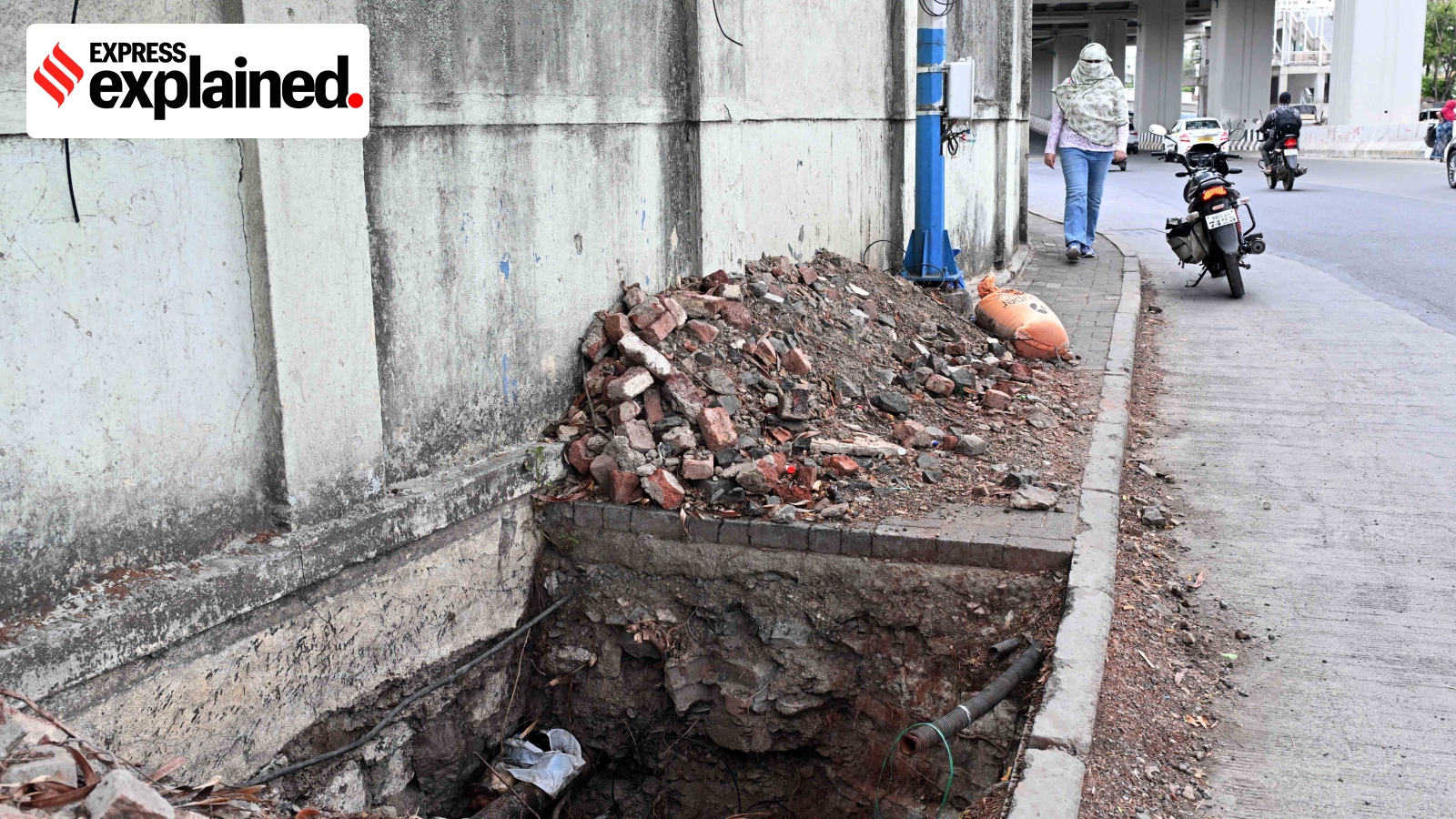
In India, one in every five road accident fatalities involves a pedestrian. Historically, road infrastructure has been overwhelmingly biased toward motorized vehicles, leaving minimal space for those on foot. In a groundbreaking move following the Supreme Court's recognition of walking on footpaths as a fundamental right, Andhra Pradesh has become the first state to formulate a dedicated Pedestrian Safety Policy.
The Three-Step Strategy
The 'Andhra Pradesh Pedestrian Safety & Universal Accessibility Policy 2026' operates on a three-pronged approach: conducting rigorous road safety audits, fixing footpath infrastructure (including the removal of encroachments), and fostering behavioral change. While the policy applies to all local bodies, including rural areas, it mandates immediate implementation in cities with populations exceeding one million.
Crucially, the policy invokes Section 198A of the Motor Vehicles Act, 1988. This provision introduces strict accountability, allowing for fines of up to ₹1 lakh to be levied against officials, contractors, or consultants if infrastructural or design failures lead to pedestrian death or disability.
Why This Matters
BozokMedia analysis shows that pedestrian safety is often the most neglected aspect of urban planning in developing nations. By codifying these rights into law and attaching financial penalties to negligence, Andhra Pradesh is shifting the paradigm from reactive accident management to proactive infrastructure accountability.
True urban mobility is measured not by how fast cars move, but by how safely a person can walk.
The policy places heavy emphasis on 'Black Spots'—locations where frequent pedestrian injuries or deaths have occurred over the last 2-3 years. Authorities are tasked with surveying 20% of roads within a year to assess the need for additional crossings and finalizing improvements within seven months.
Infrastructure and Accessibility Standards
Adhering to the Indian Roads Congress (IRC) 2022 guidelines, the policy mandates specific dimensions. Footpaths must provide a minimum walking area of two meters to ensure wheelchair accessibility, supplemented by a buffer zone and multi-utility space for trees and seating.
| Feature | Policy Standard |
|---|---|
| Minimum Walking Width | 2.0 Meters |
| Buffer Space | 0.4 - 1.0 Meters |
| Max Footpath Height | 150 mm from road level |
| Bollard Spacing | 0.6 Meters |
Frequently Asked Questions
1. How does the policy handle footpath encroachments?
The policy directs the mandatory removal of unauthorized structures and illegal stalls, recommending GIS mapping and camera-based monitoring to track chronic hotspots.
2. Is accessibility for the disabled included?
Yes, the policy mandates tactile pavers for the visually impaired, curb ramps at all crossings, and lifts at foot overbridges (FOBs) where significant level differences exist.