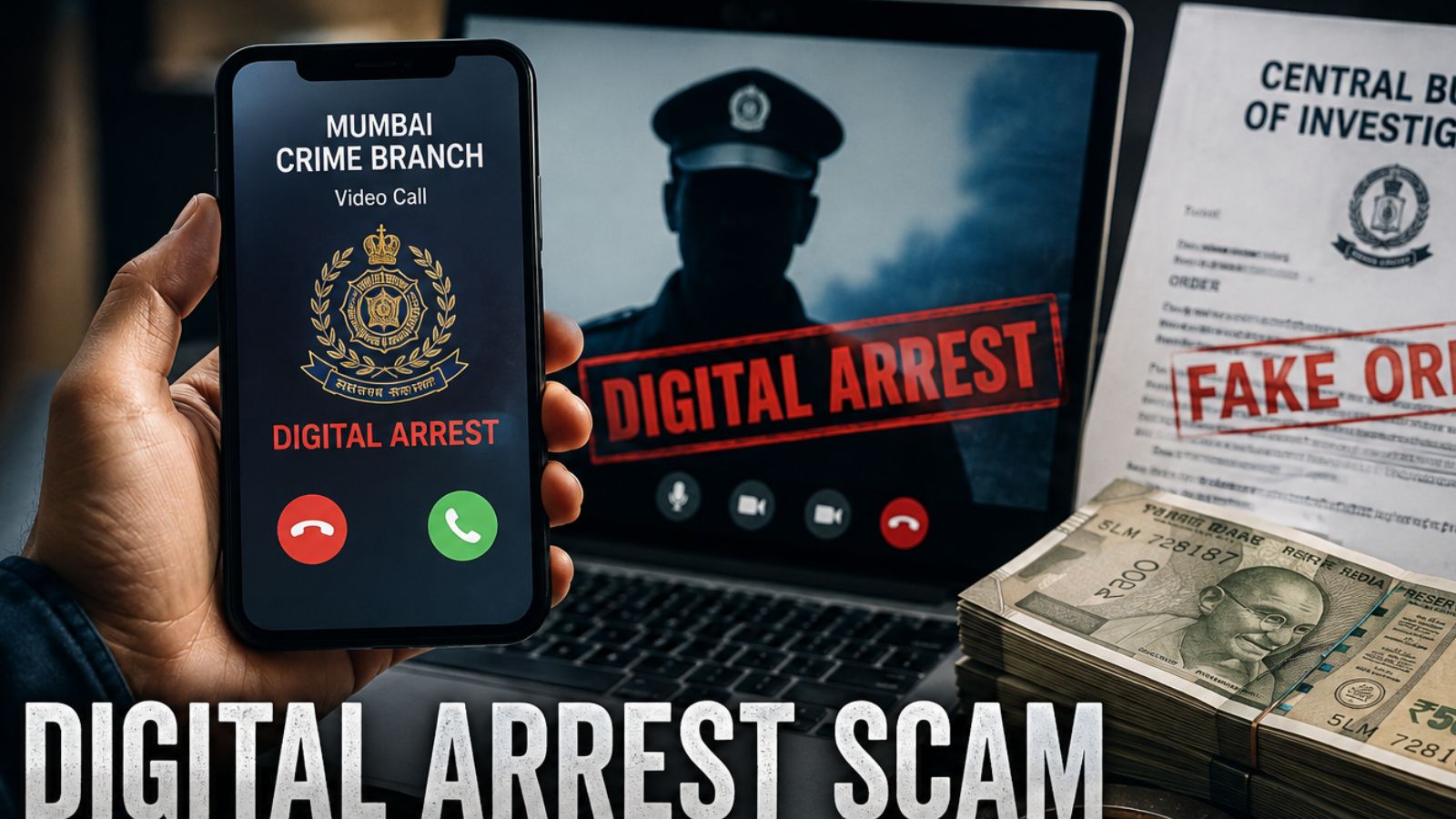
Fraudsters posing as Mumbai Crime Branch and CBI officers coerced a Kolkata resident into transferring Rs 3.26 crore through a fake 'digital arrest' tactic. Three suspects have been apprehended by the Bidhannagar cybercrime police.
- Victim lost Rs 3.26 crore through cash, liquidated shares, and mutual funds.
- Scammers used forged CBI orders and 'digital arrest' notices to intimidate the victim.
- Three suspects—Biku Kumar, Durant Patra, and Mohammad Zayed—were arrested after a 7-month probe.
In a chilling instance of cyber-psychological warfare, a resident of Kolkata was defrauded of a staggering Rs 3.26 crore. The perpetrators, masquerading as officers from the Mumbai Crime Branch, employed a tactic known as 'digital arrest,' where the victim was kept under virtual surveillance and forbidden from leaving his home.
The scam began when the fraudsters contacted the victim, claiming his Aadhaar details were linked to criminal activities involving 24 other individuals. To amplify the fear, the suspects sent forged Central Bureau of Investigation (CBI) orders and bank freeze notices, insisting that the victim was under a joint investigation and must remain isolated.
Why This Matters
BozokMedia analysis shows that these scams succeed not because of technical glitches, but because of 'authority bias.' By using official-sounding terminology and creating a high-pressure environment, criminals disable the victim's critical thinking. The demand for secrecy from family members ensures the victim remains isolated and vulnerable.
"The transition from simple phishing to 'digital arrest' marks a dangerous evolution in cybercrime, targeting the psychological vulnerability of the victim."
Under extreme duress, the victim complied with every instruction, eventually transferring Rs 3,26,84,000 into accounts controlled by the syndicate. The fraud came to light after the victim realized the deception and approached the Bidhannagar Police in January this year.
Following a meticulous seven-month investigation, the cybercrime unit tracked the money trail and technical footprints to arrest three men from Kolkata and Howrah. This case highlights a disturbing trend, despite a landmark ruling in July 2025 where a West Bengal court sentenced nine people to life imprisonment for similar crimes—the first such conviction in India.
| Feature | Legitimate Law Enforcement | Digital Arrest Fraud |
|---|---|---|
| Communication | Official Summons / Physical Visit | WhatsApp / Video Calls |
| Financial Demand | Never requests money for 'clearance' | Demands asset liquidation/transfer |
| Legal Rights | Right to legal counsel | Forced secrecy from family/lawyers |
Frequently Asked Questions
1. Can the police conduct an investigation over a video call?
While they may use digital tools for communication, they cannot 'arrest' or 'detain' someone virtually or demand money to close a case.
2. What should I do if I receive such a call?
Immediately disconnect the call and report the incident to the National Cyber Crime Reporting Portal at 1930.