The recent approval of the PM Surya Sarovar Yojana could provide the much-needed policy push to accelerate pan-India deployment of floating solar projects. The scheme aims to develop 5,000 MW of floating solar projects and support grid stability with a cumulative storage capacity of 10,000 MWh.
- The PM Surya Sarovar Yojana provides a significant policy push for the expansion of floating solar energy in India.
- The scheme aims to develop 5,000 MW of floating solar projects and support grid stability with a cumulative storage capacity of 10,000 MWh.
- Floating solar offers a significant advantage in land conservation for India.
India’s installed solar capacity has grown rapidly, from 3 GW in 2016 to over 160 GW in 2026, mainly through large-scale projects. However, finding land for new projects is becoming harder as solar competes with urbanisation and agriculture, while the need for ecological conservation remains a priority. Therefore, policymakers need to explore ways to expand solar capacity without requiring more land. The recent approval of the Pradhan Mantri Surya Sarovar Yojana (PM-SSY) clearly signals the Indian government’s intent to promote land-neutral solar applications.
What is Floating Solar?
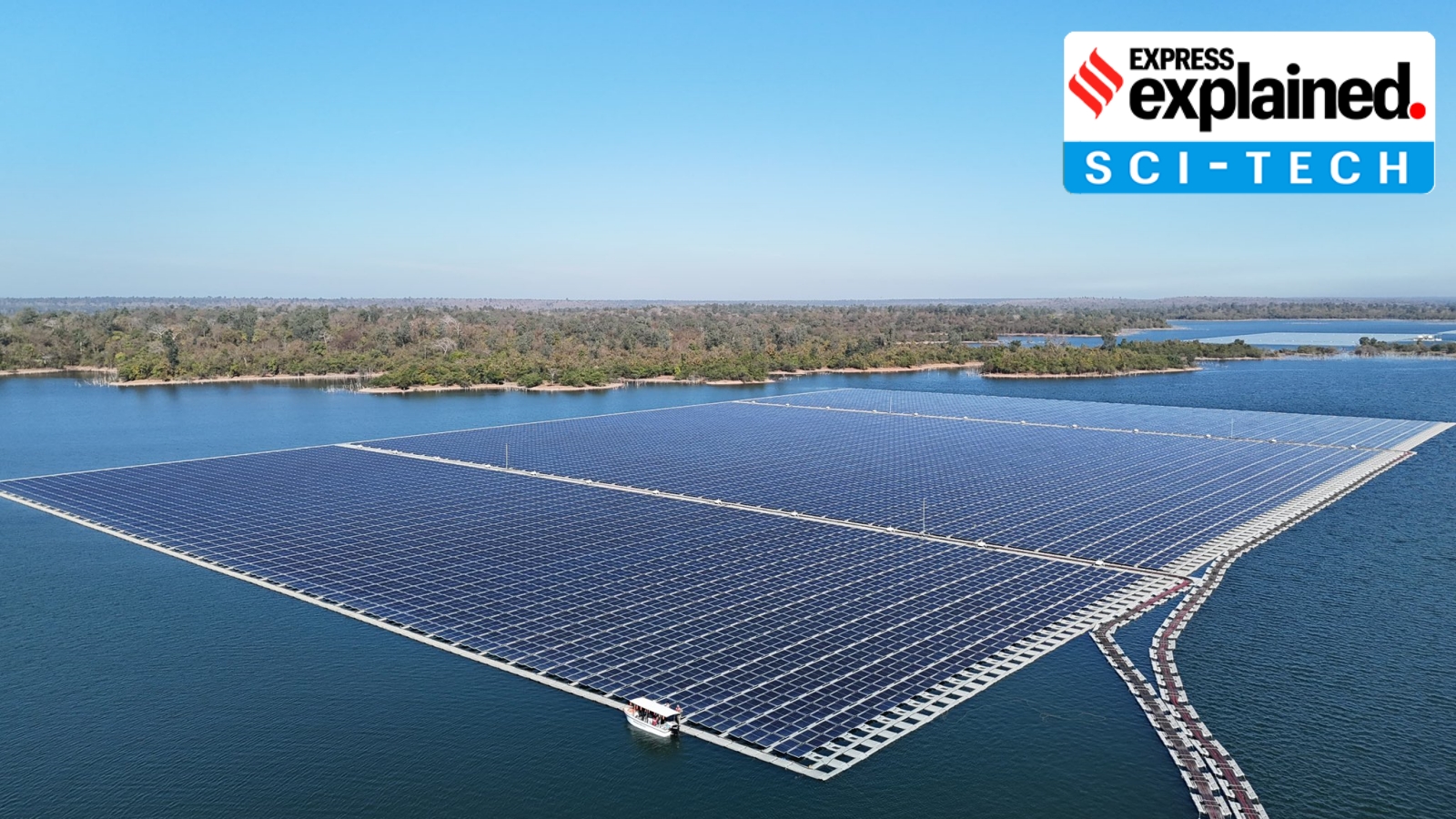
Floating solar systems comprise solar modules that are mounted on floating platforms over water bodies such as reservoirs and lakes. To maintain their position, the platforms are anchored to the reservoir bed or banks. Inverters and other electrical equipment may be installed on floating platforms or onshore, depending on the system design.
Relevance for India
The biggest advantage floating solar offers in India is land conservation, enabling more efficient land use and delivering economic benefits. Other benefits include reduced water evaporation and improved solar module efficiency. Portions of water bodies covered by floating solar systems have lower evaporation rates than uncovered portions. Water savings from reduced evaporation will also depend on the area covered, local climatic conditions, and reservoir characteristics. Further, water under the solar modules keeps them cooler, thereby enhancing their performance and efficiency, especially during hot summer conditions.
Role of PM-SSY
India’s existing floating solar installations comprise a few large projects developed by state agencies and public sector undertakings. Beyond these projects, this solar segment has yet to gain traction in the country. PM-SSY aims to change this and mainstream floating solar in India’s renewable energy landscape.
Factors Necessary for Success
The scheme’s success will depend not only on financial support but also on effective implementation, the bankability of eligible projects, and institutional coordination. Implementation will require clear identification of suitable water bodies and comprehensive feasibility studies for each site. Floating solar systems are exposed to extreme winds, waves, and rapidly changing water levels, making climate-resilience a critical factor.
Frequently Asked Questions
What is the PM Surya Sarovar Yojana?
The PM Surya Sarovar Yojana is a national initiative to promote the expansion of floating solar energy in India. The scheme aims to develop 5,000 MW of floating solar projects and support grid stability with a cumulative storage capacity of 10,000 MWh.
What floating solar projects are currently running in India?
In India, NTPC Limited commissioned two of India’s largest floating solar projects in 2022: the 100 MW Ramagundam project in Telangana and the 92 MW Kayamkulam project in Kerala. The planned 600 MW Omkareshwar Floating Solar Park in Madhya Pradesh is also a significant project, with 278 MW capacity currently operational.