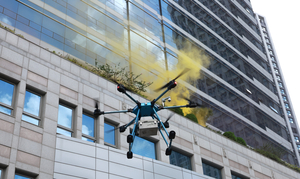
Law enforcement agencies utilized advanced drone technology to conduct a successful search for an intellectually disabled woman. The aerial surveillance proved crucial in navigating difficult terrain.
- Police successfully deployed high-tech drones in a missing person search.
- The technology allowed for rapid scanning of inaccessible areas.
- Aerial surveillance proved vital for locating an intellectually disabled individual.
In a significant development for modern policing, law enforcement officials have reported the successful use of drone technology to locate an intellectually disabled woman who had gone missing. The operation highlights the growing importance of unmanned aerial vehicles (UAVs) in critical search and rescue missions.
The search was complicated by the woman's specific needs and the potentially difficult terrain where she was last seen. Traditional ground searches were limited by visibility and speed, prompting authorities to escalate the operation using aerial assets.
Why This Matters
BozokMedia analysis shows that the integration of drones into police operations is shifting from simple surveillance to life-saving tactical deployment. For vulnerable populations, such as the intellectually disabled, every minute counts, and the rapid deployment of drones can bridge the gap between disappearance and recovery.
The synergy between advanced sensor technology and emergency response is redefining the boundaries of search and rescue efficiency.
Historically, missing person cases relied heavily on manual foot patrols and community alerts. While these remain essential, the advent of thermal imaging and high-definition aerial cameras has provided a massive technological leap. Drones can cover square miles of territory in a fraction of the time it takes a ground team.
Frequently Asked Questions
Question 1: How do drones improve search efficiency?
Answer: They provide a bird's-eye view and can access steep or dense areas that are unsafe for humans.
Question 2: Can drones work at night?
Answer: Yes, drones equipped with thermal imaging can detect body heat even in total darkness.