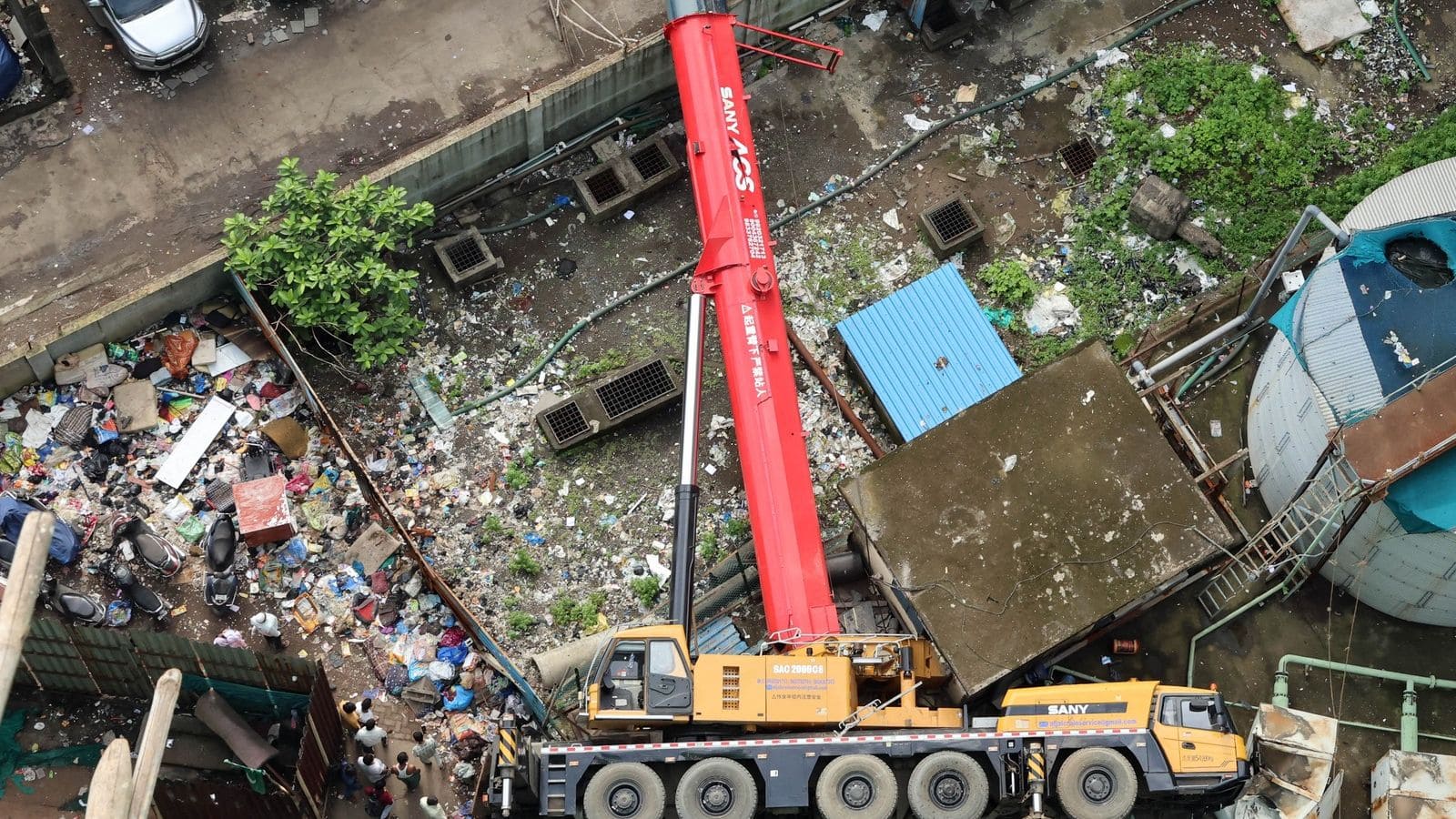
Recent crane collapses in Mumbai, including the tragic Kurla incident, have exposed critical failures in ground stability, equipment maintenance, and operator training.
- The Kurla crane collapse injured 12 people, including children, after hitting slums.
- MMRDA attributes the incident to poor ground stability and lack of third-party testing.
- The influx of cheap, second-hand Chinese cranes with manipulated age records is a major risk.
- A lack of formal government training institutes for crane operators exacerbates the danger.
Mumbai and its Metropolitan Region are witnessing a disturbing trend of heavy machinery failures. Following the recent accident in Kurla, where a 17-storey-high crane's boom crashed onto slum dwellings, injuring 12 people, questions are mounting regarding the safety of the city's rapid construction boom. This incident is part of a series of mishaps, including accidents at Metro Line 2B, BKC, and Thane.
The scale of these machines is immense; some cranes are capable of lifting over 1,000 metric tonnes. When such massive equipment fails, the consequences are not just structural damage but catastrophic loss of life. The recurring nature of these accidents suggests systemic failures rather than isolated human errors.
Why This Matters
BozokMedia analysis shows that as Mumbai pushes for hyper-development, the pressure to reduce costs and meet deadlines is overriding essential safety protocols. The intersection of high-density living and massive industrial machinery creates a high-stakes environment where any lapse is fatal.
A crane's stability is entirely dependent on the ground supporting its jacks; skipping third-party ground certification is a recipe for disaster.
According to the Mumbai Metropolitan Region Development Authority (MMRDA), the Kurla incident was primarily caused by poor ground stability. Navin Dedhia of the Crane Owners Association of India (COAOI) highlighted that contractors often skip ground testing to save costs and avoid project delays. Furthermore, incomplete maps of underground utilities can weaken the soil, making it unable to bear the immense pressure of a heavy lift.
Equipment integrity is another critical factor. Premal Thakker from the COAOI revealed a worrying trend: the proliferation of cheap, second-hand Chinese cranes in the Indian market. In many instances, the recorded age of these machines is manipulated through brokers, allowing outdated and unsafe equipment to be used in high-risk operations. Unlike new cranes from Original Equipment Manufacturers (OEMs), these older models lack essential safety features like hydraulic locking cylinders and safe load indicators.
Finally, the human element cannot be ignored. There is a significant gap in professional training. Unlike modern technology-driven roles, many crane operators in India learn 'on the job' due to a lack of dedicated government training institutes. As machines become more complex and cheaper, less-skilled operators are being tasked with managing increasingly dangerous equipment.
Frequently Asked Questions
1. What is the primary cause of the Kurla crane accident?
Preliminary investigations by MMRDA point toward poor ground stability, which caused the crane to lose balance and tilt.
2. How does the age of a crane affect its safety?
Older cranes often lack modern safety systems like load indicators and are more prone to hydraulic or electrical failures, especially if their age records have been falsified.