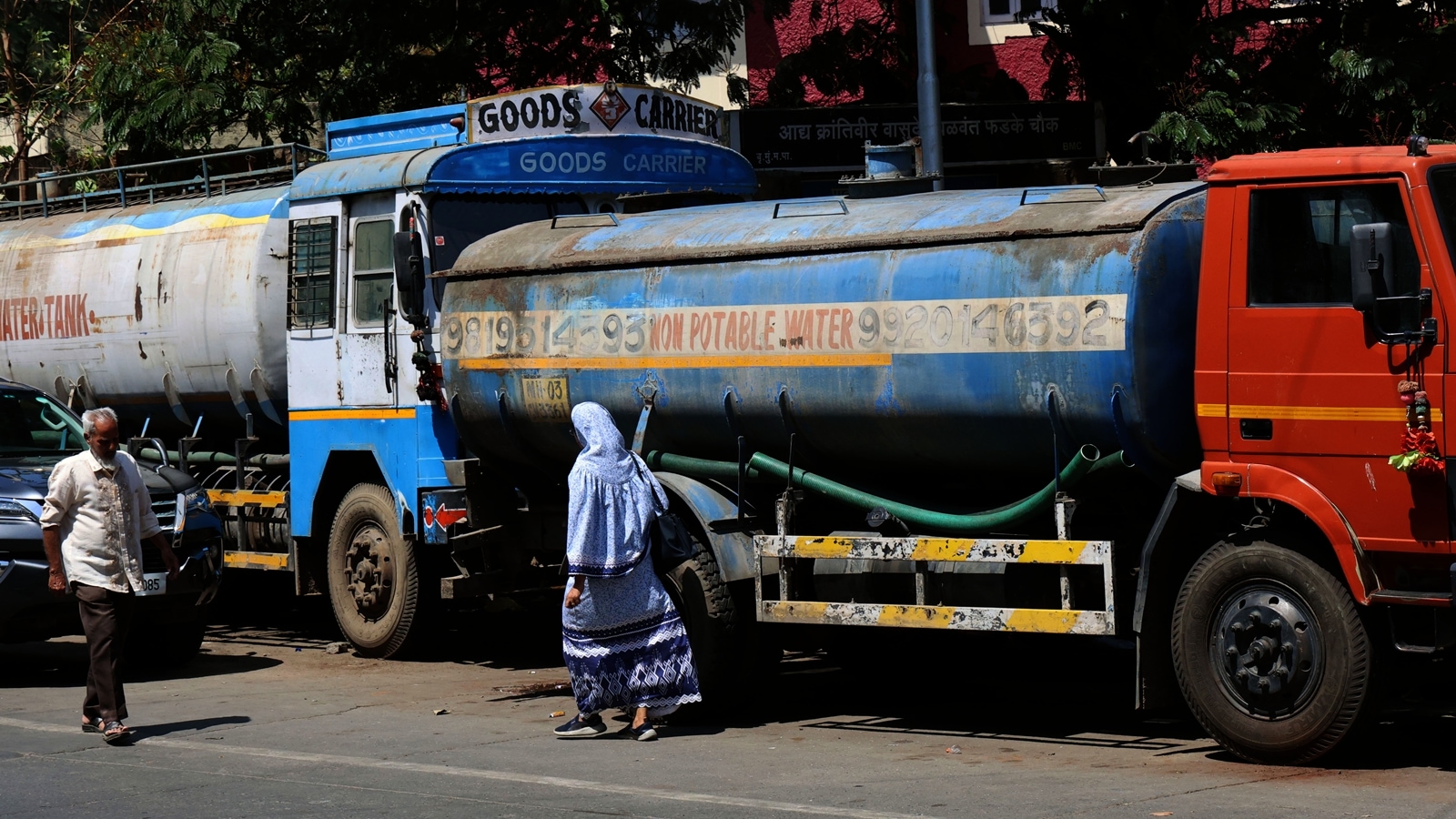
A major pipeline rupture and technical failure at the Basai Water Treatment Plant have left residents in DLF Phase 1 and 2 without adequate water for four days, forcing reliance on expensive private tankers.
- Technical tripping at Basai Water Treatment Plant and a 1,300-mm pipeline leak triggered the crisis.
- Residents in DLF Phase 1 & 2 have faced low pressure or zero supply for four consecutive days.
- Private water tanker rates have surged from ₹1,200 to over ₹3,000.
- Additional pipeline damage in Sector 50 has compounded the issue for multiple sectors.
The residents of Gurugram's DLF Phase 1 and 2 are grappling with a severe water crisis that has lasted for four days. What began as irregular supply has escalated into a near-total shutdown in several pockets, forcing families to ration every drop and rely heavily on water tankers for basic survival.
According to officials from the Gurugram Metropolitan Development Authority (GMDA), the crisis was initiated by a technical 'tripping' at the Basai Water Treatment Plant, followed by the detection of a major leak in a critical 1,300-mm master supply pipeline. The situation was further exacerbated on Saturday when an unidentified party caused damage to another 1,000-mm pipeline near Baani Square during excavation work.
Why This Matters
BozokMedia analysis shows that such recurring infrastructure failures in high-growth corridors like Gurgaon highlight a widening gap between rapid real estate development and the capacity of civic utilities. When primary supply lines fail, the immediate economic burden shifts to the citizens through inflated private service costs.
The disruption in the master supply line, coupled with secondary damages during excavation, creates a cascading effect that makes rapid restoration extremely difficult.
The impact on daily life has been profound. Sarita Handa, a resident and Vice-President of the A Block RWA, noted that even simple tasks like running a washing machine have become impossible. She highlighted a worrying trend: as the official supply dwindles, private tanker operators have exploited the scarcity, doubling their rates from approximately ₹1,200 to upwards of ₹3,000 per tanker.
Historical Background: Gurgaon's rapid transition from a village to a global corporate hub has placed immense strain on its hydraulic infrastructure. The city relies on a complex network of pipelines and treatment plants that often struggle to keep pace with the vertical expansion of high-rise residential complexes like those in DLF City.
| Impact Factor | Official GMDA Supply | Private Tanker Market |
|---|---|---|
| Reliability | Low (Due to technical failure) | High (But inconsistent availability) |
| Cost Structure | Regulated/Subsidized | Highly Volatile (₹1,200 - ₹3,000+) |
| Service Area | Widespread/Affected | Localized/Premium Areas |
Frequently Asked Questions
Question 1: Which sectors are currently affected by the water disruption?
Answer: Sectors 46, 48, 49, 50, 52, 56, 57, and 58 through 76 are expected to face supply issues until repairs are finalized.
Question 2: What is DLF doing to assist residents?
Answer: DLF has issued advisories to conserve water and is working to re-pressurize the distribution network, while also monitoring for water wastage.