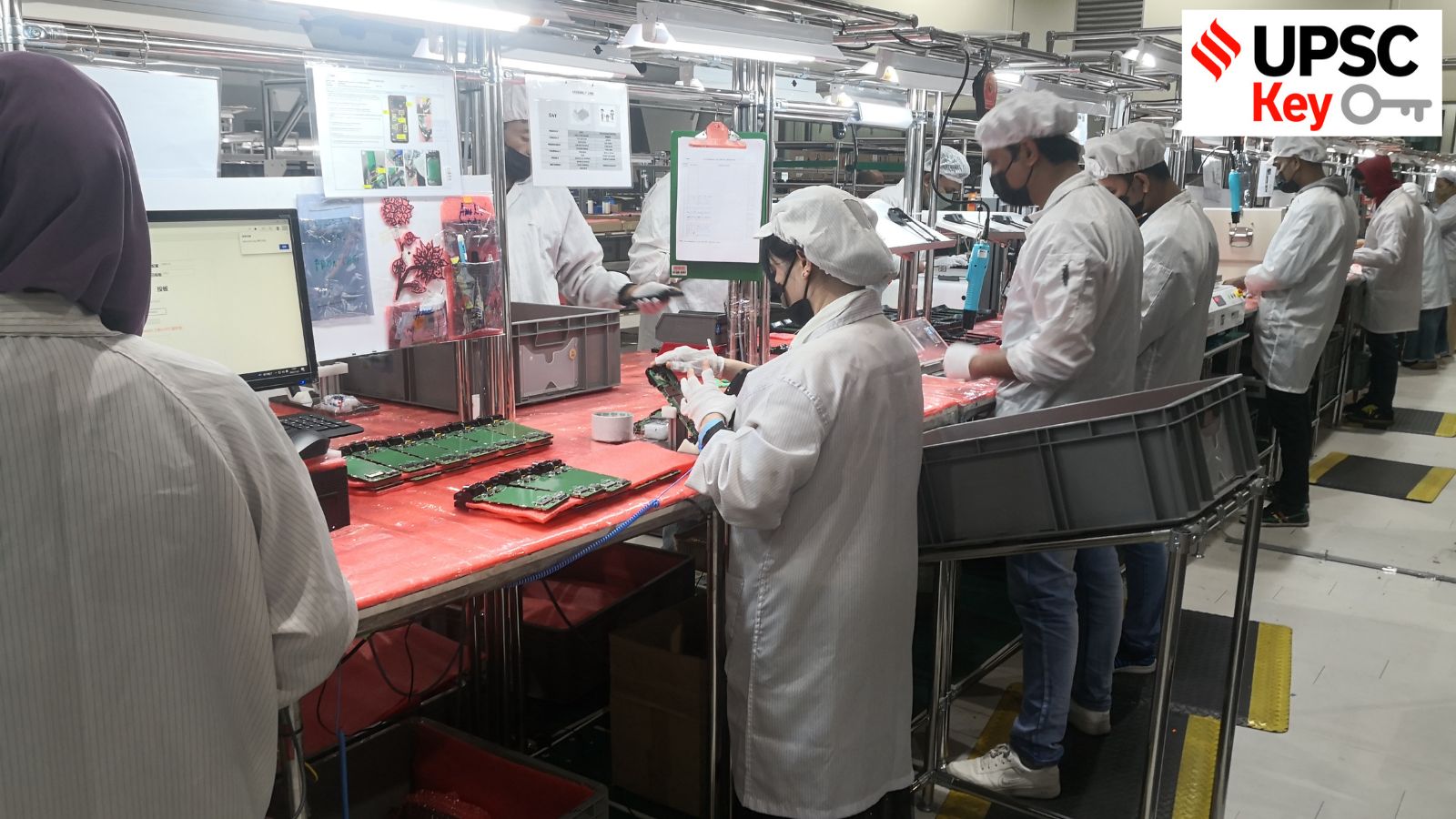
A deep dive into India's ₹62,500 crore mobile manufacturing initiative, the strategic India-Mauritius energy pact, and critical economic updates essential for UPSC aspirants.
- Government launches ₹62,500 crore scheme to foster domestic smartphone brands.
- India-Mauritius energy pact secures 5-year fuel supply via IOC.
- Strategic shift from being an assembly hub to a global R&D center.
For candidates preparing for the UPSC Civil Services Examination, staying updated with economic shifts and bilateral relations is paramount. The recent announcement of a ₹62,500-crore mobile phone manufacturing scheme marks a significant pivot in India's industrial policy, moving beyond mere assembly towards true technological sovereignty.
Revolutionizing Electronics: Beyond Assembly
While India has successfully positioned itself as a major assembly hub for global giants, the new scheme seeks to address the 'missing middle'—the creation of indigenous smartphone brands. The scheme operates on two tracks: one for large-scale manufacturers and Electronics Manufacturing Services (EMS) companies, and a specialized track for Indian brands that maintain their Intellectual Property (IP), R&D, and management control within India.
Why This Matters
BozokMedia analysis shows that this policy is a direct attempt to capture a higher share of the global value chain. By incentivizing domestic IP, India aims to reduce its long-term reliance on foreign technology and design, which is currently a major component of electronics imports.
To transition from a manufacturing hub to a global leader, India must prioritize intellectual property over mere hardware assembly.
Strategic Energy Ties: India and Mauritius
In the realm of International Relations, the five-year fuel supply agreement between India and Mauritius is a masterstroke for regional stability. Under this pact, the Indian Oil Corporation (IOC) will supply the entirety of Mauritius's requirements for petrol, diesel, and aviation turbine fuel. This strengthens India's role as a reliable energy partner in the Indian Ocean Region (IOR).
| Feature | Old PLI Focus | New Manufacturing Scheme |
|---|---|---|
| Primary Goal | Assembly & Volume | Brand Creation & IP Ownership |
| Incentive Basis | Production Linked | Production + Domestic Sourcing |
Historical Background
India's relationship with Mauritius is anchored in the 'SAGAR' (Security and Growth for All in the Region) policy. As China increases its footprint in the Indian Ocean, India's deepening energy and security ties with island nations like Mauritius serve as a crucial strategic counterbalance.
Frequently Asked Questions
1. How does the new mobile scheme differ from the previous PLI?
The new scheme places a much heavier emphasis on creating homegrown brands and ensuring that R&D and IP remain within India.
2. What is the significance of the India-Mauritius fuel pact?
It bolsters India's energy diplomacy and strengthens its strategic presence in the Indian Ocean.
