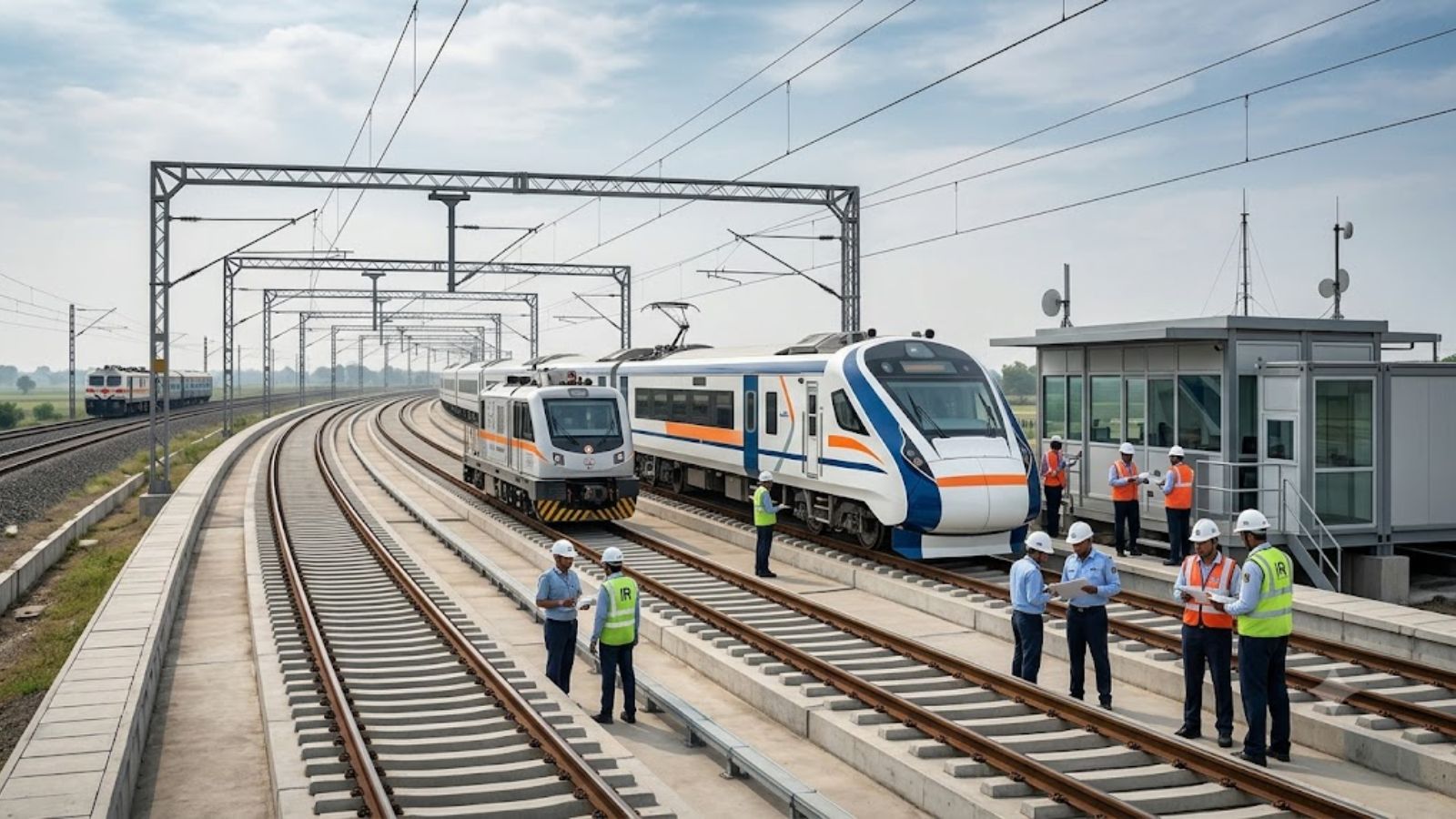
In a major move to ensure passenger safety, Indian Railways has launched a nationwide drive to clean and disinfect water tanks, filters, and coolers following alarming reports of bacterial contamination.
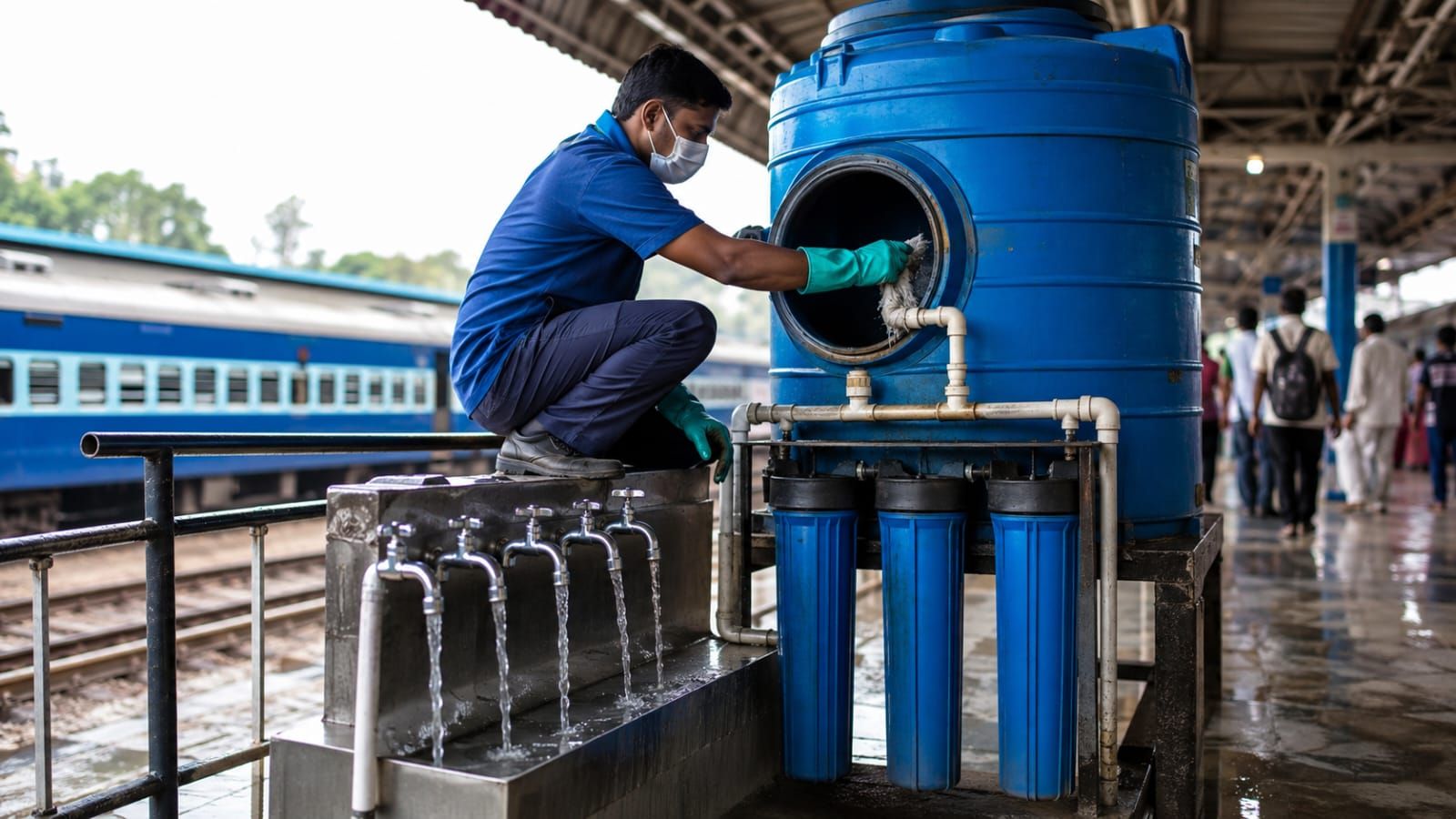
- Comprehensive cleaning and disinfection of water tanks, filters, and water coolers across all stations.
- Mandatory chemical and bacteriological testing of water samples to ensure safety.
- The drive follows a CAG report detecting E. coli bacteria in several railway stations.
Indian Railways has officially initiated a high-priority special drive aimed at the intensive cleaning and maintenance of drinking water infrastructure at railway stations. The initiative is designed to bolster hygiene standards and ensure that the water provided to millions of passengers meets stringent safety and quality protocols.
Under the directives issued by the Railway Board, zonal railways are tasked with conducting thorough inspections of all water-related assets. This includes water sources, treatment plants, underground and overhead tanks, PVC tanks, water booths, and dispensing points. The process involves draining tanks, desludging, scrubbing, and thorough disinfection to eliminate contaminants.
Why This Matters
BozokMedia analysis shows that this proactive stance is a direct response to systemic vulnerabilities in water management. For years, the maintenance of water infrastructure in transit hubs has faced scrutiny, and this drive represents a shift toward more rigorous, standardized sanitation protocols.
Ensuring pure drinking water is not just a logistical necessity; it is a fundamental pillar of passenger welfare and public health safety in the railway ecosystem.
To prevent future contamination, authorities will inspect tank covers, vents, and overflow points to shield water supplies from birds, animals, and algae. Furthermore, the Railways will address any leakages in pipelines and ensure there is no cross-connection between potable (drinking) and non-potable water systems, which is a common cause of contamination.
Historical Context: The CAG Warning
The urgency of this drive is underscored by a recent report from the Comptroller and Auditor General (CAG). The report, titled ‘Passenger Amenities and Sanitation at Non-Suburban Railway Stations in Indian Railways’, revealed a disturbing reality: E. coli bacteria was detected in water samples from 8 out of 49 surveyed stations, including locations in Mumbai, Kerala, Tamil Nadu, and Jharkhand.
| Parameter | Previous Status | New Standardized Protocol |
|---|---|---|
| Inspection Periodicity | Irregular/Inconsistent | Strictly prescribed intervals |
| Bacteriological Testing | Insufficient | Mandatory Physical & Chemical Analysis |
| Chlorine Monitoring | Fluctuating levels | Daily residual-chlorine monitoring |
Beyond the stations, the scope of this drive extends to railway colonies and workplaces, ensuring that the entire railway ecosystem benefits from improved water hygiene. Zonal railways are required to submit station-wise deficiency reports, allowing the Railway Board to monitor corrective actions in a time-bound manner.
Frequently Asked Questions
Question 1: What specific equipment is being cleaned during this drive?
Answer: The drive covers water tanks, filtration plants, water coolers, UV/RO systems, and water vending machines.
Question 2: Why was this drive launched so suddenly?
Answer: It was prompted by a CAG report that identified the presence of E. coli bacteria in water at several railway stations.