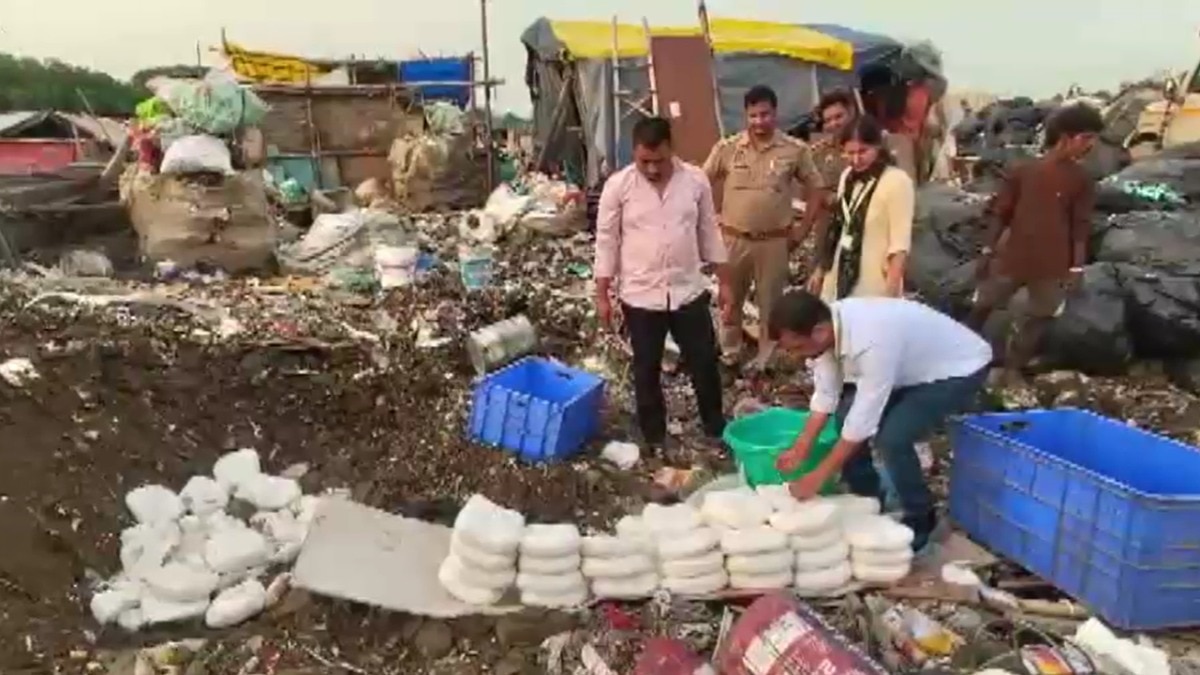
In a major crackdown ahead of the festive season, food safety authorities in Noida and Jaipur destroyed 600 kg of unsafe paneer following inspections of dairy establishments.
- A total of 600 kg of paneer was destroyed across Noida and Jaipur.
- Raids were conducted to prevent food adulteration during the upcoming festive season.
- An illegal vegetable fat manufacturing unit was sealed in Phalodi, Rajasthan.
- Multiple samples of milk, ghee, and sweets have been sent for laboratory testing.
As the festive season approaches, food safety departments in Uttar Pradesh and Rajasthan have intensified their vigil against food adulteration. In a coordinated effort, authorities in Noida (Gautam Buddha Nagar) and Jaipur destroyed a combined total of 600 kg of paneer that was deemed unfit for human consumption. The raids targeted dairy businesses suspected of storing products under unhygienic conditions.
Major Seizures in Jaipur and Noida
In Jaipur, the Food Safety Department inspected several dairy outlets. Following the inspection, approximately 300 kg of paneer was found to be stored in highly unhygienic environments and was subsequently destroyed. Similarly, in Noida, officials intercepted a batch of 300 kg of paneer supplied from Haryana. The product was found to be prima facie unsafe, leading to its immediate destruction.
Sarvesh Mishra, Assistant Commissioner (Food), Grade-II, confirmed that eight different samples, including curd, khoya, and boondi laddoos, were sent to the laboratory for detailed analysis. The authorities have warned that strict action under the Food Safety and Standards Act will follow the lab reports.
Wider Crackdown in Rajasthan
The enforcement drive extended beyond Jaipur. In the Phalodi district of Rajasthan, officials dismantled an illegal manufacturing unit producing vegetable fat. Authorities seized 690 kg of vegetable fat along with raw materials and packing machinery, leading to the sealing of the factory. In Dholpur, inspections were carried out at various shops, with samples of milk and traditional sweets like 'ghewar' being collected for testing.
Why This Matters
BozokMedia analysis shows that the period leading up to major festivals often sees a spike in the sale of substandard dairy products. Adulteration in staples like paneer, ghee, and khoya poses a significant risk to public health, potentially leading to widespread foodborne illnesses. This proactive enforcement is crucial to maintaining consumer trust and ensuring food security.
The intensification of inspections is a necessary deterrent against the growing menace of food adulteration in the dairy sector.
Frequently Asked Questions
1. Why was the paneer destroyed?
The paneer was found to be stored under extremely unhygienic conditions and was deemed unfit for consumption during initial inspections.
2. What happens after the lab reports arrive?
Based on the laboratory results, authorities will initiate legal proceedings against the establishments under the Food Safety and Standards Act.