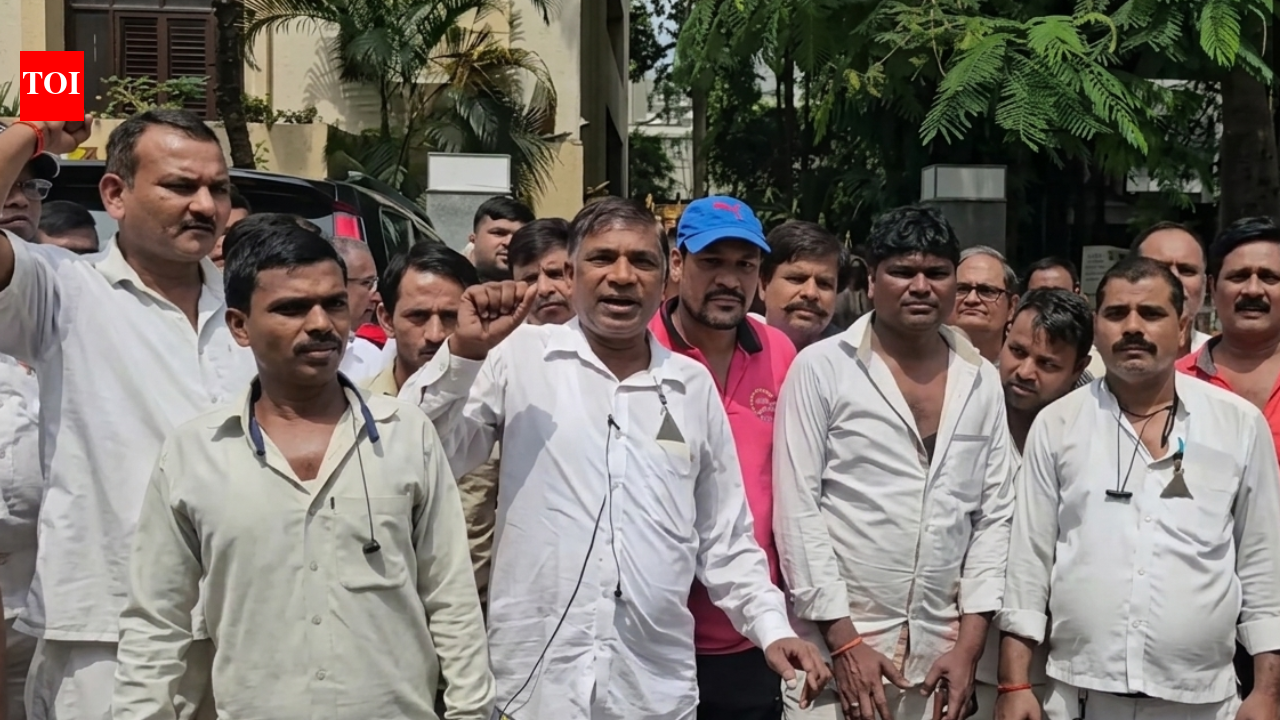
Non-Marathi speaking auto and taxi drivers in Mumbai have initiated a three-day strike, blocking major roads to protest a government mandate requiring proficiency in the local language.
- Mumbai auto and taxi drivers have launched a 3-day strike against mandatory Marathi language requirements.
- Protesters argue that elderly, uneducated drivers cannot suddenly acquire language proficiency.
- Roadblocks were staged on Kandivli Link Road, causing significant traffic disruptions.
- Drivers are demanding a reconsideration of heavy fines (up to ₹20,000) for non-compliance.
The streets of Mumbai witnessed significant tension on Monday as a large section of the city's autorickshaw and taxi workforce began a three-day strike. The unrest is a direct reaction to the Maharashtra government's directive making basic Marathi language proficiency mandatory for all transport operators, including cab and auto drivers. The protesters claim that this mandate is not only impractical but also financially ruinous for those who have spent decades serving the city without formal education.
The epicenter of the protest was the Kandivli Link Road, where drivers staged a massive roadblock, bringing traffic to a standstill. The sentiment among the drivers is one of desperation and perceived injustice. Many of the protesters are in their late 50s and early 60s, arguing that their lack of schooling makes it nearly impossible to suddenly master a new language to meet official standards.
Why This Matters
BozokMedia analysis shows that this conflict is more than just a linguistic dispute; it is a clash between regional identity politics and the socio-economic reality of Mumbai's migrant workforce. While the government seeks to preserve and promote the local culture, the enforcement mechanism—heavy fines and potential license threats—disproportionately affects the most vulnerable workers who lack the resources for formal language training.
"Enforcing language mandates without providing state-funded educational support creates a systemic barrier that penalizes the working class for their lack of formal schooling."
The drivers highlighted a critical gap in the government's approach: the lack of a grace period. Several drivers reported that they are attempting to learn "broken Marathi" to communicate with passengers, yet they are being penalized with steep fines ranging from ₹15,000 to ₹20,000 instead of being encouraged or given time to learn.
Historically, Mumbai has been a melting pot of diverse cultures and languages, with Hindi and English serving as the primary lingua francas for commerce and transport. The shift toward mandatory Marathi represents a tightening of regionalist policies that have seen a rise in recent years across Maharashtra, often leading to friction between the local administration and the city's diverse migrant population.
Frequently Asked Questions
Q1: Why are the auto drivers striking?
They are protesting the mandatory requirement to know Marathi and the heavy fines imposed on those who cannot speak the language.
Q2: Which areas of Mumbai are most affected?
While the strike is city-wide, major disruptions were reported on the Kandivli Link Road and other key transit hubs.