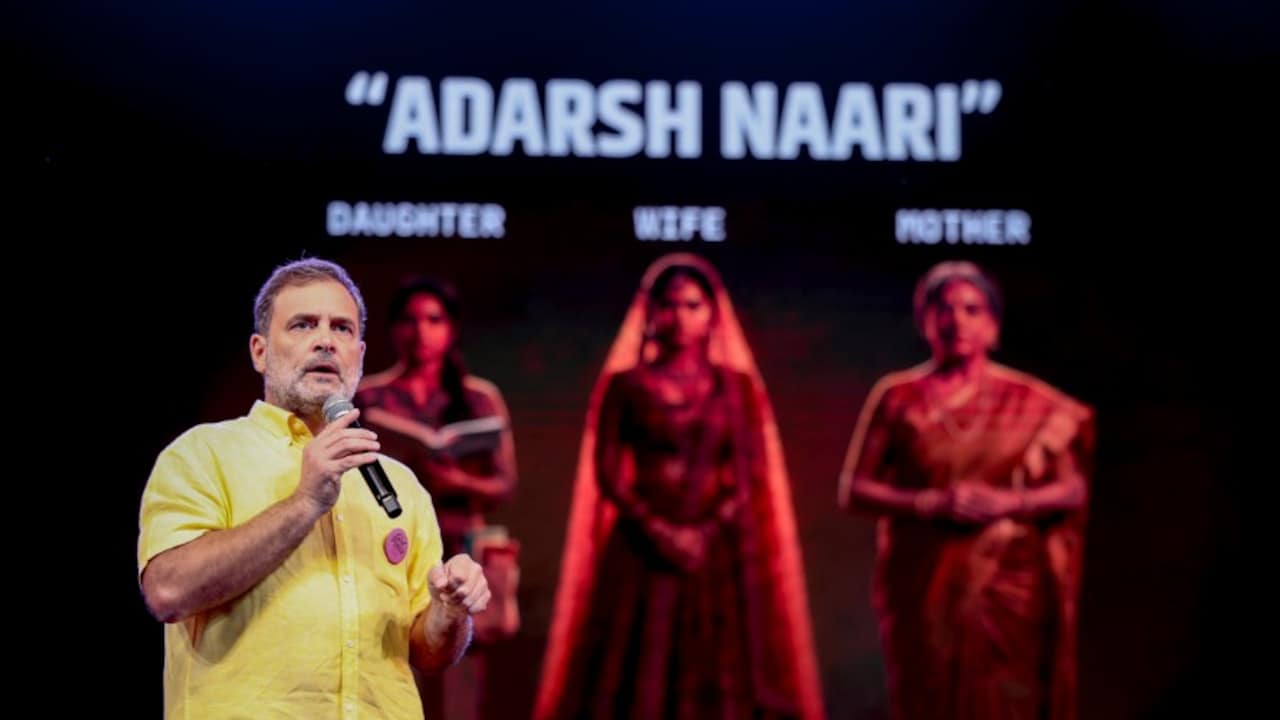
During the 'Chhatron Ki Goonj' event in Pune, Congress leader Rahul Gandhi urged women to reclaim their independence, sparking a fresh political confrontation between the Congress and the BJP.
- Rahul Gandhi emphasized that women are India's greatest strength.
- He urged women to reject patriarchal norms and prioritize their own autonomy.
- The statement has triggered a sharp political reaction from the BJP.
In a powerful address at the 'Chhatron Ki Goonj' event in Pune, Congress leader Rahul Gandhi placed women's rights and autonomy at the center of his political discourse. Gandhi asserted that women are the backbone and the biggest strength of India, arguing that the current social structure often suppresses their potential through outdated patriarchal norms.
During his speech, Gandhi made a provocative call to "smash the patriarchy," telling the female attendees that they belong to no one except themselves. He emphasized that the fight for gender equality is not just a social necessity but a fundamental requirement for India's democratic and economic progress. By framing women's independence as a core issue, Gandhi sought to mobilize a younger, female demographic across the country.
Why This Matters
BozokMedia analysis shows that this shift in rhetoric indicates the Congress party's strategy to pivot toward identity politics focused on gender and youth. By positioning himself as a champion of women's liberation, Rahul Gandhi is attempting to create a distinct ideological contrast with the BJP's traditional approach to family values and social structures.
"The shift toward explicitly anti-patriarchal language marks a calculated attempt to align the Congress party with global progressive movements to attract Gen-Z voters."
The Bharatiya Janata Party (BJP) was quick to respond, dismissing the remarks as "populist rhetoric" and claiming that the current government has already implemented systemic changes through welfare schemes like Ujjwala and Beti Bachao Beti Padhao. The clash highlights the deep ideological divide between the two parties regarding the definition of women's empowerment—one focusing on individual autonomy and the other on state-led welfare.
Historically, the discourse on women's rights in Indian politics has often been limited to safety and education. However, Gandhi's focus on "ownership of self" moves the conversation toward psychological and social liberation, which is a more radical departure from conventional political campaigning in India.
Frequently Asked Questions
What was the main theme of Rahul Gandhi's speech in Pune?
The main theme was the empowerment of women and the need to dismantle patriarchal structures to ensure women's autonomy.
How did the BJP respond to these statements?
The BJP criticized the comments as superficial, arguing that their government's tangible welfare schemes provide more real empowerment than rhetoric.