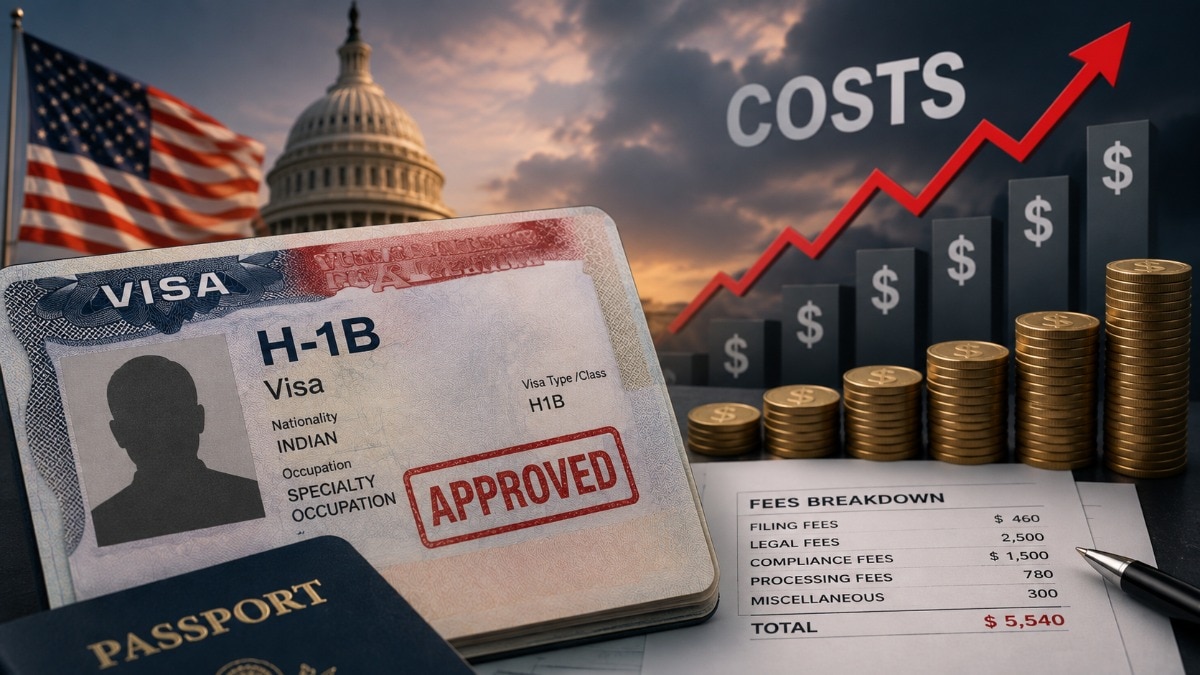
The U.S. Department of Homeland Security has proposed new fees for H‑1B work visas and F‑1 Optional Practical Training, which could significantly raise costs for Indian students and technology professionals. While exact amounts are still confidential, estimates suggest fees could soar up to $100,000.
- DHS has initiated a regulatory process to increase H‑1B and OPT fees.
- Indian students and tech workers may face dramatically higher expenses.
- Proposed fees are not finalized but could reach as high as $100,000.
What the New Fee Proposals Entail
According to New York‑based immigration law firm Fragomen, the Department of Homeland Security (DHS) has submitted draft rules to the Office of Management and Budget (OMB) that would raise fees for both the H‑1B work‑visa program and the F‑1 Optional Practical Training (OPT) program. The proposals are still under review and specific amounts have not been disclosed.
Background: The $100,000 H‑1B Fee Attempt
In September 2025, the Trump administration introduced a one‑time $100,000 payment requirement for certain new H‑1B petitions. A federal court in Massachusetts later struck down the rule, finding it exceeded executive authority. The recent DHS proposal could revive a similar fee structure, potentially affecting the same applicant pool.
Current Cost Structure for H‑1B Visas
Even without the $100,000 surcharge, employers already bear several mandatory fees—registration, I‑129 filing, ACWIA training, fraud‑prevention, and more—totaling several thousand dollars. Large IT consulting firms may also incur an additional $4,000 fee for high‑volume employers.
Why Indian Students Care About OPT‑to‑H‑1B Pathway
Most Indian nationals enter the U.S. on an F‑1 student visa, graduate, and then use OPT to gain work experience. STEM graduates often obtain a 24‑month STEM‑OPT extension before transitioning to H‑1B status. Increased fees at any stage could make the entire pipeline financially prohibitive.
Why This Matters
BozokMedia analysis shows that a steep increase in H‑1B and OPT fees could deter a large pool of Indian talent from contributing to the U.S. tech ecosystem, potentially reshaping global talent flows and affecting American innovation capacity.
"If these fees are implemented, both startups and individual students will face a barrier that could limit the United States' access to top global talent," says immigration attorney Sara Mehir.
Frequently Asked Questions
Question 1: When will the new fees take effect?
Answer: No definitive implementation date has been announced; the proposals are currently pending OMB review.
Question 2: Are there any exemptions for Indian students?
Answer: At present, no specific exemptions have been disclosed, meaning all applicants would be subject to the same fee schedule.