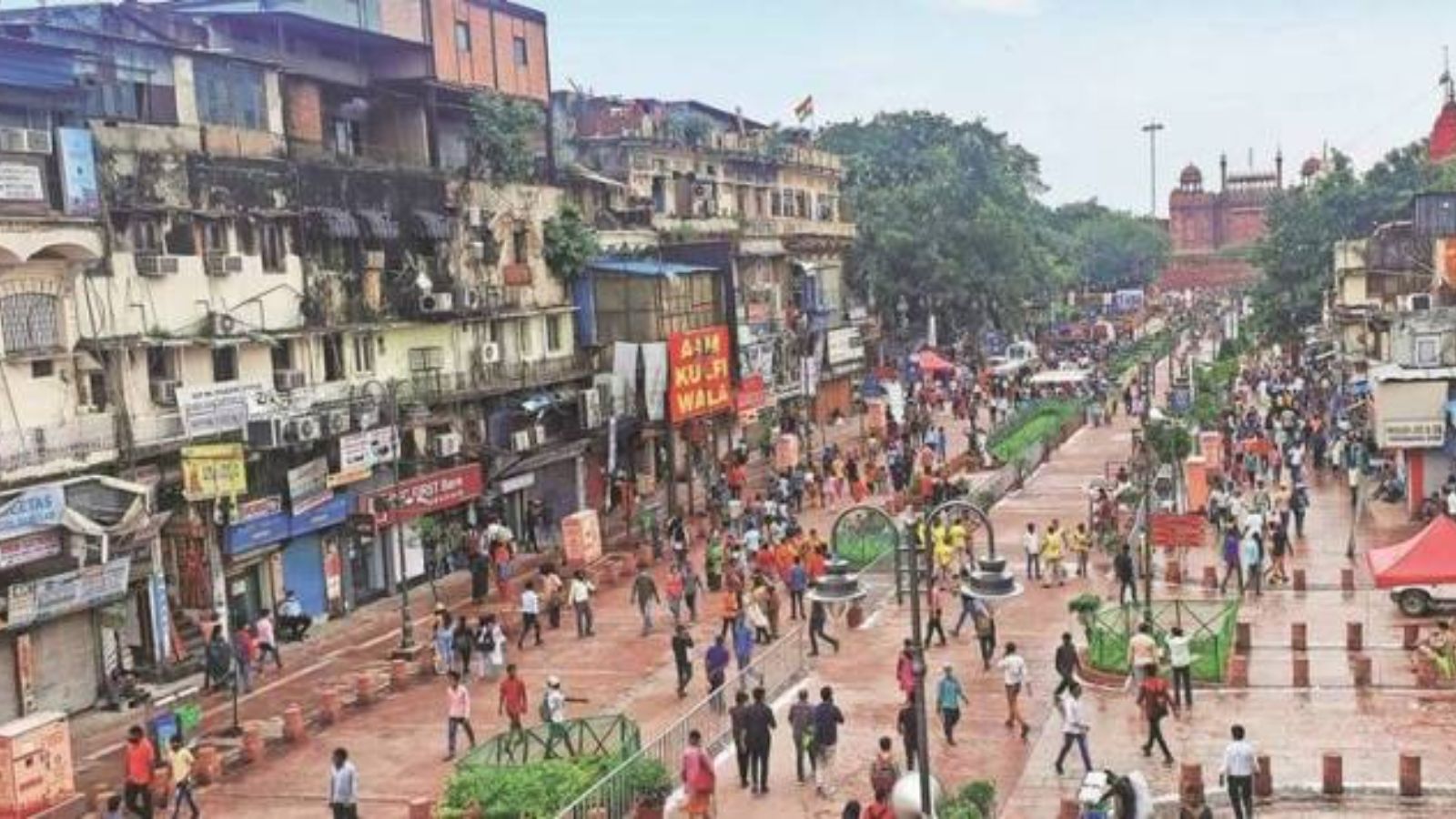
In a major move to restore the heritage glory of Old Delhi, the Delhi government plans to divide the 1.3-km Chandni Chowk stretch into five distinct zones for better maintenance. The ₹34 crore project aims to tackle sanitation issues and improve infrastructure.
- The 1.3-km stretch from Lal Jain Mandir to Fatehpuri Mosque will be split into 5 zones.
- A budget of ₹34 crore has been estimated for complete upkeep and maintenance.
- PWD is inviting tenders for a three-year contract with a private firm.
- Mechanized cleaning and 24/7 security deployment are key components.
The historic heart of Old Delhi, Chandni Chowk, is set for a comprehensive makeover. The Delhi government has announced a strategic plan to divide the 1.3-km-long road stretch, spanning from Lal Jain Mandir to the Fatehpuri Mosque, into five separate operational zones. This move is designed to ensure specialized maintenance, cleanliness, and the long-term preservation of this iconic heritage market.
While the area underwent significant redevelopment in 2021, its aesthetic appeal began to decline shortly after due to departmental overlaps and administrative friction. Officials noted that a previous maintenance contract lapsed due to an internal tussle between the Municipal Corporation of Delhi (MCD) and the Public Works Department (PWD), leading to issues like poor sanitation, garbage accumulation, and damaged footpaths.
The Five Strategic Zones
To ensure granular control and accountability, the stretch will be partitioned as follows:
- Zone 1: From Lal Jain Mandir to Esplanade Road T-Point, including Red Fort Crossing and Dewan Hall Road.
- Zone 2: From Esplanade Road T-Point to Sis Ganj Sahib Gurudwara, covering Dariba Kalan.
- Zone 3: From Fountain Chowk to Town Hall Crossing, including Paranthe Wali Gali.
- Zone 4: From Town Hall to Ballimaran, covering Nai Sadak and Shanti Desai Marg.
- Zone 5: From Ballimaran to Fatehpuri Mosque, including Khari Baoli Road.
Why This Matters
BozokMedia analysis shows that the fragmentation of responsibility among multiple urban bodies has historically hindered the upkeep of Delhi's heritage sites. By dividing the stretch into manageable zones under a single private contractor, the government is attempting to eliminate the 'accountability gap' that led to the recent deterioration of the area.
Dividing the maintenance responsibilities into specific zones will create a direct line of accountability and ensure higher standards of urban hygiene.
The project, estimated at ₹34 crore, involves the cleaning of approximately 55,000 sqm of roads, footpaths, and vendor zones. The plan includes the deployment of advanced mechanized sweeping machines, jet machines, and ride-on scrubbers. Furthermore, security guards will be stationed at key locations in eight-hour shifts to monitor the area and assist the public.
Frequently Asked Questions
1. What is the scope of the maintenance work?
The work includes sanitation, horticulture, drainage management, repair of street furniture, and maintenance of public toilets.
2. How long will the new contract last?
The PWD intends to appoint a private company for a period of three years.
| Aspect | Previous Status | Proposed Plan |
|---|---|---|
| Management Model | Multi-departmental/Fragmented | 5 Dedicated Zones |
| Cleaning Method | Manual/Inconsistent | Mechanized (Jet/Scrubbers) |
| Accountability | Low (due to MCD-PWD dispute) | High (Single Private Contractor) |