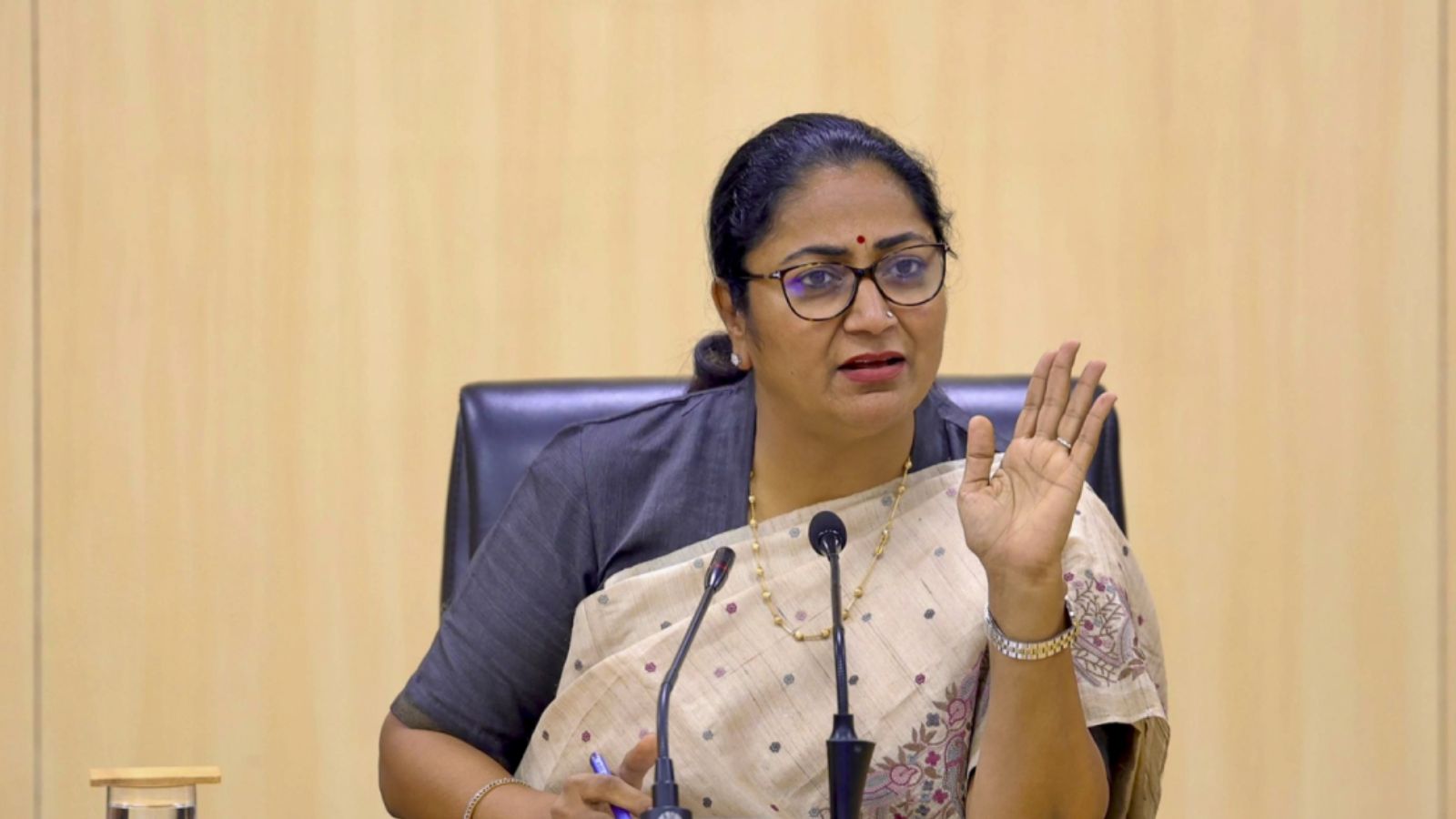
Following a spike in swine flu cases in Delhi, Chief Minister Rekha Gupta convened an emergency review meeting. Health officials have assured the public that medical resources are sufficient and the situation is under control.
- Delhi has recorded 2,308 H1N1 (swine flu) cases so far this year.
- Health Minister Pankaj Kumar Singh assured sufficient hospital beds and medicines are available.
- ICMR advises that routine testing and flu shots are not necessary for the general public.
- Schools have been directed to implement strict hygiene protocols.
In response to a significant spike in swine flu (H1N1) cases across the capital, Delhi Chief Minister Rekha Gupta called an emergency review meeting on Tuesday. The high-level meeting included Health Minister Pankaj Kumar Singh and senior officials from the Health Department to coordinate a response to the rising influenza and dengue cases.
Addressing the media after the session, Health Minister Singh emphasized that there is no cause for alarm. "I would like to convey through all your channels that there is absolutely no need for panic anywhere. Everything is under control. Our hospitals have sufficient beds, doctors, and medicines available," he stated. He noted that while 2,308 H1N1 cases have been reported, patients are recovering well and being discharged routinely.
Why This Matters
BozokMedia analysis shows that the simultaneous rise of H1N1 and dengue in a densely populated urban center like Delhi creates a complex challenge for public health infrastructure. While the current mortality rate remains low, the speed of transmission requires proactive administrative and educational intervention to prevent hospital overcrowding.
"The disease is self-limiting; there is no need for widespread testing unless severe symptoms require hospitalization." - Dr. Rajiv Bahl, Director General, ICMR
Dr. Rajiv Bahl, Director General of the Indian Council of Medical Research (ICMR), reiterated that the mortality rate from the current viral infection remains low. He clarified that the flu shot should be reserved for high-risk groups, such as those over 65 or individuals with compromised immune systems, following medical consultation.
Infection Statistics Overview
| Infection Type | Reported Cases | Current Status |
|---|---|---|
| H1N1 (Swine Flu) | 2,308 | Stable |
| Other Influenza Variants | ~600-650 | Recovering |
| Dengue | ~2,200 | Under Monitoring |
The Directorate of Education has also taken proactive measures by issuing a circular to all government and private schools. The directive urges a "Healthy School – Healthy Community" approach, emphasizing respiratory hygiene, hand washing, and avoiding self-medication. Districts have been tasked with monitoring compliance by August 31.
Frequently Asked Questions
1. Is the flu shot mandatory for everyone in Delhi?
No, ICMR suggests it is primarily recommended for high-risk individuals like the elderly or those with underlying health conditions.
2. Are there any deaths reported due to H1N1 in Delhi?
As of the latest reports, there have been no deaths reported, and no patients are currently in critical condition or on ventilators.