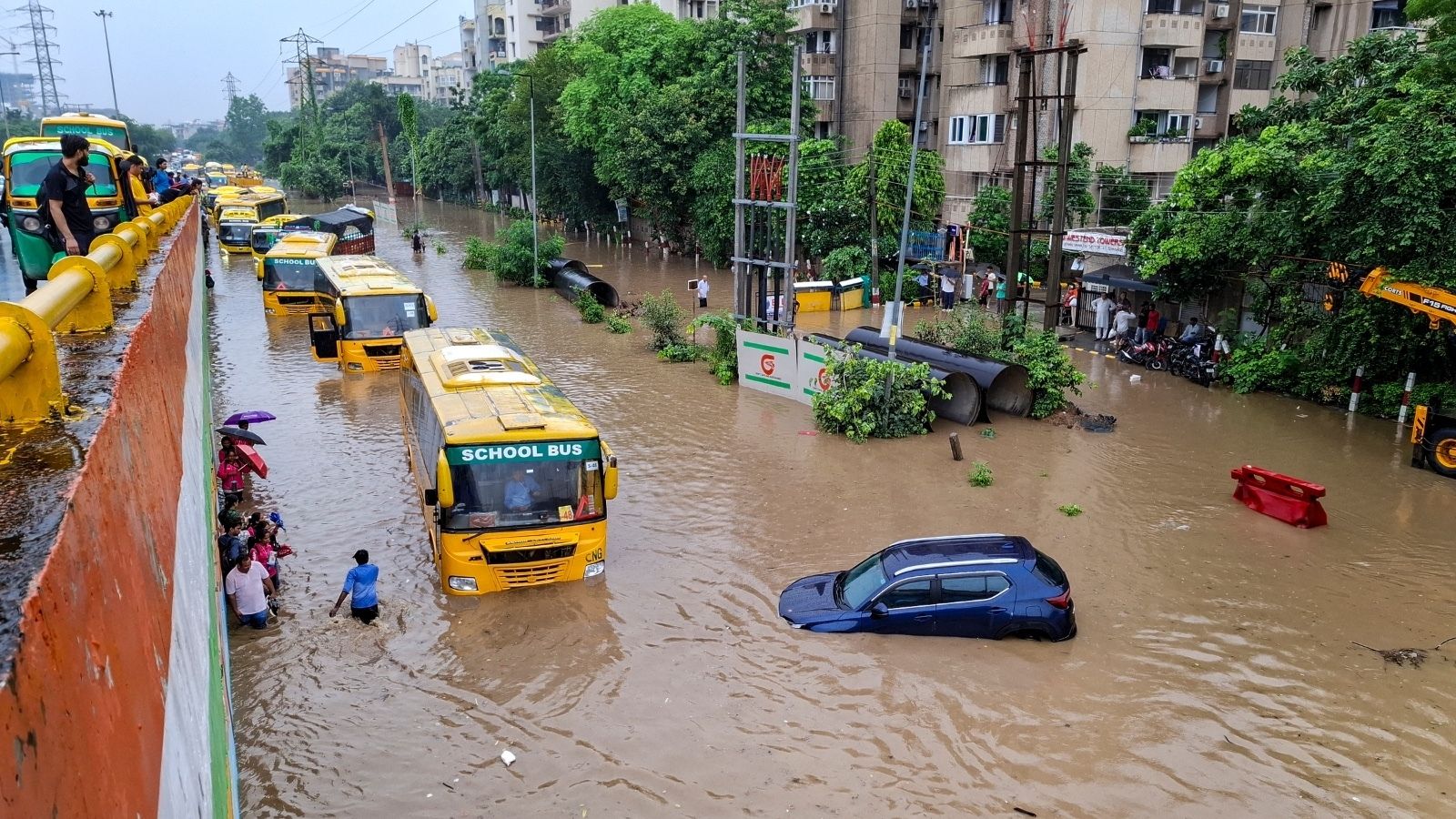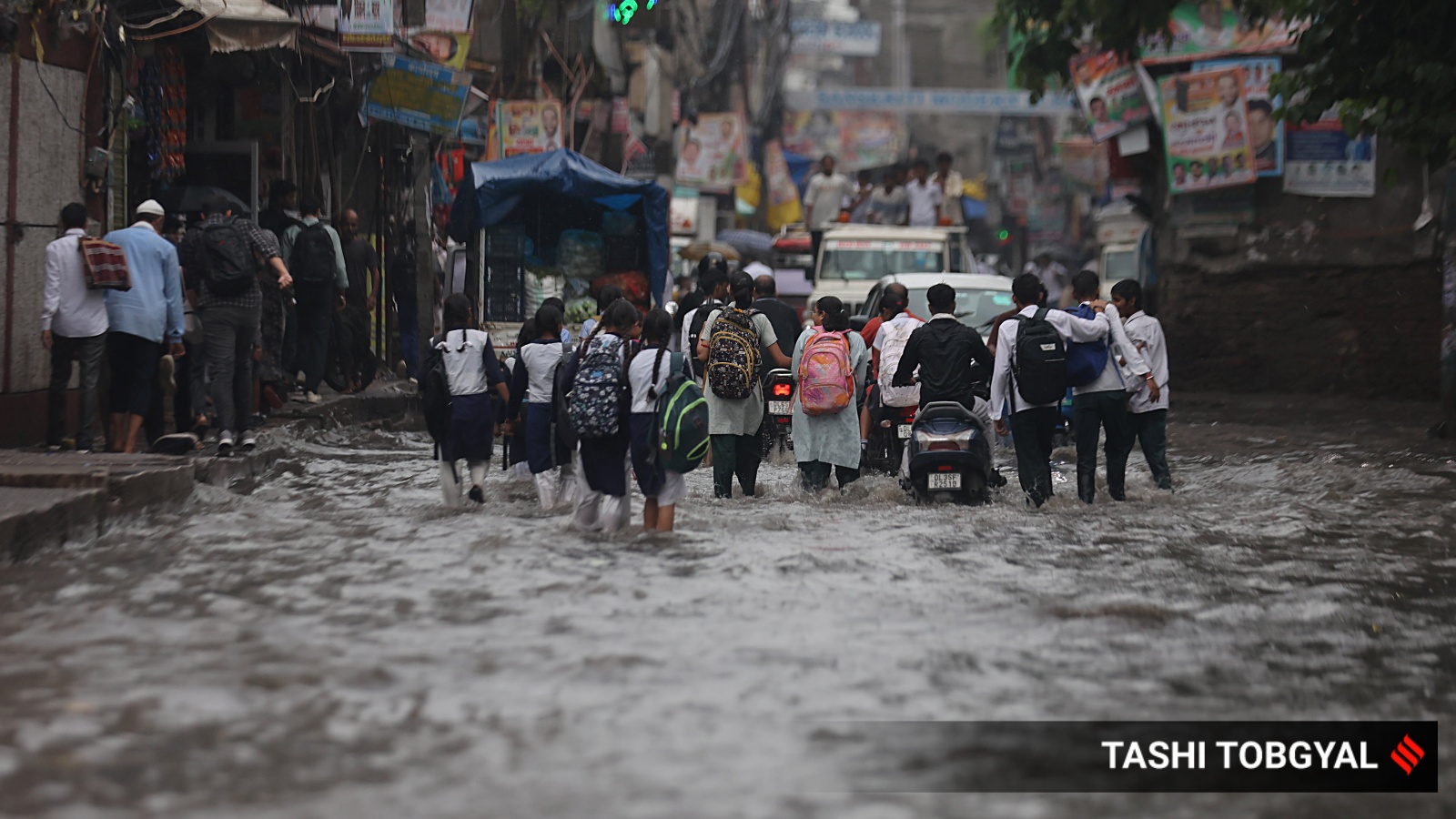
Torrential rains across Delhi-NCR have caused widespread chaos, with waist-deep waterlogging in Sangam Vihar and Sadar Bazar, forcing school closures and disrupting commercial activity.
- Janakpuri and Ayanagar recorded the highest rainfall at 70mm and 66mm respectively.
- MCD primary schools in Deoli were forced to cancel classes due to submerged grounds.
- Sadar Bazar's wholesale hub saw severe flooding, impacting commercial logistics.
- Infrastructure failures led to road cave-ins in Deoli Pahadi Road.
The national capital witnessed a recurring nightmare on Monday as heavy rainfall triggered severe waterlogging across Delhi-NCR. In Southeast Delhi’s Sangam Vihar, the morning began with harrowing scenes of schoolgirls wading through waist-deep murky water to reach their destinations. At the MCD primary school in Deoli, which serves nearly 800 students, the school grounds were completely submerged, leading to the abrupt cancellation of classes despite staff reporting for duty.
According to the India Meteorological Department (IMD), the Safdarjung base station recorded 34.6 mm of rain, while Janakpuri and Ayanagar saw significantly higher precipitation at 70 mm and 66 mm, respectively. The downpour didn't just flood streets; it exposed the fragility of the city's infrastructure, with a section of the road caving in at Deoli Pahadi Road, necessitating emergency repairs by the Delhi Jal Board (DJB).
Why This Matters
BozokMedia analysis shows that the systemic failure in Delhi's drainage is a cocktail of bureaucratic delays and unplanned urbanization. The DJB's admissions to the National Green Tribunal (NGT) reveal that sewer laying in Sangam Vihar is delayed due to forest-land restrictions and encroachments, with deadlines pushed to 2027. This gap between urban growth and infrastructure maintenance ensures that the city remains vulnerable to every heavy spell of rain.
"The failure to integrate internal feeder connectivity with peripheral trunk sewers is the primary reason why localized flooding persists in Delhi's periphery."
The commercial heart of Central Delhi, Sadar Bazar, faced a similar ordeal. Porters were seen hauling heavy goods through waist-deep water along the Qutub Road–Teliwara Akhara stretch. The area's reliance on an aging combined drainage system, further compromised by ongoing tunnel work, has made it a perennial hotspot for flooding.
While the Public Works Department (PWD) claims a reduction in critical waterlogging spots from 194 to 65 through pre-monsoon measures, the lived experience of residents suggests otherwise. Long-term residents report a decades-long history of neglect, with some communities even pooling private funds to install drainage pipes when government appeals failed.
| Location | Rainfall (mm) | Primary Impact |
|---|---|---|
| Janakpuri | 70 | Severe Inundation |
| Ayanagar | 66 | Traffic Gridlock |
| Safdarjung | 34.6 | Moderate Flooding |
Frequently Asked Questions
1. Why does Sangam Vihar flood repeatedly?
The flooding is caused by delayed sewer laying due to forest-land restrictions, local encroachments, and a lack of internal feeder connectivity to the main trunk sewers.
2. Which areas of Delhi recorded the most rain?
Janakpuri (70 mm) and Ayanagar (66 mm) recorded the highest rainfall during this spell.