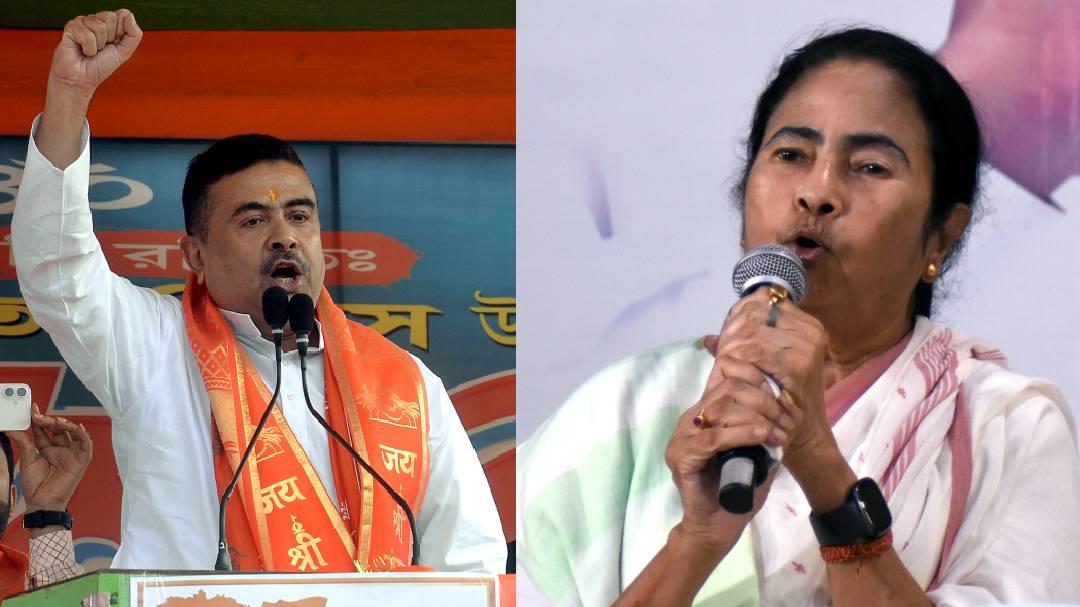
TMC chief Mamata Banerjee has sparked a political storm by alleging that Suvendu Adhikari threatened to place her under house arrest. The conflict stems from protests regarding delayed payments under the Annapurna Yojana for women in West Bengal.
- Mamata Banerjee alleges Suvendu Adhikari threatened her with house arrest and political persecution.
- The conflict is rooted in the delayed disbursement of ₹3,000 monthly aid under the Annapurna Yojana.
- TMC chief questions if this behavior aligns with the constitutional vision of India.
The political atmosphere in West Bengal has reached a boiling point as Mamata Banerjee, the Chairperson of the Trinamool Congress (TMC), launched a scathing attack on Suvendu Adhikari. The dispute centers on the Annapurna Yojana, a welfare scheme intended to provide ₹3,000 in monthly financial assistance to eligible women. Banerjee claims that Adhikari threatened to restrict her movements and place her under house arrest should she lead street protests against the delayed payments.
Taking to X (formerly Twitter), Mamata Banerjee addressed the President of India and the Chief Justice, questioning whether the current state of political discourse reflects the democratic values enshrined in the Constitution. She expressed deep concern over the implication that a political leader could be barred from leaving their residence, labeling it as a "dangerous authoritarian moment" for the nation.
Why This Matters
BozokMedia analysis shows that this clash is not merely about a welfare scheme, but a broader struggle for narrative dominance in West Bengal. By framing the issue as a constitutional crisis, Banerjee is attempting to position herself as a defender of democracy against perceived BJP authoritarianism, while the delay in welfare payments provides a tangible grievance for the electorate.
The TMC leader argued that Adhikari's threats represent a pattern where dissent is punished and constitutional rights are treated as privileges granted by those in power. She asserted that while power may intimidate for a short period, the "arrogance" of the opposition would eventually be answered by the people.
The weaponization of administrative machinery to stifle political opposition signals a worrying shift in regional democratic norms.
Historically, West Bengal has been a bastion of intense political rivalry, often characterized by street battles and high-stakes rhetoric. However, the explicit mention of "house arrest" marks a significant escalation in the verbal warfare between the TMC and the BJP, reflecting the deep polarization of the state's political landscape.
Frequently Asked Questions
Q1: What is the primary cause of the dispute?
The dispute is caused by the delay in providing ₹3,000 monthly financial aid to eligible women under the Annapurna Yojana.
Q2: Who did Mamata Banerjee appeal to regarding the threats?
She brought the matter to the attention of the President of India, the Chief Justice, and the general public via social media.