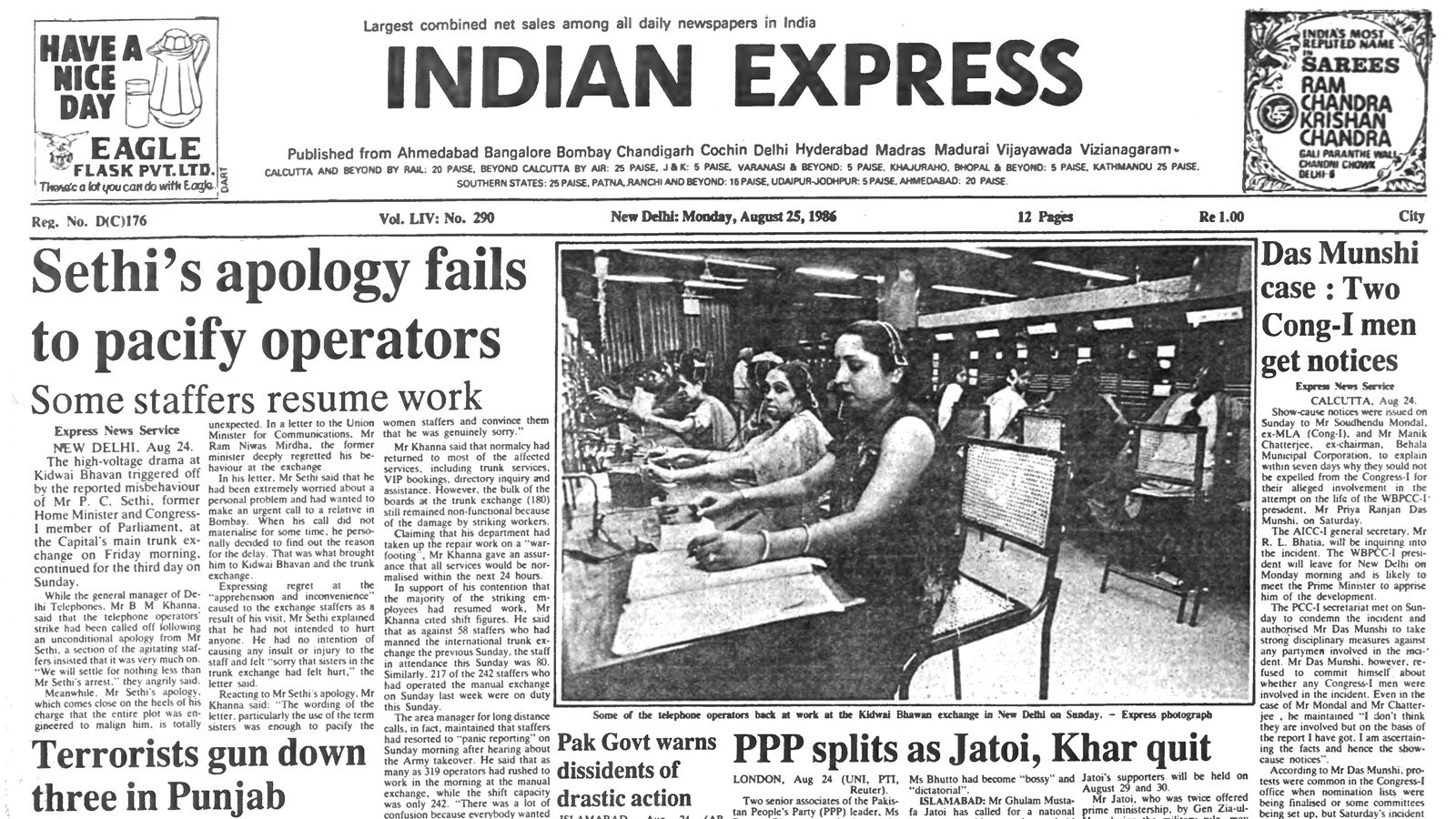
On August 25, 1986, Pakistan’s military‑run government warned opposition forces of severe retaliation, while the democratic coalition vowed to continue its push for early elections. Simultaneously, senior PPP members split to form a rival party, and India faced a fine for boycotting the Commonwealth Games.
- Pakistani government warned opposition of ‘drastic action’ if they continued anti‑Zia protests.
- Democracy Restoration Movement pledged to keep up its campaign.
- India fined for boycotting the 13th Commonwealth Games.
Background and Key Developments
On 25 August 1986, The Indian Express reported a rising political tension in Pakistan. President Zia‑ul‑Haq announced that unless opposition groups dropped their drive to oust him and demand early elections, the state would take “drastic action.”
The leaders of the Movement for the Restoration of Democracy (MRD) responded by stating they would not abandon the struggle, promising continued street protests and public mobilization. Security officials noted that the country remained largely quiet, with no major clashes reported, but a high level of alert persisted.
Split Within the Pakistan People’s Party
Two senior associates of PPP chief Benazir Bhutto—former Sindh chief minister Ghulam Mustafa Jatoi and former Punjab chief minister and governor Ghulam Mustafa Khar—broke ranks, accusing Bhutto of being an “autocrat out of touch with the people.” They announced plans to launch a new opposition party at a convention in Lahore, signalling a deepening rift within the party.
Violent Incident in Punjab
In the Faridkot district of Punjab, suspected terrorists opened fire on a car near the village of Budhsinghwala, killing three passengers with Sten guns. Police and the CRPF rushed to the scene and launched a comprehensive combing operation. This attack highlighted the volatile security environment of the period.
India’s Commonwealth Games Boycott Fine
India was ordered to pay £245,000 (approximately ₹4.4 million) for boycotting the 13th Commonwealth Games in Edinburgh, a protest against the British government’s refusal to impose broad economic sanctions on South Africa. The total fine for the 32 boycotting nations amounted to £2.7 million, underscoring the financial repercussions of political protest in sport.
Why This Matters
BozokMedia analysis shows that the 1986 showdown not only shaped Pakistan’s democratic trajectory but also impacted regional security dynamics, economic policies, and the handling of international sports boycotts. Understanding these events provides crucial context for today’s India‑Pakistan relations and broader South Asian geopolitics.
"The 1986 crisis is a mirror of Pakistan’s ongoing democratic challenges," says political scientist Dr. Ahmad Khan.
Frequently Asked Questions
Q1: Did the 1986 warning accelerate Zia’s eventual downfall?
A: Yes, mounting public opposition and international pressure contributed to the political environment that led to Zia’s sudden death in 1988 and a brief return to civilian rule.
Q2: What impact did the fine have on India’s sports policy?
A: The penalty prompted India to reassess its approach to political boycotts in international sport, encouraging more diplomatic engagement in future disputes.