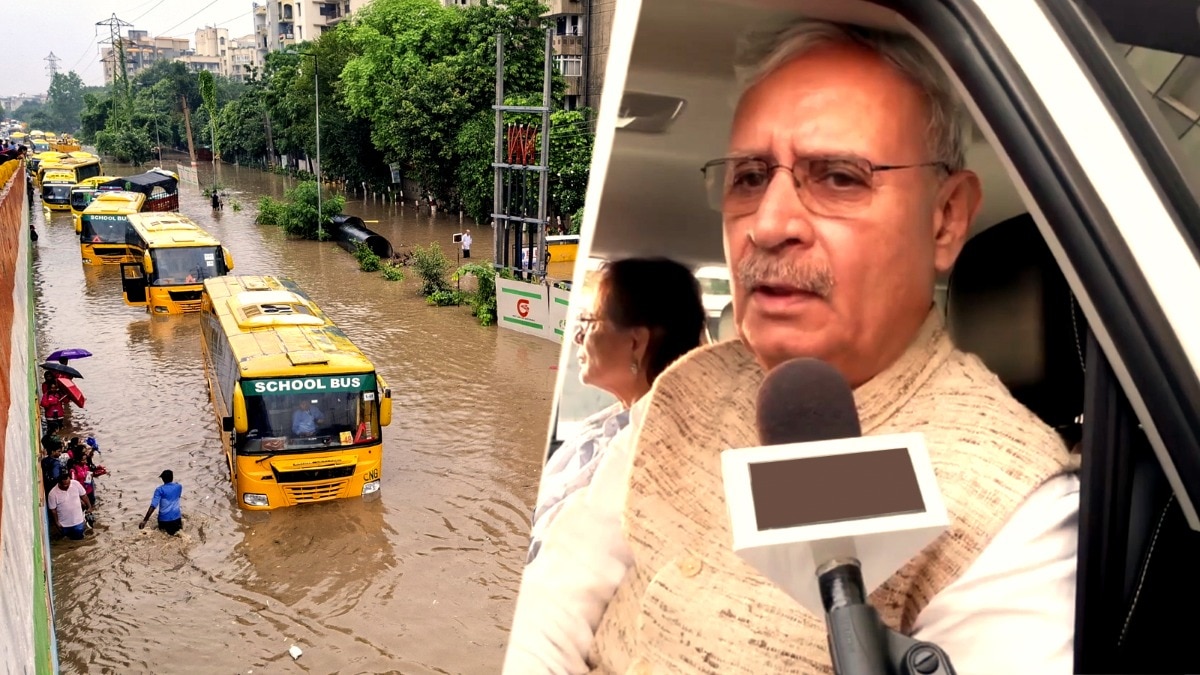
BJP MP Rao Inderjit Singh has labeled current anti-waterlogging measures as mere 'band-aid solutions,' pointing to Congress-era construction over natural drains as the root cause.
- MP Rao Inderjit Singh criticizes current measures as temporary 'band-aid solutions.'
- Blames construction over traditional drainage channels during the Congress era.
- Proposes underground tunnels, similar to Metro infrastructure, as a permanent fix.
- Government is actively working on securing funds for long-term drainage solutions.
The recurring nightmare of waterlogging in Gurugram has sparked a fresh political debate. BJP MP Rao Inderjit Singh has asserted that the current efforts to combat the city's chronic flooding are nothing more than 'band-aid solutions' that offer temporary relief without addressing the fundamental structural issues.
During a recent interaction, Singh highlighted that the city's drainage crisis is a direct consequence of unplanned urban expansion. He specifically pointed towards the Congress era, alleging that significant construction took place over ancient drainage channels. These natural arteries once facilitated the seamless flow of rainwater from the Aravalli hills down to the Yamuna River.
Why This Matters
BozokMedia analysis shows that as Gurugram evolves into a global corporate hub, its reliance on aging or obstructed drainage systems poses a massive risk to its economic stability. The disconnect between rapid real estate growth and hydrological planning has created a systemic vulnerability that seasonal rains expose every year.
"If we block the water in one place, it inevitably finds a way out elsewhere; we need structural shifts, not superficial fixes."
To tackle this, the MP has proposed a massive engineering project: the construction of underground tunnels. Drawing a parallel to the Delhi Metro infrastructure, Singh suggested that these tunnels should follow the paths of the original natural drains to channel excess water out of the city efficiently.
Historical Background
Historically, the geography of the Millennium City allowed for natural runoff through a network of seasonal streams and drains. However, decades of rapid urbanization led to the filling of these watercourses to make room for residential and commercial complexes, effectively trapping rainwater within the urban sprawl.
Frequently Asked Questions
Question 1: What is the proposed long-term solution for Gurugram?
Answer: The MP has proposed building large-scale underground tunnels along old drainage routes to restore natural water flow.
Question 2: Why is the MP blaming the previous administration?
Answer: He claims that construction over natural water channels during the Congress regime disrupted the city's original drainage system.