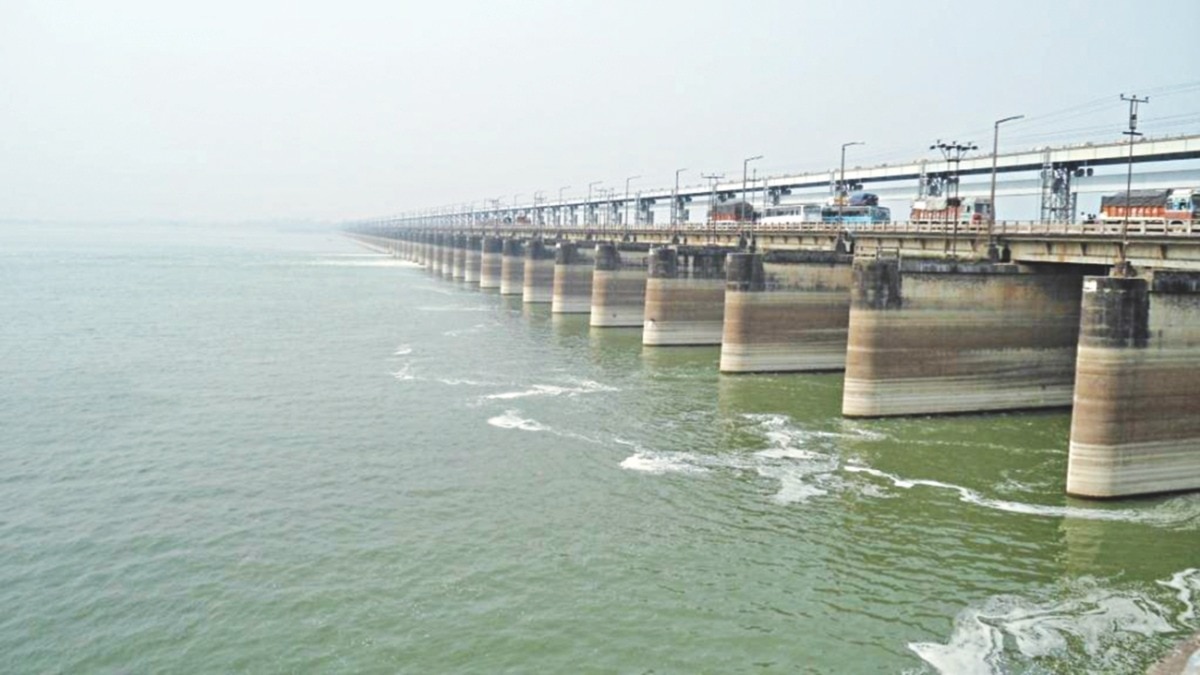
The Farakka Barrage has become a flashpoint of competing interests. While Bihar struggles with floods, West Bengal seeks to protect its port, and Bangladesh demands guaranteed water during dry seasons.
- The Farakka Water Treaty is set to expire in December 2026.
- The barrage was constructed primarily to flush silt from the Hooghly River to save the Kolkata Port.
- Bihar faces increased flood risks, while Bangladesh faces water scarcity during summer.
- Climate change is complicating the future of water sharing in the region.
The Farakka Barrage, located in the Murshidabad district of West Bengal on the Ganges River, is more than just a massive 2.25 km long structure with 109 gates. It is the epicenter of a complex geopolitical and regional struggle involving the competing needs of Bihar, West Bengal, and Bangladesh.
Historical Context and the Engineering Mandate
Before the construction of the barrage in 1975, the ecology of the Ganges was vastly different. Historical records from the Central Inland Fisheries Research Institute note that Hilsa fish once migrated from the Bay of Bengal all the way up the Ganges. The construction of the barrage changed this natural flow forever. The primary motivation was to address the heavy siltation in the Hooghly River, which threatened the navigability of the Kolkata Port. By diverting water through a feeder canal, engineers aimed to flush out the silt and keep the shipping lanes open.
A Three-Way Conflict of Interest
BozokMedia analysis shows that the dispute is not merely bilateral between India and Bangladesh, but also involves intense internal pressures within India.
- The Bihar Crisis: Leaders and residents in Bihar argue that the diversion of water and the presence of the barrage have altered the river's natural course, contributing to devastating floods and sedimentation issues in the state.
- West Bengal's Necessity: For West Bengal, the survival of the Kolkata and Haldia ports is vital for the economy. Maintaining the flow of the Hooghly is a non-negotiable requirement.
- Bangladesh's Survival: For Bangladesh, the Ganges (known as the Padma) is a lifeline. During the dry season (January to May), water scarcity severely impacts their agriculture, fisheries, and drinking water supply.
The Farakka Treaty is not just a document of water division; it is a sensitive focal point of South Asian hydro-politics.
The 1996 Treaty and the 2026 Deadline
In 1996, a breakthrough was achieved with the 'Ganga Water Sharing Treaty' signed by the Prime Ministers of India and Bangladesh. This 30-year agreement regulates water sharing during the lean season. However, as the treaty approaches its expiration in December 2026, tensions are rising.
| Water Availability (cusecs) | India's Share | Bangladesh's Share |
|---|---|---|
| 70,000 or less | 50% | 50% |
| 70,000 - 75,000 | Remaining (~65,000) | 35,000 |
| Above 75,000 | 40,000 | Remaining (~35,000+) |
Evolving Challenges: Climate Change and Politics
The landscape of this dispute is shifting. Bangladesh has recently expressed dissatisfaction, citing that the 1996 agreement did not account for modern realities like climate change, erratic rainfall, and a significantly larger population. The demand for a new treaty that guarantees water security amidst environmental uncertainty is becoming a central diplomatic issue.
Frequently Asked Questions
1. Why was the Farakka Barrage built?
It was built to divert water into the Hooghly River to prevent siltation and maintain the navigability of the Kolkata Port.
2. When does the current water treaty expire?
The current India-Bangladesh Ganga water sharing treaty expires in December 2026.