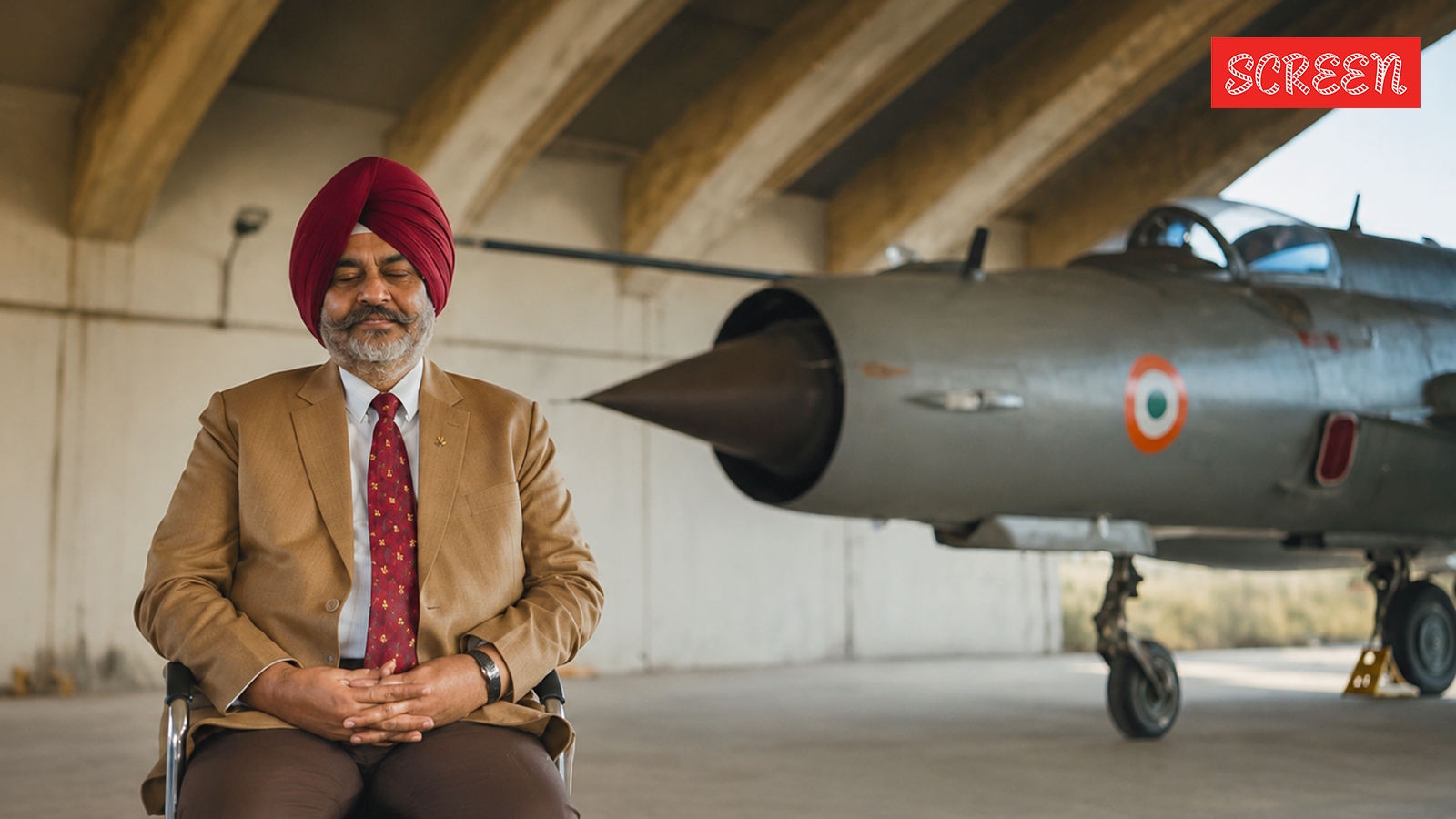
In the Netflix documentary 'The Last Salute,' former Air Chief Marshal BS Dhanoa recounts the harrowing and high-stakes MiG-21 sorties conducted during the 1999 Kargil War's Operation Safed Sagar.
- Former Air Chief BS Dhanoa shared experiences of flying MiG-21s at altitudes of 15,000 feet.
- Pilots used improvised 'jugaad' to ensure weapon accuracy in thin mountain air.
- A pilot famously mistook glowing artillery shells for 'cigarette butts' during a night strike.
- The MiG-21 served multi-role functions including strike, reconnaissance, and air defense.
The Netflix documentary 'The Last Salute' offers a profound look into the 62-year legacy of the MiG-21 within the Indian Air Force (IAF). Through the eyes of veterans, the film revisits the intense combat operations of Operation Safed Sagar during the 1999 Kargil War.
Former Air Chief Marshal BS Dhanoa, who commanded the 'Golden Arrows' squadron during the conflict, shed light on the extreme technical difficulties faced by pilots. Flying at altitudes between 14,000 and 15,000 feet presented unique challenges, as the thin atmosphere altered the behavior of both the aircraft and its ordnance. To maintain precision during bombing runs, ground crews and pilots had to rely on tactical improvisation or 'jugaad.'
Why This Matters
BozokMedia analysis shows that the success of Operation Safed Sagar was not just a matter of hardware, but of human ingenuity. The ability of the IAF to adapt aging technology like the MiG-21 to high-altitude warfare was a decisive factor in the conflict's outcome.
In the cockpit, it is all quiet; you don’t actually know about the death and devastation going on below until you are in the battle.
One of the most striking anecdotes shared by Dhanoa involves a night sortie. While navigating a valley, a fellow pilot remarked that the enemy seemed to be 'trading cigarette butts.' Dhanoa corrected him, explaining that those glowing red objects were actually artillery shells, heated to a brilliant glow as they were fired from their barrels.
Wing Commander Jaideep Singh highlighted the versatility of the MiG-21 during the war. Far from being limited to a single mission type, the aircraft was deployed for photo-reconnaissance, precision strikes, and air defense. This multi-role capability put immense pressure on the Pakistani forces, whose lack of ammunition and rations was even captured via intercepted radio chatter.
Historical Background
The Kargil War was a localized conflict fought in the high-altitude mountainous regions of Jammu and Kashmir. Operation Safed Sagar marked the IAF's entry into the combat zone, utilizing air power to strike enemy positions entrenched in heights that were previously considered inaccessible to conventional aircraft.
Frequently Asked Questions
1. What was the significance of the MiG-21 in the Kargil War?
The MiG-21 provided essential air support, reconnaissance, and strike capabilities in extremely difficult high-altitude terrain.
2. Where can I watch 'The Last Salute'?
The documentary is currently streaming on Netflix.