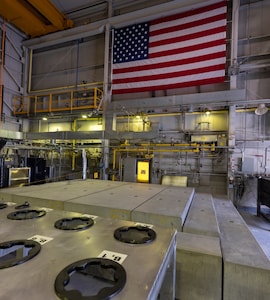
The US Army has committed $2.2 billion to deploy Small Modular Reactors (SMRs) across five military installations to ensure energy resilience and reduce fossil fuel dependency during conflicts.
- US Army awarded $2.2 billion to vendors for Small Modular Reactor (SMR) development.
- Five military bases have been identified for initial deployment.
- The project aims for the first operational reactor by September 2028.
- The initiative seeks to mitigate risks to the domestic electric grid and fossil fuel supply chains.
In a decisive move to bolster national security and energy independence, the US Army announced on Wednesday that it has awarded a combined $2.2 billion to various vendors. This funding is earmarked for the construction and operation of small nuclear reactors at five strategic military bases across the United States.
The timeline for this ambitious project is aggressive, with the Army aiming to have the first reactor operational by September 2028. This target follows a May 2025 executive order by President Donald Trump, designed to fast-track the development of next-generation civil and military nuclear power.
Mitigating Strategic Vulnerabilities
The push for nuclear autonomy stems from significant concerns regarding energy security. Jeff Waksman, a senior Army official overseeing facilities and energy, emphasized the vulnerability of current systems during a press conference. "We now know that our domestic electric grid is potentially at risk," Waksman stated, noting that in a conflict scenario, the logistics of moving fossil fuels like diesel to remote or contested locations could become a critical failure point.
Transitioning to nuclear power is a strategic necessity to decouple military operations from volatile global fossil fuel markets.
The Rise of Small Modular Reactors (SMRs)
The government is focusing on Small Modular Reactors (SMRs), which offer a more flexible and scalable alternative to traditional large-scale nuclear plants. The selection process has identified five key companies to lead this technological frontier, including industry giants Westinghouse and General Atomics, as well as innovative startups like Antares Nuclear and Radiant Industries.
Why This Matters
BozokMedia analysis shows that this transition represents a fundamental shift in military logistics. By integrating SMRs, the US military is effectively building its own decentralized power grid, making it significantly harder for adversaries to disrupt operations through traditional energy warfare or supply chain sabotage.
While the technology is promising, the regulatory landscape remains complex. Currently, only NuScale holds approval from the US Nuclear Regulatory Commission (NRC). However, the military is leveraging its own internal certification processes—a capability that dates back to the launch of the USS Nautilus in 1954—to expedite deployment while working to align with NRC standards.
Frequently Asked Questions
1. What are the advantages of SMRs over traditional reactors?
SMRs are smaller, easier to deploy in diverse locations, and can be scaled according to specific energy needs.
2. Why is the Army moving away from diesel?
Diesel is difficult to transport during wartime and creates a logistical vulnerability that nuclear energy can eliminate.