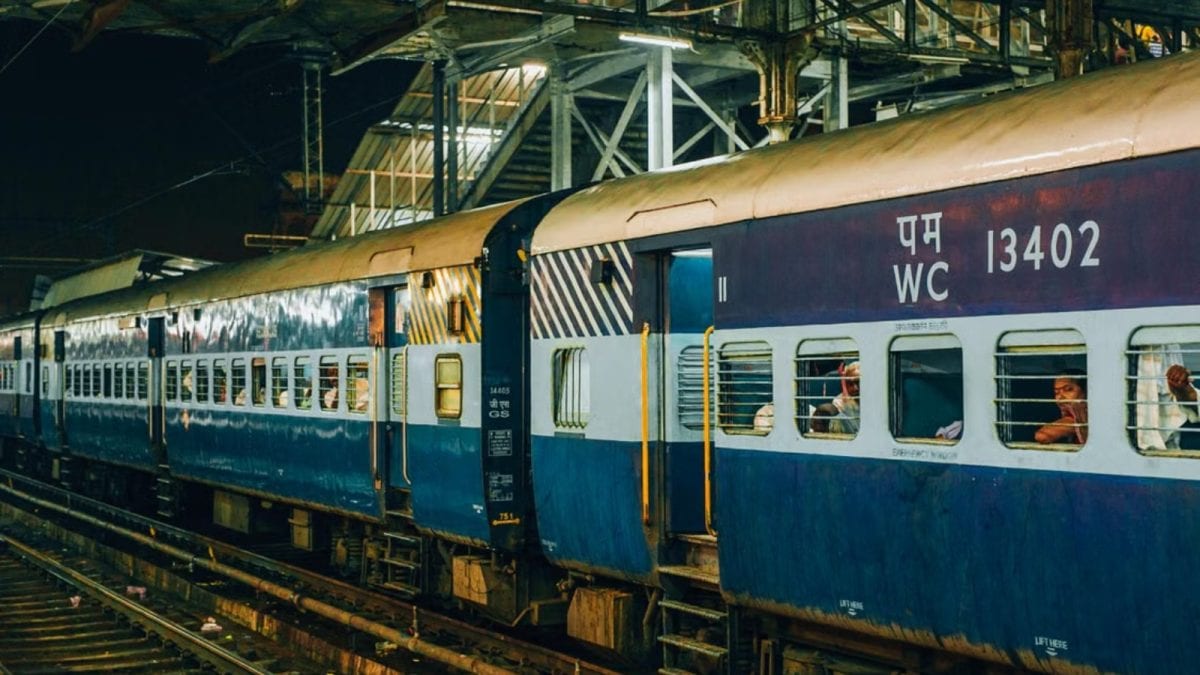
Ever wondered why every Indian train has a unique 5-digit number? Discover how these digits categorize trains, from express to local services.
- Indian Railways transitioned from 4-digit to 5-digit numbering on December 20, 2010.
- The first digit of a train number identifies its category (Special, Express, Local, etc.).
- The system was implemented to accommodate the growing number of trains and complex networks.
When traveling by train in India, you frequently encounter a 5-digit number on your ticket, station display boards, or the locomotive itself. Numbers like 12627 or 12001 are common sights. However, most passengers remain unaware that these digits are not random; they are part of a highly sophisticated identification system designed by Indian Railways.
Historically, the Indian Railways used a 4-digit numbering system that had been in place since 1989. As the nation's rail network expanded with more long-distance expresses, suburban services, and special holiday trains, the 4-digit system became insufficient. To manage this massive growth and integrate seamlessly with computerized reservation and tracking systems, the 5-digit numbering system was introduced on December 20, 2010.
Why This Matters
BozokMedia analysis shows that understanding this numbering logic provides passengers with instant insight into the type of service they are using. It is a vital tool for operational efficiency, allowing the railway to categorize thousands of services across diverse geographical zones without overlap or confusion.
The 5-digit numbering logic is a mathematical blueprint that enables the management of one of the world's largest railway networks.
Breaking Down the First Digit:
- 0: Special Trains (e.g., seasonal or festival specials).
- 1 & 2: Long-distance Express, Mail, and Superfast trains.
- 3 & 4: Suburban/Local services in major metros like Kolkata and Chennai.
- 5: Ordinary Passenger trains connecting medium-distance stations.
- 6: MEMU (Mainline Electric Multiple Unit) services.
- 7: DMU/DEMU and Rail-car services for non-electrified routes.
- 9: Suburban Local services specifically for the Mumbai region.
Beyond the first digit, the subsequent numbers help identify the specific Railway Zone and division. For instance, different digit series are mapped to zones like Konkan Railway, Central Railway, or Northern Railway. This granular level of coding ensures that every single service, from a local commuter train to a premium superfast express, is uniquely identifiable in the national database.
Frequently Asked Questions
1. Why did the Railways change from 4 to 5 digits?
The change was necessary to accommodate the massive increase in the number of trains, including special, suburban, and MEMU services.
2. Can I identify the zone of a train using its number?
Yes, the subsequent digits in the 5-digit sequence are coded to represent specific railway zones and divisions.