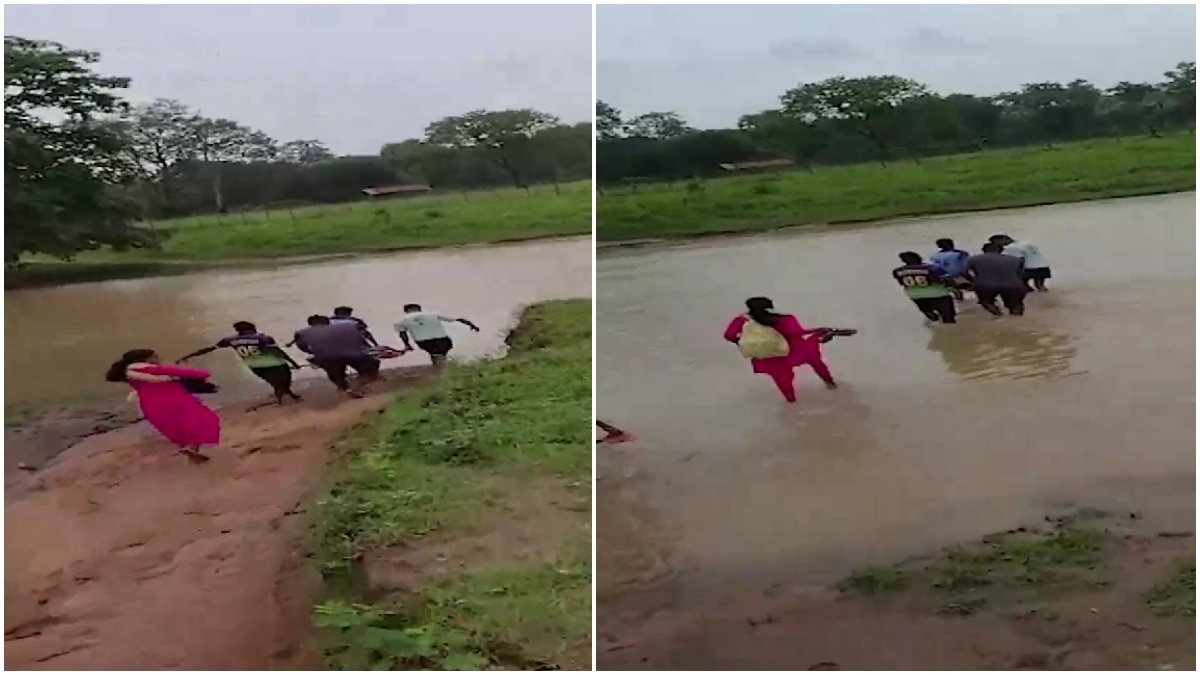
A harrowing scene has emerged from rural Maharashtra where a pregnant woman had to be carried across a turbulent, flooded stream on a wooden cot because no bridge was available.
- Lack of bridge infrastructure forced a pregnant woman to cross a flooded stream on a cot.
- Local villagers risked their lives to ensure her safety during the transit.
- The incident highlights the critical gap in rural healthcare access and connectivity.
A heart-wrenching incident has been reported from rural Maharashtra, highlighting the dire state of infrastructure in the region. A pregnant woman was forced to cross a raging, flooded stream on a makeshift wooden cot as there was no bridge in sight to facilitate safe passage. The incident underscores the extreme vulnerability of rural populations during the monsoon season.
The sheer force of the water made the crossing incredibly perilous. Local villagers, demonstrating immense bravery and community spirit, stepped in to carry the cot through the rising waters. While the woman was successfully transported, the incident has sparked outrage regarding the lack of basic amenities and connectivity in remote parts of the state.
Why This Matters
BozokMedia analysis shows that such incidents are symptomatic of a larger systemic failure in rural development. The absence of even a small bridge in a high-risk flood zone directly impacts maternal health and emergency medical response times, turning manageable medical issues into life-threatening crises.
Infrastructure gaps in rural areas are not just inconveniences; they are direct threats to maternal and infant survival rates.
This situation raises urgent questions about the effectiveness of monsoon preparedness and the allocation of funds for rural connectivity. For many villages, the arrival of the monsoon does not just mean rain; it means total isolation and a struggle for survival.
Historical Background
Maharashtra's topography, particularly in the hilly and coastal regions, makes it highly susceptible to flash floods and heavy monsoon rainfall. Historically, many remote villages have remained disconnected for months during the rainy season, leading to significant challenges in accessing healthcare, education, and markets.
Frequently Asked Questions
Q1: Why was a cot used to cross the river?
A1: Due to the absence of a bridge, a cot was used as a makeshift raft to carry the pregnant woman across the water.
Q2: What is the main cause of this issue?
A2: The primary cause is the lack of permanent infrastructure, specifically bridges, in rural Maharashtra.