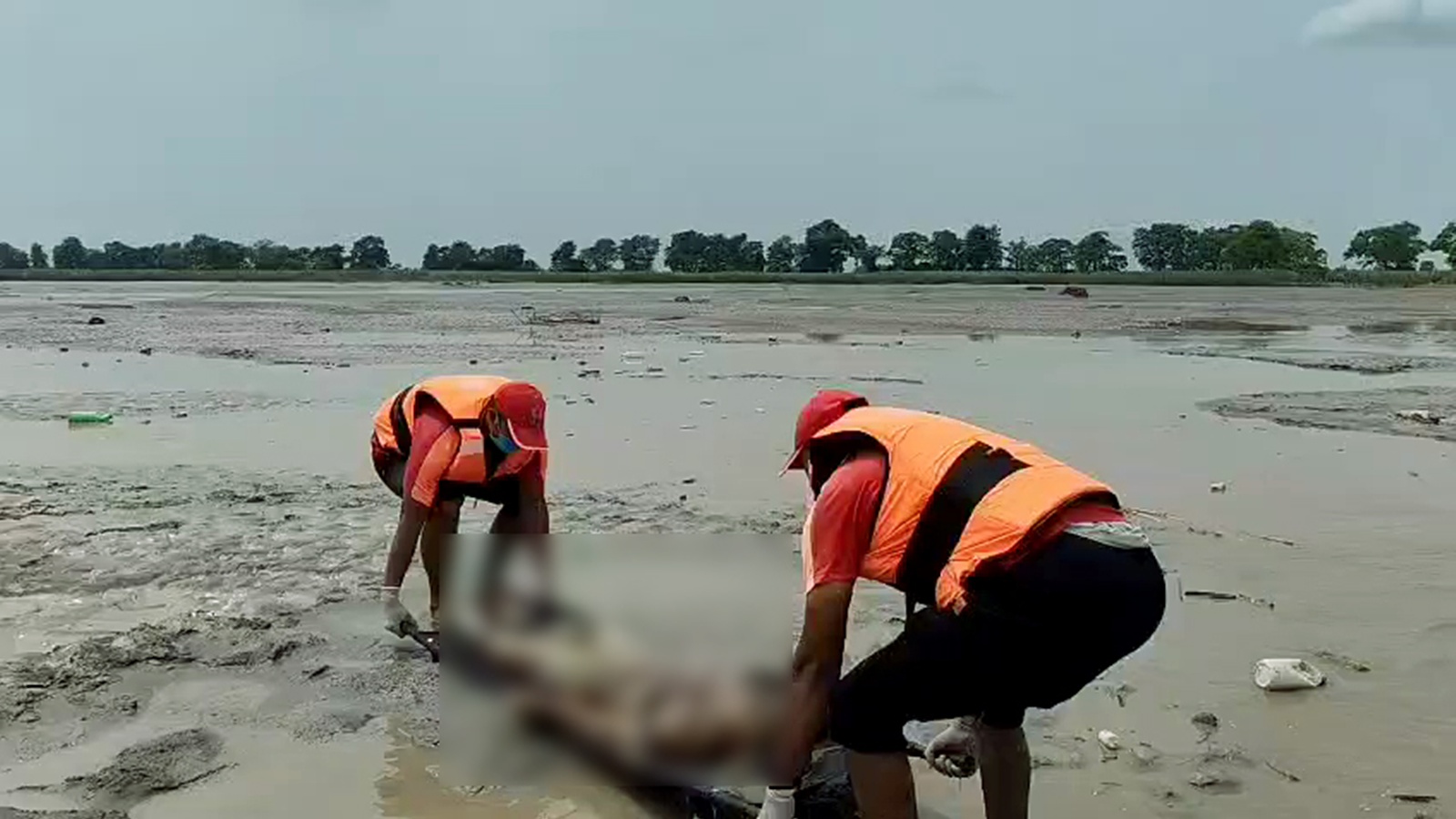
Devastating floods in Nepal have washed 10 bodies into the Gandak River in Uttar Pradesh's Maharajganj and Kushinagar districts. Authorities suspect the deceased are Nepali nationals.
- 10 bodies recovered from the Gandak River in Maharajganj and Kushinagar, UP.
- The deceased are believed to be Nepali nationals, though identification is pending.
- Bodies were found in an advanced state of decomposition.
- NDRF, SDRF, and PAC teams are conducting ongoing rescue and recovery operations.
The catastrophic floods in Nepal have left a grim and deadly trail across the border into Uttar Pradesh. The Gandak River, which originates in the Himalayan regions of Nepal and flows through India, has carried the brunt of the disaster into the districts of Maharajganj and Kushinagar. Over the last 48 hours, authorities have recovered 10 bodies washed downstream by the raging currents.
According to official reports, the recovered bodies belong to adults and are in an advanced state of decomposition. While the identities of the deceased have not yet been formally established, officials strongly believe they are Nepali nationals swept away by the flash floods. The bodies have been moved to mortuaries in Maharajganj and Kushinagar for a 72-hour observation period to facilitate identification efforts.
Why This Matters
BozokMedia analysis shows that the increasing frequency of flash floods in the Himalayan belt is a direct consequence of shifting climatic patterns. For border states like Uttar Pradesh, these transboundary water disasters present a complex challenge involving disaster management, international coordination, and humanitarian crisis response.
The surge in debris and human casualties highlights the urgent need for better early warning systems across the Indo-Nepal border.
Prashant Kumar, the Additional District Magistrate of Maharajganj, stated that four bodies—comprising three women and one young man—were recovered within his district. He emphasized that if no kin come forward within the 72-hour window, the administration will proceed according to government protocols for unidentified deceased persons.
In Kushinagar, disaster management expert Ravi Pratap Rai confirmed the recovery of six additional bodies, including three men and three women. A multi-agency response involving the NDRF (National Disaster Response Force), SDRF (State Disaster Response Force), and the Provincial Armed Constabulary (PAC) is currently active in the affected zones.
Historical Background
The Gandak River basin has long been susceptible to seasonal flooding. However, in recent years, the intensity of these floods has escalated due to glacial melt and extreme precipitation events in the upper reaches of Nepal. This pattern has turned the river into a carrier of debris, livestock, and unfortunately, human remains, during heavy monsoon surges.
Beyond the human tragedy, the river has also deposited significant amounts of debris, including vehicles, furniture, gas cylinders, and household goods, along the banks. While local villagers have attempted to retrieve these items, the administration has issued a stern warning against entering the river due to the unpredictable nature of the currents.
Frequently Asked Questions
1. How is the administration identifying the deceased?
Officials are documenting physical marks, tattoos, and any jewelry or belongings found on the bodies to assist in identification.
2. Is the flood threat still active in UP?
While water levels have begun to recede, authorities maintain a high alert and advise residents to stay away from low-lying areas near the river.