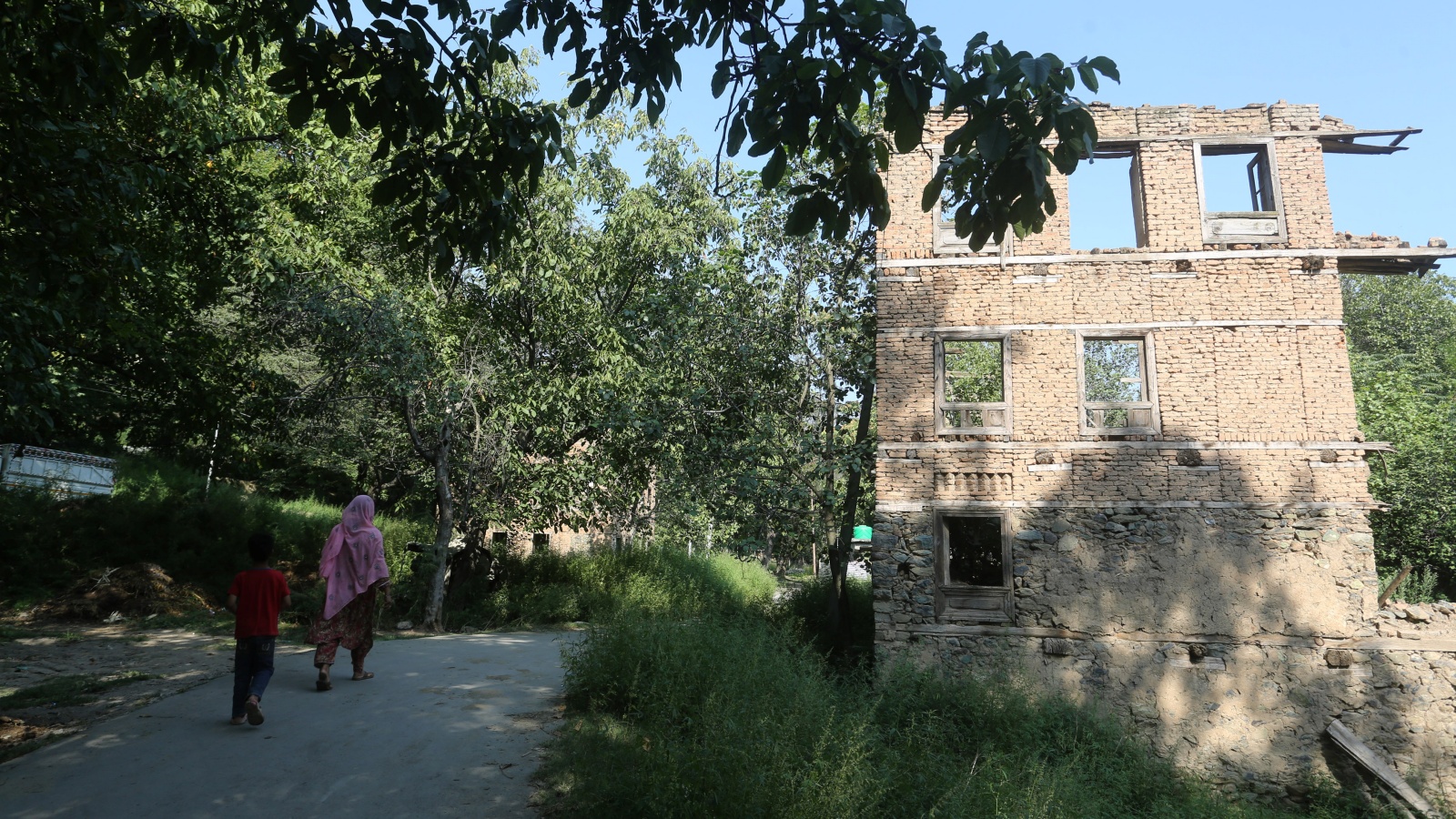
Twenty-eight years after the brutal massacre in Wandhama, Ganderbal, where 23 Kashmiri Pandits were murdered, four abandoned houses remain as haunting reminders of a night that changed the Valley forever.
- In January 1998, militants killed 23 Kashmiri Pandits in Wandhama village.
- The victims included 4 children and 9 women.
- The State Investigation Agency (SIA) has recently reopened probes into these killings.
- Four abandoned Pandit houses still stand in the village as ruins.
In the village of Wandhama, located in the Ganderbal district of central Kashmir, time seems to have frozen. While the nearby Srinagar-Ladakh national highway buzzes with modern transit, the heart of the village holds a grim relic: four crumbling brick-and-stone houses. These structures are the last physical remnants of the families wiped out during the horrific massacre on the night of January 25-26, 1998.
On that fateful night, militants dressed in army fatigues descended upon the village. They rounded up the Kashmiri Pandit community and opened indiscriminate fire. The carnage claimed 23 lives, including nine women and four children. It was one of the most chilling episodes of the militancy era, leaving a scar on the collective consciousness of the region.
Why This Matters
BozokMedia analysis shows that the recent decision by the Jammu & Kashmir Police’s State Investigation Agency (SIA) to reopen investigations into these killings marks a significant shift in the pursuit of historical justice. For the displaced community and the local residents, these probes represent a long-awaited attempt to uncover the truth behind decades-old atrocities.
The persistence of these ruins serves as a physical manifestation of unhealed trauma that continues to haunt the socio-political landscape of Kashmir.
Local resident Mohammad Haneef Baba, who witnessed the aftermath, recalls the terror. He remembers how the village men were at the mosque during Ramazan when the shots rang out. Initially mistaken for Republic Day celebrations, the reality set in when the screams of women pierced the night. When the men rushed to the Pandit houses, they found bodies scattered across the ground.
The massacre left only one survivor—a teenager who managed to hide in a pile of charcoal. The brutality of the event triggered further migrations, not just of Pandits, but also of some Muslim families who sought safety in larger towns like Sopore and Srinagar.
Today, the landscape of Wandhama is evolving. Concrete structures are replacing old stone houses, yet the four Pandit homes remain untouched. Locals suggest that no one dares to occupy them, as if the weight of the past prevents any new life from taking root there. Despite the tragedy, a fragile bond persists; former residents often return to visit old Muslim neighbors, though the deep-seated fear of the past prevents them from staying overnight.
Frequently Asked Questions
1. When did the Wandhama massacre occur?
The massacre took place on the night of January 25-26, 1998.
2. Who is investigating the case now?
The State Investigation Agency (SIA) of the Jammu & Kashmir Police has reopened the investigation.

