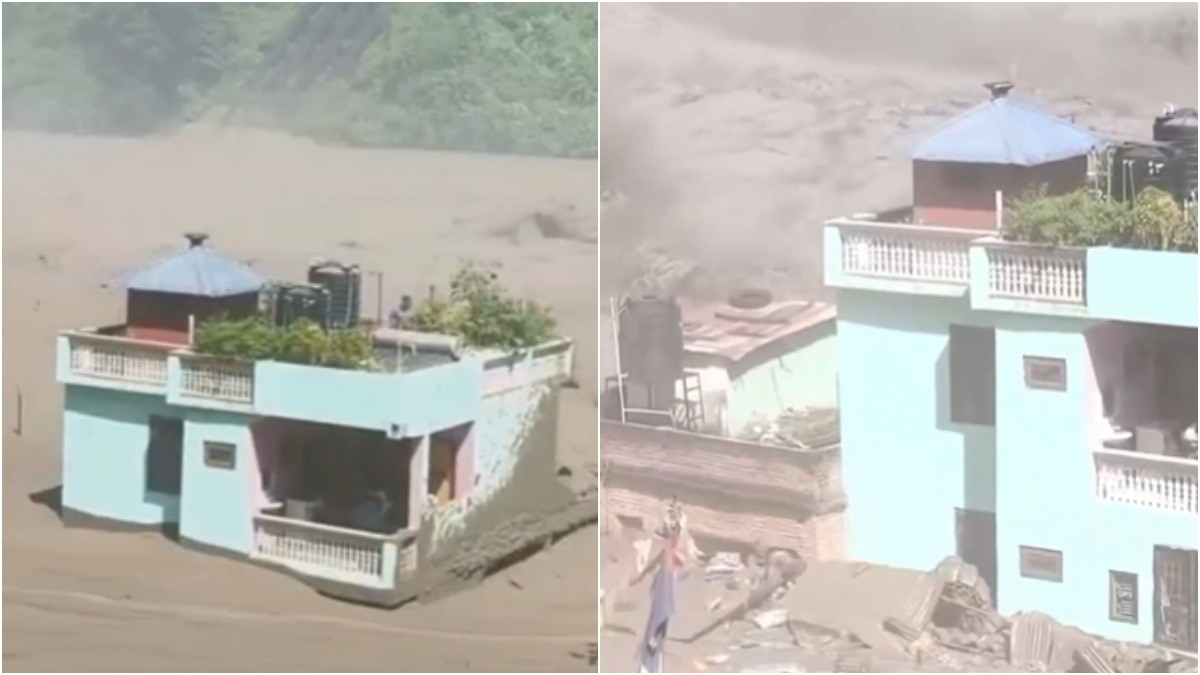
While raging floodwaters decimated an entire neighborhood in Nepal, one single house remained untouched. The survival of this structure has sparked widespread amazement and architectural curiosity.
- Massive flooding in Nepal caused widespread destruction of residential areas.
- A single house remained intact while surrounding structures were completely washed away.
- The survival is attributed to superior construction quality and strategic placement.
In a harrowing scene of nature's fury, recent floods in Nepal have left a trail of destruction across several rural settlements. As raging torrents tore through the landscape, homes were swept away in seconds, leaving families displaced and devastated. However, amidst the wreckage, one particular residence emerged as a symbol of resilience, earning the nickname 'The Miracle House' for remaining completely unscathed.
Eyewitnesses describe the scene as apocalyptic, with water levels rising with unprecedented speed and force. While the surrounding neighborhood was reduced to rubble, this specific structure stood its ground. The contrast between the total annihilation of the surrounding area and the pristine condition of this house has left both locals and engineers baffled.
Why This Matters
BozokMedia analysis shows that this incident transcends mere luck; it serves as a critical case study in disaster-resilient infrastructure. In regions like Nepal, which are highly susceptible to both seismic activity and monsoon-driven flooding, the disparity in construction quality can be a matter of life and death. This 'miracle' highlights the urgent need for standardized, reinforced building codes in vulnerable terrains.
"The survival of a single structure amidst total failure of surrounding buildings usually points to a combination of superior soil anchoring and high-grade reinforced concrete."
Historically, Nepal has struggled with seasonal flooding and landslides. Following the 2015 earthquake, there was a global push to introduce 'build back better' initiatives. However, the implementation remains uneven. The survival of this house provides a tangible example of how reinforced foundations can withstand the lateral pressure of fast-moving floodwaters.
Frequently Asked Questions
Q1: Was the house built using a specific anti-flood technology?
While not officially documented as a 'smart home,' its reinforced concrete frame and deep piling are believed to be the primary reasons for its survival.
Q2: Is the area now safe for residents to return?
Local authorities have warned that the terrain remains unstable due to soil erosion, and residents are advised to follow official evacuation guidelines.