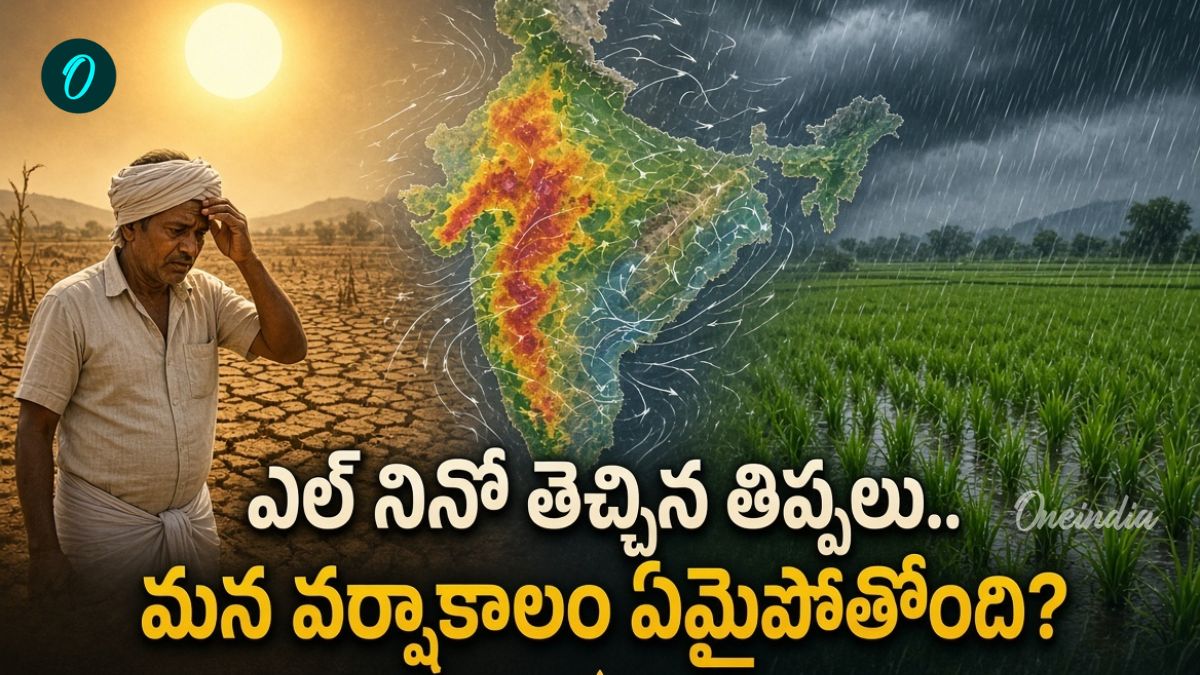
The traditional monsoon calendar is failing as shifting weather patterns and El Nino phenomena create unprecedented challenges for India's agricultural sector and food security.
- Monsoon timing and distribution are becoming increasingly unpredictable.
- The El Nino phenomenon is a primary driver of erratic rainfall patterns.
- Shifting seasons pose a critical threat to India's agrarian economy and food stability.
The rhythmic predictability of the Indian monsoon, which has guided the nation's agricultural cycles for centuries, is undergoing a radical and alarming transformation. Recent data suggests that the shifting monsoon patterns are no longer following the traditional calendar, leading to a state of climatic chaos. We are witnessing a departure from the established norms of onset and withdrawal, creating a volatile environment for farmers.
Central to this disruption is the influence of El Nino. As a warming phase in the central and eastern tropical Pacific Ocean, El Nino alters global atmospheric circulation, often leading to suppressed rainfall in the Indian subcontinent. This phenomenon, coupled with broader climate change, is creating a 'double whammy' effect for the region's weather stability.
Why This Matters
BozokMedia analysis shows that the Indian economy remains deeply tethered to the monsoon. Since a significant portion of India's arable land relies on seasonal rains rather than irrigation, any deviation in timing or intensity directly translates to fluctuations in crop yields, inflation in food prices, and overall economic instability.
The convergence of global warming and El Nino cycles is creating a 'new normal' of extreme weather that our current agricultural infrastructure is ill-equipped to handle.
Beyond just the quantity of rain, the distribution of rainfall has become highly erratic. Instead of steady showers spread across months, many regions are experiencing 'rain bombs'—short periods of intense, destructive precipitation followed by prolonged dry spells. This volatility makes it nearly impossible for farmers to plan sowing and harvesting cycles effectively.
Historical Background
Historically, the Indian monsoon was one of the most reliable seasonal patterns in the world. Throughout much of the 20th century, the arrival of the monsoon in June and its retreat in September/October provided a stable framework for the Kharif and Rabi crop cycles. However, the rapid rise in global temperatures over the last three decades has destabilized these historical patterns.
Frequently Asked Questions
1. How does El Nino affect the Indian Monsoon?
El Nino typically weakens the monsoon winds, leading to lower-than-average rainfall and increased drought risks in India.
2. Why is the timing of the monsoon changing?
Global warming and changes in ocean temperatures are altering the atmospheric pressure systems that drive the monsoon winds.