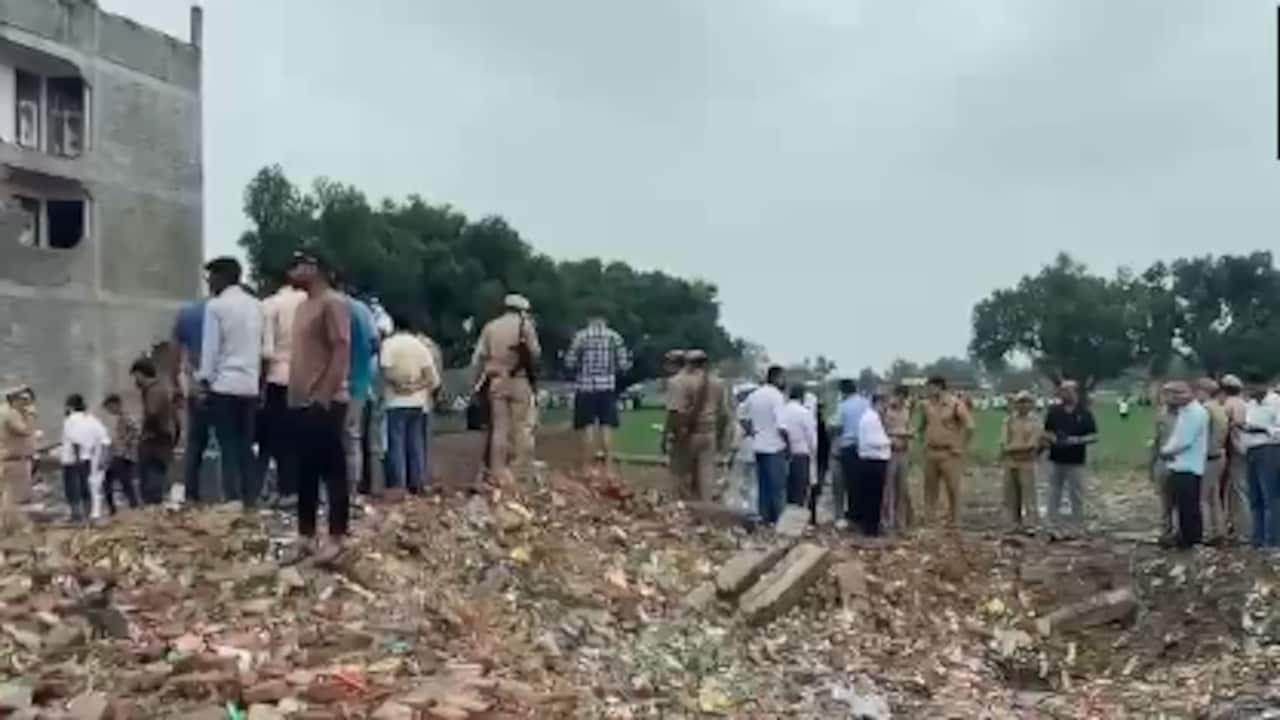
A major confrontation erupted at the Rajasthan High Court as advocates staged a sit-in protest outside Acting Chief Justice Sanjeev Prakash Sharma's courtroom following serious allegations of maladministration.
- Lawyers of the Rajasthan High Court protested against Acting CJ Sanjeev Prakash Sharma.
- Supreme Court Justice Sandeep Mehta wrote three letters to CJI Surya Kant seeking the Acting CJ's transfer.
- Allegations include gross maladministration, misuse of power, and favoritism in case listings.
In an unusual escalation of tension within the judicial corridors, several advocates of the Rajasthan High Court staged a sit-in protest on Monday, August 31, 2026. The protest took place directly outside the courtroom of Acting Chief Justice Sanjeev Prakash Sharma, while a division bench comprising the Acting CJ and Justice Sangeeta Sharma was presiding over legal proceedings.
The atmosphere turned volatile as lawyers raised slogans against Justice Sharma, expressing their deep dissatisfaction with his judicial and administrative conduct. This public display of dissent by the Bar is rare and highlights a severe breakdown in the relationship between the advocates and the head of the court.
Why This Matters
BozokMedia analysis shows that this crisis is not merely a local dispute but a systemic failure. When a sitting Supreme Court judge, Justice Sandeep Mehta, formally requests the transfer of a High Court's Acting CJ, it signals a critical lack of confidence in the regional judicial leadership. Such conflicts can lead to a backlog of cases and a decline in the perceived integrity of the legal system in Rajasthan.
The integrity of the judiciary rests on the perceived impartiality of its administrative head; any shadow of favoritism undermines the rule of law.
The catalyst for this unrest was a series of three letters sent by Justice Sandeep Mehta to the Chief Justice of India, CJI Surya Kant. In these communications, Justice Mehta alleged "gross maladministration" and the blatant misuse of administrative powers. He specifically pointed toward favoritism in the listing of cases, which is a critical power that determines the speed and outcome of litigation.
Furthermore, Justice Mehta has advocated for the appointment of a regular Chief Justice from an external high court to restore neutrality and order within the Rajasthan judiciary. The demand for an outside appointment suggests that the internal trust within the Rajasthan High Court has reached an all-time low.
Historically, the appointment of an 'Acting' head is meant to be a seamless transition. However, when the transition is marred by allegations of power abuse, it creates a vacuum of authority that encourages public protests from the legal fraternity, as seen in this instance.
Frequently Asked Questions
1. Why are the advocates protesting against the Acting Chief Justice?
The protest is fueled by allegations of administrative misconduct, favoritism in case listings, and a general lack of transparency in the court's functioning.
2. What action has Justice Sandeep Mehta taken?
Justice Mehta has written three formal letters to CJI Surya Kant seeking the immediate transfer of Justice Sanjeev Prakash Sharma out of Rajasthan.