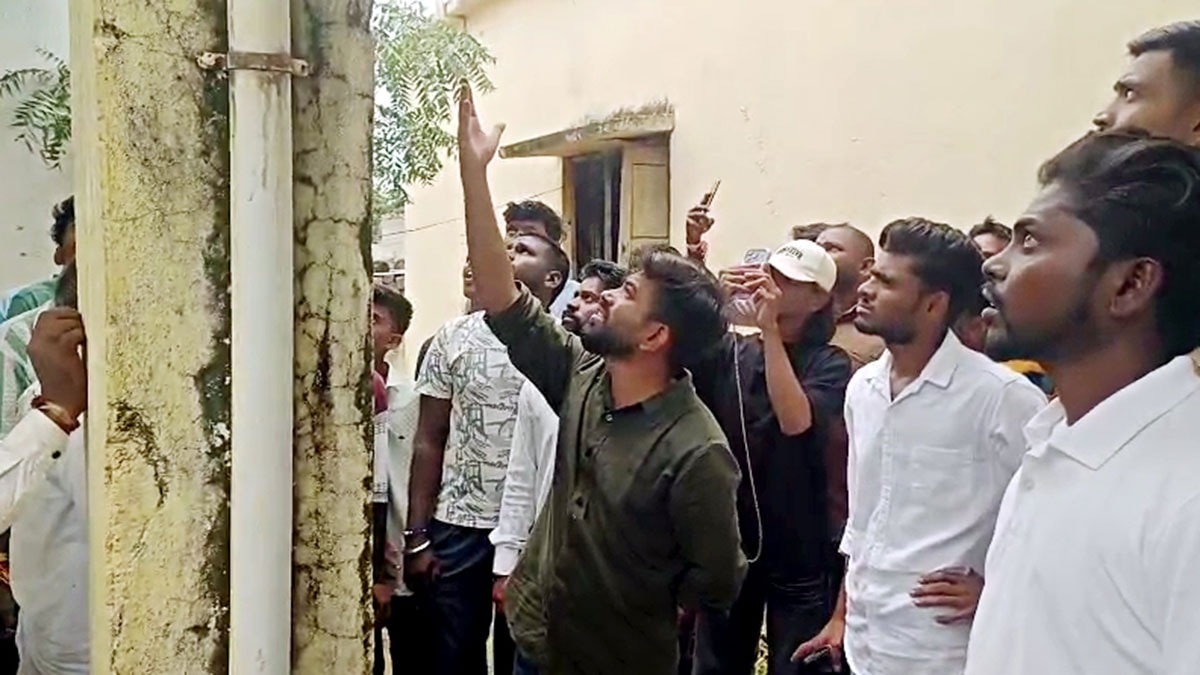
The Cockroach Janta Party's (CJP) grassroots campaign to audit government schools has forced state governments and opposition parties into a high-stakes political battle over education infrastructure.
- CJP volunteers conducted ~1,500 audits across multiple states, exposing severe infrastructure lapses.
- Governments in UP and Rajasthan have reacted with a mix of infrastructure funding and legal crackdowns.
- The AAP has launched a parallel campaign to capitalize on the political momentum.
An unlikely topic has suddenly surged to the top of the political agenda just months before crucial state elections: the dilapidated state of government schools. The 'School Thik Karo' (Fix the School) campaign, spearheaded by the Cockroach Janta Party (CJP), has turned school deficiencies into a viral political weapon. By recording broken toilets, unsafe classrooms, and lack of drinking water, volunteers are compelling state administrations to act.
The movement has rapidly expanded from its origins at Delhi's Jantar Mantar to states including Maharashtra, Uttar Pradesh, Rajasthan, Gujarat, Bihar, and Tamil Nadu. According to CJP co-convenor Ashutosh Ranka, between 1,200 and 1,500 volunteers have carried out an estimated 1,500 audits, utilizing a simple yet effective strategy: investigate, record, post, and demand a response.
Why This Matters
BozokMedia analysis shows that this campaign represents a shift toward 'evidence-based activism.' By bypassing traditional bureaucratic complaints and moving directly to social media with visual proof, CJP has stripped the government of its ability to hide behind statistical claims. This creates a direct accountability loop between the citizen and the state.
"The transition from written petitions to viral video audits is fundamentally changing how civic grievances are addressed in democratic setups."
In Uttar Pradesh, the Yogi Adityanath administration initially highlighted its 'Operation Kayakalp' but quickly shifted to a defensive posture. Orders were issued to register cases against those spreading "misleading videos," while simultaneously, Chief Secretary S.P. Goyal directed district magistrates to urgently inspect school infrastructure and road connectivity.
The Aam Aadmi Party (AAP) was quick to seize this opening. Rajya Sabha MP Sanjay Singh launched a parallel 'School Theek Karo' campaign, challenging the BJP's "double engine governance" in UP. Meanwhile, in Rajasthan, the Bhajan Lal Sharma government announced a massive ₹12,500 crore revamp programme, which many analysts view as a direct reaction to the heat generated by CJP's investigations.
However, the campaign has met with resistance. Several states, including Haryana and Telangana, have restricted entry and prohibited filming within school premises. In Maharashtra, CJP founder Abhijeet Dipke and others faced legal action after recording teachers in Latur. Despite this, CJP National Secretary Aafreen Nawaz maintains that the government's defensive reaction validates their impact, noting that repairs often begin in real-time following a viral video.
Frequently Asked Questions
1. What is the 'School Thik Karo' campaign?
It is a citizen-led audit initiative by the CJP to document and publicize the poor condition of government schools to force administrative repairs.
2. How have state governments responded to the audits?
Responses have varied from allocating thousands of crores for infrastructure (Rajasthan) to filing police cases against activists (UP and Maharashtra).