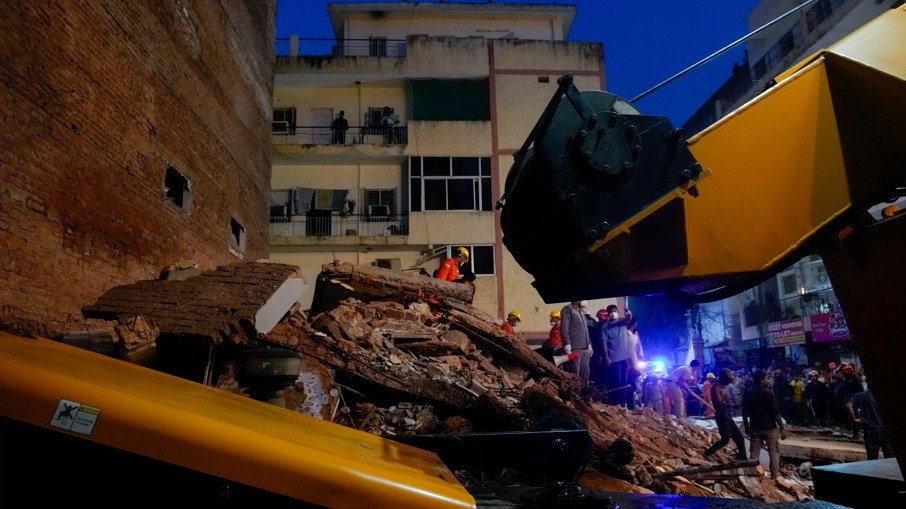
While devastating flash floods leveled entire neighborhoods in Nepal, one green two-story house remained miraculously intact. A viral architectural analysis reveals the structural secrets that saved the building and its occupants.
- The use of an RCC (Reinforced Concrete Frame) provided a resilient structural skeleton.
- Strategic geographical positioning diverted the maximum force of the debris flow.
- Accumulated mud and debris acted as a natural buffer, shielding the foundation.
The catastrophic flash floods in Nepal recently left a trail of unprecedented destruction, sweeping away everything in their path. Amidst the chaos of collapsing buildings and uprooted trees, a green two-story house became a global talking point after videos emerged showing it standing completely unscathed while surrounding structures vanished. This phenomenon has sparked a massive debate on social media regarding the intersection of luck and engineering.
In the mountainous regions of Nepal, many traditional homes are constructed using stone masonry. While these walls are excellent at bearing vertical loads (the weight of the roof), they are highly vulnerable to lateral pressure—the sideways force exerted by rushing water and heavy debris. This explains why many nearby houses in the viral footage appeared to shake momentarily before abruptly collapsing.
Why This Matters
BozokMedia analysis shows that this incident serves as a critical case study for urban planning in disaster-prone zones. As climate change increases the frequency of extreme weather events, the shift from traditional masonry to reinforced structural frames is no longer a luxury but a necessity for survival.
The primary reason for this house's survival was its RCC (Reinforced Concrete Frame) construction. Unlike load-bearing walls, an RCC structure utilizes a network of reinforced concrete columns and beams. This creates a rigid 'skeleton' that distributes the impact of external forces across the entire frame rather than concentrating the pressure on a single wall, preventing a total structural failure.
"The engineer who designed that house's column structure deserves a national medal for creating a sanctuary amidst a natural disaster."
Beyond the material, the location of the house played a pivotal role. The building was not positioned directly in the center of the flood's main trajectory. Consequently, a significant portion of the water and debris flowed around the sides of the house, similar to how water flows around a large boulder in a river, reducing the direct impact force.
Interestingly, reports suggest that the initial layer of mud and debris that settled around the house actually worked in its favor. This accumulation created a protective barrier, or a 'natural shield,' which dampened the velocity of subsequent waves and protected the base of the structure from further erosion.
Frequently Asked Questions
Q1: Does an RCC frame guarantee survival in a flash flood?
A: No, while it significantly increases the chances, survival also depends on the soil's bearing capacity, the depth of the foundation, and the sheer volume of the water flow.
Q2: What makes a flash flood more dangerous than a regular flood?
A: Flash floods occur with almost no warning and carry high-velocity debris (rocks, trees, cars), which act as battering rams against buildings.