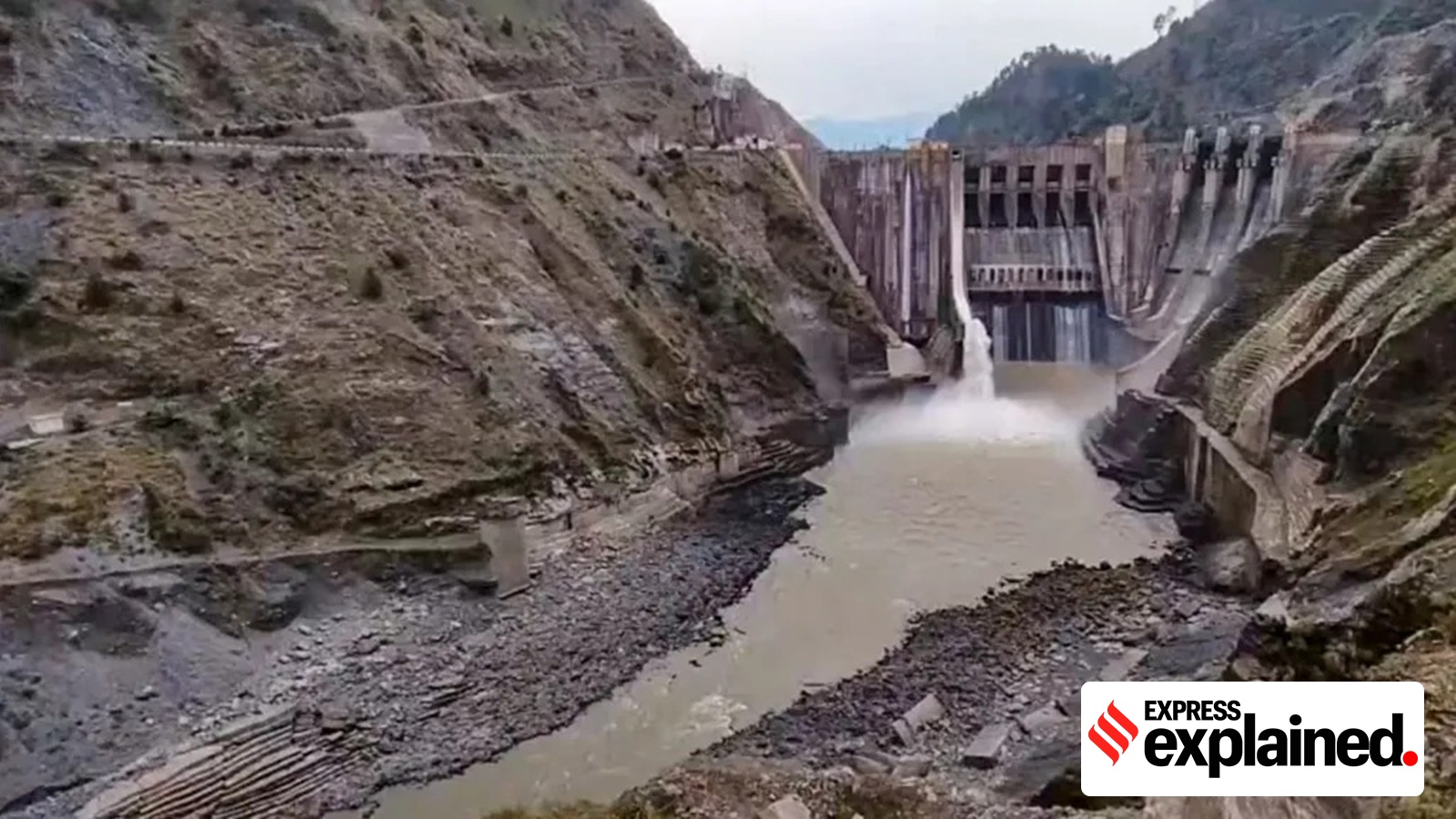
The Permanent Court of Arbitration at The Hague has ruled that the Indus Waters Treaty remains in force, ordering India to restrict construction at the Ratle plant. India has rejected the ruling, calling the court illegally constituted.
- The Permanent Court of Arbitration (PCA) ruled that the Indus Waters Treaty (IWT) is fully operational.
- India was directed to temporarily halt specific construction work at the Ratle hydro-electric plant.
- India refuses to recognize the PCA, labeling its proceedings as 'null and void'.
- New Delhi maintains that water sharing cannot continue alongside cross-border terrorism.
The Permanent Court of Arbitration (PCA) in The Hague has delivered a significant verdict, stating that the Indus Waters Treaty (IWT) between India and Pakistan remains fully in force. The court has urged India to continue observing its obligations under the treaty, rejecting India's stance of holding the agreement in 'abeyance'.
The legal friction escalated after the Pahalgam terror attack on April 23, 2025, when India announced that the treaty would be suspended until Pakistan ended its support for cross-border terrorism. The Court interpreted this move as an attempt to 'suspend or terminate' the treaty, ruling that the IWT provides no mechanism for unilateral termination by either party.
The Ratle Project Dispute
A critical component of the ruling involves the Ratle Hydro-Electric Plant, a run-of-the-river project on the Chenab river in Jammu and Kashmir. Pakistan challenged the design features of the plant, claiming they violate treaty norms. Consequently, the Court has ordered India to stop concreting the dam wall and power intake structure above specified levels and to provide regular updates on the construction schedule.
India's Defiant Stance
India has consistently maintained that the Court of Arbitration is illegally constituted. New Delhi argues that the treaty-mandated Neutral Expert process is the only legitimate mechanism for resolving technical disputes. India has repeatedly stated that parallel proceedings are not permitted under the treaty, rendering the PCA's awards and decisions 'null and void'.
Why This Matters
BozokMedia analysis shows that this conflict transcends water rights, evolving into a broader geopolitical struggle over sovereignty and security. By linking water sharing to terrorism, India is shifting the paradigm from a purely technical treaty to a security-centric diplomatic tool, signaling that strategic patience has its limits.
"The Indus Waters Treaty has survived three wars, but the current climate of systemic terrorism and climate change may finally force a total renegotiation."
Historical Background
The Indus Waters Treaty was signed in 1960, brokered by the World Bank. It divided the six rivers of the Indus system: India received control over the Eastern rivers (Ravi, Beas, Sutlej), while Pakistan was given the Western rivers (Indus, Jhelum, Chenab). India is permitted limited use of the Western rivers for non-consumptive purposes, such as hydroelectric power generation, provided it does not interfere with the flow.
| Perspective | India's Position | Pakistan's Position |
|---|---|---|
| Court Recognition | Illegal / Null and Void | Legally Binding |
| Dispute Mechanism | Neutral Expert Process | Court of Arbitration |
| Primary Driver | National Security/Terrorism | Water Security/Riparian Rights |
Frequently Asked Questions
1. Is India completely scrapping the Indus Waters Treaty?
No, India has placed the treaty in 'abeyance' (temporary suspension) rather than formal termination, contingent upon Pakistan's actions regarding terrorism.
2. What is the Ratle project?
It is a run-of-the-river hydroelectric project on the Chenab river in J&K, which Pakistan claims violates the technical specifications of the 1960 treaty.


