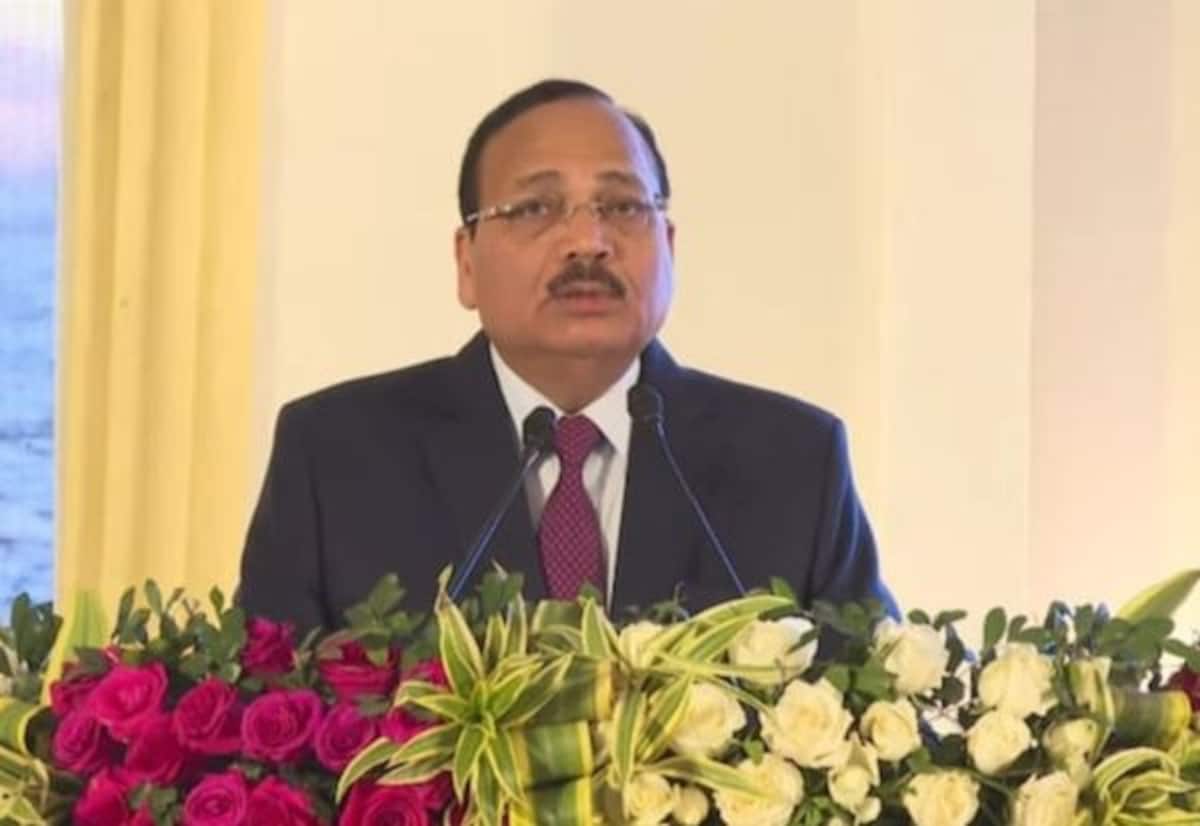
The Supreme Court of India is proactively tackling the menace of 'digital arrests' and cyber frauds. Chief Justice Surya Kant highlighted the judiciary's commitment to protecting citizens from high-tech scams during an international summit in London.
- The Supreme Court has urged Central and State governments to create specific legal sections to penalize digital arrest scams.
- CJI Surya Kant emphasized that the judiciary is taking proactive measures without waiting for parliamentary legislation.
- The CJI highlighted the critical need for global cooperation to recover illicitly transferred funds.
Speaking at the concluding ceremony of an international conference on economic crimes in London, Chief Justice Surya Kant expressed pride in the Indian judiciary's agility in combating modern financial frauds. He asserted that the courts are not merely waiting for the legislature to act but are actively intervening to curb the rise of 'digital arrest' scams.
Digital arrest is a sophisticated fraud where criminals impersonate high-ranking police officers, judges, or government officials via video calls to intimidate victims into transferring large sums of money. Recognizing the severity of this trend, the Supreme Court has directed the Central and State governments to formulate specific legal frameworks to ensure stricter punishments for such offenders.
Why This Matters
BozokMedia analysis shows that the shift toward 'judicial proactiveness' in cybercrime is a response to the lag between technological evolution and legislative drafting. By taking a lead role, the Supreme Court is filling a critical vacuum, ensuring that victims of digital fraud have a pathway to justice while the government works on permanent laws. This signals a zero-tolerance approach toward high-tech financial crimes.
The speed of justice must evolve to match the speed of a fiber-optic cable in the age of digital warfare.
The Chief Justice further discussed the role of the Prevention of Money Laundering Act (PMLA) and the Fugitive Economic Offenders Act. He noted that while these laws are powerful tools, the judiciary often has to step in to correct instances where investigative agencies may overreach or misuse these provisions.
In a poignant intellectual reflection, Justice Surya Kant referenced Kautilya's Arthashastra. He compared the temptation of handling public funds to honey or poison on the tongue, stating that an official managing state money often finds it nearly impossible to resist the urge to misuse even a small fraction of it.
Addressing the global scale of the problem, the CJI revealed a shocking statistic: only 1% of illegally transacted money worldwide is ever recovered by governments. He called for strengthened international cooperation and intelligence sharing to dismantle global financial crime networks.
Frequently Asked Questions
1. What exactly is a 'Digital Arrest'?
It is a scam where fraudsters use video calls and fake credentials to convince a person they are under arrest by a government agency, forcing them to pay money to avoid jail.
Because the scale of victims is increasing rapidly, the Court is using its authority to guide the government and provide immediate judicial relief to prevent further losses.