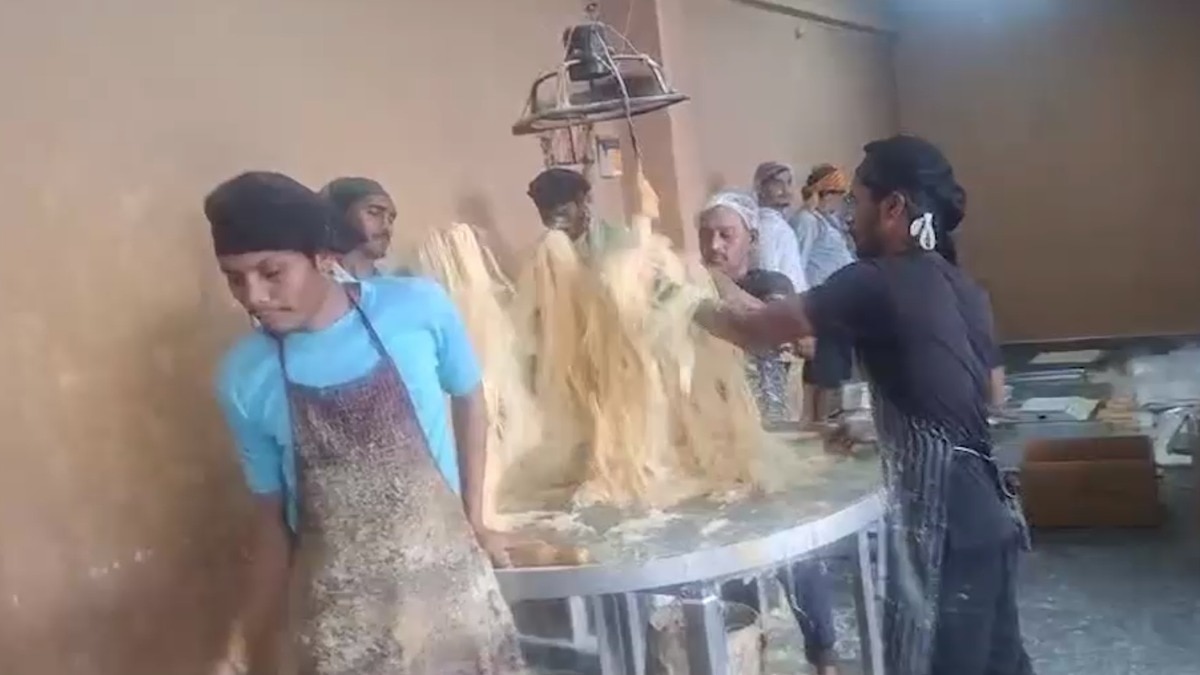
A massive statewide crackdown by Karnataka food safety officials has led to the seizure of hundreds of kilograms of expired and mislabelled sweets, with six manufacturing units shut down for severe hygiene violations.
- Hundreds of kilograms of expired sweets, khova, and curd seized across Karnataka.
- Six manufacturing units temporarily shut down due to unhygienic conditions and lack of licenses.
- Major violations include missing FSSAI logos, expired ingredients, and fly infestations.
In a sweeping operation aimed at protecting public health, the Karnataka Food Safety and Drug Administration Department has launched a comprehensive crackdown on sweet manufacturing units across the state. Following directives from Health and Family Welfare Minister U T Khader, officials conducted raids in Bengaluru, Mysuru, Dakshina Kannada, Belagavi, Kalaburagi, and Hubballi-Dharwad.
The inspections, carried out under the Food Safety and Standards Act, 2006, uncovered a disturbing pattern of negligence. Authorities seized a vast array of products, including cooking oil, pulses, jalebi, Mysore Pak, and khova. These samples have been dispatched to government laboratories to determine if they meet the mandatory safety benchmarks.
Major Seizures and Closures
The scale of the violations was evident in Bengaluru, where Balaji Milk Khova saw the seizure of 400 kg of khova and kalakand due to a total lack of mandatory declarations, including manufacture dates and FSSAI registration. Similarly, Asha Sweets in Yeshwanthpur had 49 kg of tea powder and 20 kg of khova seized.
Hygiene was a critical failure at several units. Lal Sweets Pvt Ltd was found to have fly infestations and lacked mandatory labeling on banana chips and chakli masala. In Mangaluru, Swagath Sweets was shut down immediately for operating without a valid food license and maintaining unhygienic premises.
Why This Matters
BozokMedia analysis shows that the recurring nature of these violations suggests a systemic failure in self-regulation among mid-sized confectionery units. The use of unauthorized artificial colors and the storage of expired raw materials pose severe risks of foodborne illnesses and long-term health complications for consumers.
"The absence of basic traceability—like batch numbers and expiry dates—is not just a clerical error; it is a direct threat to consumer safety in the event of a mass contamination outbreak."
Further actions were taken in Belagavi, where A1 Purohit had 10 kg of expired chocolate flavor seized, and in Mysuru, where Word of Mysore Pack faced seizures of over 360 kg of ready-to-eat savouries. The total estimated value of seized goods across the state has reached significant figures, reflecting the volume of substandard food intended for public consumption.
| Business Name | Primary Violation | Action Taken |
|---|---|---|
| Balaji Milk Khova | No FSSAI/Expiry Labels | 400kg Seized |
| Swagath Sweets | No License/Unhygienic | Unit Closed |
| Lal Sweets Pvt Ltd | Fly Infestation | Products Seized |
| Bikaner Sweets | Labelling Deficiencies | Unit Closed |
Frequently Asked Questions
Q1: What are the legal consequences for food businesses violating FSSAI norms?
Businesses can face heavy fines, temporary or permanent closure of their units, and criminal prosecution under the Food Safety and Standards Act, 2006.
Q2: How can consumers identify if a sweet product is safe?
Always check for the FSSAI logo, a clear 'Use By' or 'Expiry' date, the manufacturer's address, and the batch number on the packaging.