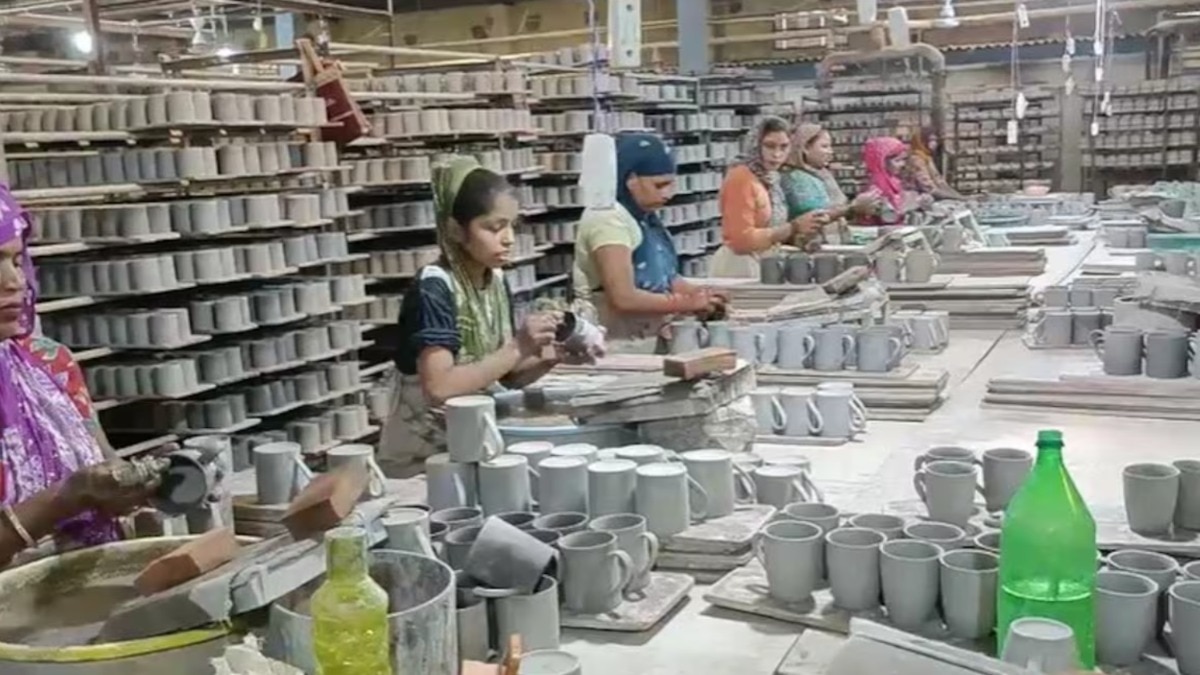
The renowned Khurja pottery of Uttar Pradesh is scaling new heights globally through the One District One Product (ODOP) initiative. This strategic move aims to empower local artisans and integrate traditional ceramics into the international supply chain.
- Khurja pottery is being promoted internationally under the ODOP scheme.
- Artisans are receiving training in modern design and global quality standards.
- The initiative focuses on increasing export revenue and rural employment.
Khurja, located in the Bulandshahr district of Uttar Pradesh, has long been celebrated as the 'Ceramic City' of India. Under the state government's ambitious One District One Product (ODOP) scheme, the traditional pottery and ceramic crafts of this region are now receiving an unprecedented global push. This initiative is designed to transition traditional craftsmanship into a scalable, export-oriented industry.
By providing artisans with access to modern technology, high-grade raw materials, and strategic marketing support, the government is bridging the gap between rural production and urban/international demand. While Khurja's products were previously confined to domestic markets, they are now penetrating markets in Europe, North America, and the Middle East via e-commerce and global trade exhibitions.
Why This Matters
BozokMedia analysis shows that schemes like ODOP are pivotal in operationalizing the 'Vocal for Local' vision. When a localized craft achieves global recognition, it does more than just generate revenue; it preserves the intangible cultural heritage of the region. The global expansion of Khurja pottery serves as a blueprint for other MSMEs across India to scale their traditional arts.
"The intersection of traditional artistry and strategic government intervention is the key to transforming local crafts into global luxury brands."
Historically, Khurja pottery has been distinguished by its unique glazes and intricate patterns, with roots stretching back through various eras of Indian history. However, the rise of cheap mass-produced imports had previously threatened the livelihood of local potters. The current revival marks a shift toward sustainable, high-value artisanal production.
| Feature | Traditional Model | ODOP-Driven Model |
|---|---|---|
| Market Reach | Local/Regional | Global/E-commerce |
| Design Approach | Traditional Patterns | Contemporary & Fusion Designs |
| Technology | Manual Kilns | Modern Energy-Efficient Kilns |
Frequently Asked Questions
1. What is the ODOP scheme?
It is an initiative by the Government of Uttar Pradesh to promote one unique product from each district to enhance local employment and global exports.
2. How does global exposure benefit Khurja artisans?
It allows them to command premium prices, reduces dependence on middlemen, and ensures the survival of their ancestral craft.