A heartbreaking account of an Amish family's loss during Pennsylvania's measles outbreak reveals the devastating gap between political rhetoric and human suffering.
- Lancaster County, home to the largest Amish community, is the epicenter of Pennsylvania's measles outbreak.
- A newborn baby died following his mother's severe measles infection during pregnancy.
- The death has become a political flashpoint between Governor Josh Shapiro and RFK Jr.
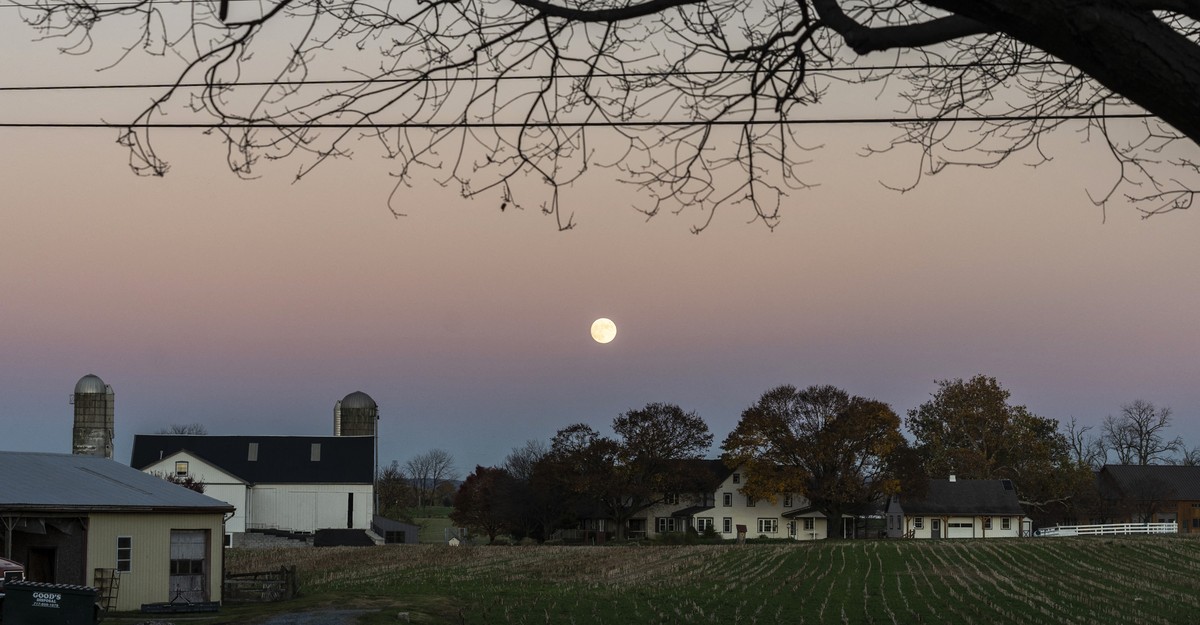
In the serene, postcard-perfect landscapes of Lancaster County, Pennsylvania, a quiet tragedy has unfolded that belies the political storm raging in the state capital. While government officials and political figures trade accusations over the 'weaponization' of public health data, a grieving Amish family is grappling with the loss of their newborn son—a victim of a preventable viral onslaught.
The outbreak has hit the Amish community particularly hard, with 210 cases recorded this year. For 'John' and 'Anna' (names changed for privacy), the virus was not a political talking point but a domestic nightmare. Anna, pregnant at the time, suffered a severe infection characterized by a 102-degree fever and extreme dehydration, leaving her physically depleted just as she entered labor.
On August 14, the tragedy culminated in the birth of a seven-pound baby boy. Despite the immediate efforts of paramedics providing oxygen and chest compressions, the infant never breathed. While the county coroner later noted a ruptured spleen as the cause of death in an infant who tested positive for measles, the chronological link to the mother's severe illness paints a harrowing picture of the virus's impact on maternal and neonatal health.
Why This Matters
BozokMedia analysis shows that this incident highlights a dangerous intersection where public health crises are subsumed by partisan warfare. When RFK Jr. and Governor Josh Shapiro clash over whether a death was 'fabricated' or 'politically motivated,' the actual human experience—the grief of parents and the vulnerability of unvaccinated populations—is erased from the narrative.
The tragedy in Lancaster underscores that vaccine hesitancy in closed communities creates 'pockets of vulnerability' that can lead to catastrophic neonatal outcomes.
The Amish perspective on vaccination is often neither a political statement nor a result of deep research, but rather a cultural inertia. In this case, the parents simply 'didn't do it,' unaware that measles can cause severe pregnancy complications regardless of the strain. This lack of medical intervention, coupled with Pennsylvania's religious exemptions for school vaccinations, creates a perfect storm for outbreaks.
Historically, the Amish community has faced several measles outbreaks due to their preference for traditional lifestyles and skepticism toward modern medicine. These events often serve as a wake-up call for public health officials to engage in culturally sensitive outreach rather than top-down mandates.
Frequently Asked Questions
Q: Can pregnant women receive the measles vaccine?
A: No, the CDC recommends against giving the MMR vaccine to pregnant women, making prior vaccination critical.
Q: Why is Lancaster County so affected?
A: It houses one of the largest Amish populations in the U.S., where vaccination rates are historically lower due to cultural and religious beliefs.