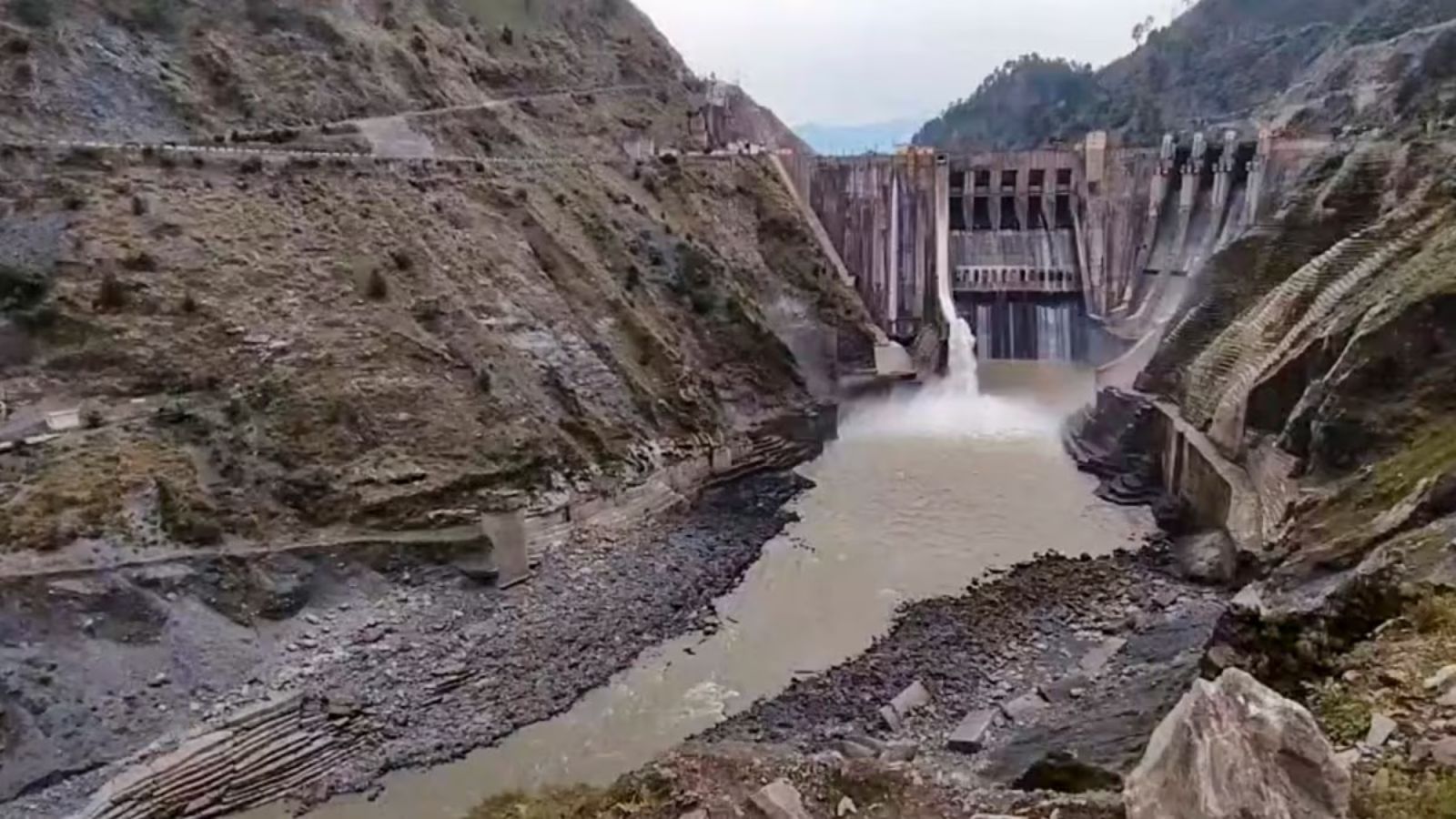
India has categorically rejected the Hague-based Court of Arbitration's ruling on the Indus Waters Treaty, asserting that the tribunal has no legal authority over India's sovereign decisions regarding national security.
- India refuses to recognize the Court of Arbitration (CoA) and its ruling on the Indus Waters Treaty.
- The decision to keep the treaty in 'abeyance' remains in force following the Pahalgam terror attack.
- New Delhi maintains that cross-border terrorism must end before treaty obligations are resumed.
In a decisive move, the Government of India has rejected the award issued by the Hague-based Court of Arbitration (CoA). The court had previously ruled that India's decision to place the 1960 Indus Waters Treaty (IWT) in 'abeyance' was not permissible under international law. However, the Ministry of External Affairs (MEA) has countered this, stating the court has "no jurisdiction whatsoever to pronounce on India’s sovereign decisions."
The CoA had concluded that the Indus Waters Treaty remains fully in force and that India must adhere to its obligations, particularly concerning the design and operation of hydroelectric projects on the Western Rivers. India's response was swift and severe, labeling the CoA as an "illegally constituted" body formed by the World Bank in patent breach of the treaty's terms.
Why This Matters
BozokMedia analysis shows that India is fundamentally shifting its approach toward Pakistan, linking environmental and resource treaties directly to counter-terrorism benchmarks. By placing the treaty in abeyance following the April 2025 Pahalgam attack, India is signaling that diplomatic cooperation cannot coexist with state-sponsored terrorism.
"By ignoring the CoA, India is asserting a new doctrine of sovereignty where national security imperatives override legacy international agreements."
The Ministry of External Affairs emphasized that India has never recognized the legal existence of this arbitral body and has consistently refused to participate in its proceedings. According to the MEA, any awards or decisions issued by the CoA are "null and void and without legal effect."
Historically, the Indus Waters Treaty of 1960 has been praised for its resilience, surviving multiple wars between the two nuclear-armed neighbors. However, the current deadlock represents the most significant crisis the treaty has faced in over six decades.
Frequently Asked Questions
Q1: Why did India put the Indus Waters Treaty in abeyance?
A: The decision was taken by the Cabinet Committee on Security (CCS) on April 23, 2025, as a direct response to the Pahalgam terrorist attack, demanding that Pakistan irrevocably abjure cross-border terrorism.
A: The World Bank acted as the mediator for the original 1960 treaty and later constituted the Court of Arbitration, a move that India views as a violation of the treaty's legal framework.