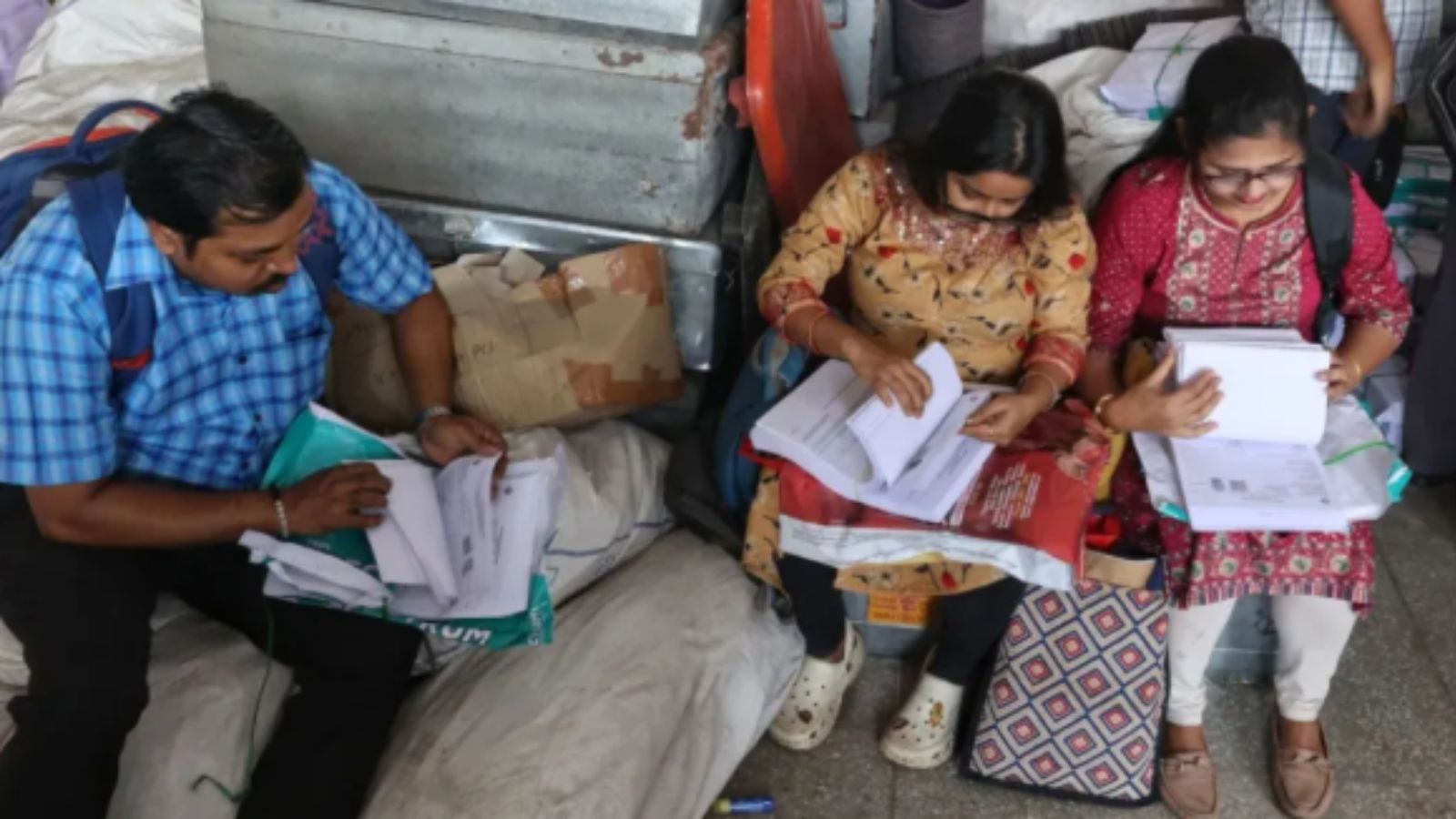
The Election Commission's Special Intensive Revision (SIR) has resulted in the removal of over 13 crore entries from draft electoral rolls nationwide. Delhi and Maharashtra have witnessed the steepest declines, raising critical questions about voter eligibility and urban migration.
- Over 13.37 crore names removed across 30 States/UTs during the SIR process.
- Delhi recorded the highest deletion rate at 32.8%, followed by Maharashtra at 21.1%.
- Primary reasons for removal include permanent shifting, death, and duplicate entries.
- Incorrectly deleted voters have a one-month window to apply for re-inclusion.
The Election Commission of India (ECI) has undertaken a massive cleanup of the national electoral rolls through the Special Intensive Revision (SIR). Since its inception in June last year, the drive has led to the deletion of more than 13 crore names from draft rolls. The latest data released on Monday highlights a staggering reduction in key regions, with Delhi seeing a 32.8% cut and Maharashtra a 21.1% drop.
In quantitative terms, Delhi's electorate plummeted from 1.45 crore pre-SIR to 97.53 lakh in the draft roll. Similarly, Maharashtra saw its numbers slide from 9.78 crore to 7.71 crore. This third phase of the SIR, covering 16 states and three UTs, has already resulted in 6.15 crore deletions across 17 jurisdictions. The ECI has allowed a grace period of one month for citizens to contest these deletions and apply for inclusion in the final roll.
Analyzing the Deletion Metrics
Detailed reports from the Chief Electoral Officers (CEO) reveal the nature of these removals. In Maharashtra, 3.56% were marked as deceased, 15.78% as permanently shifted or absent, and 1.81% as duplicates. Delhi's data is even more skewed, with 29.86% of electors marked as absent or shifted, 1.95% as deceased, and 0.98% as duplicates.
BozokMedia analysis shows that this shift from 'Summary Revisions' to 'Intensive Revisions' marks a strategic pivot by the Election Commission. For two decades, the EC relied on annual updates. The return to a full-scale intensive revision—where voters must map themselves back to rolls from the early 2000s—suggests an effort to eliminate systemic 'ghost voters' and ensure a pristine database. This is likely a prerequisite for the proposed 'One Nation One Election' framework, which requires a highly accurate and synchronized voter database.
"The scale of these deletions underscores the massive gap between static electoral data and the dynamic reality of urban migration in India."
The SIR rollout began in Bihar and expanded in phases. While most of the country is covered, Himachal Pradesh and Jammu & Kashmir were excluded due to census work and weather, and Assam was excluded pending the publication of the National Register of Citizens (NRC).
| Region | Deletion Percentage (%) | Primary Driver |
|---|---|---|
| Delhi | 32.80% | Absent/Shifted |
| Maharashtra | 21.10% | Shifted/Deceased |
| Telangana | 21.70% | General Revision |
| Andaman & Nicobar | 20.60% | General Revision |
The legality of this process was recently tested in the Supreme Court. A batch of petitions challenged the EC's order from June 2025, but the Court upheld the commission's powers and the SIR process in a judgment delivered this May.
Frequently Asked Questions
Q1: What should I do if my name is missing from the draft roll?
Answer: You can apply for inclusion in the final roll within one month of the draft roll publication as per the EC schedule.
Q2: Why were certain states like Assam and J&K excluded from this phase?
Answer: J&K and Himachal were deferred due to census and weather, while Assam's revision is tied to the pending NRC publication.