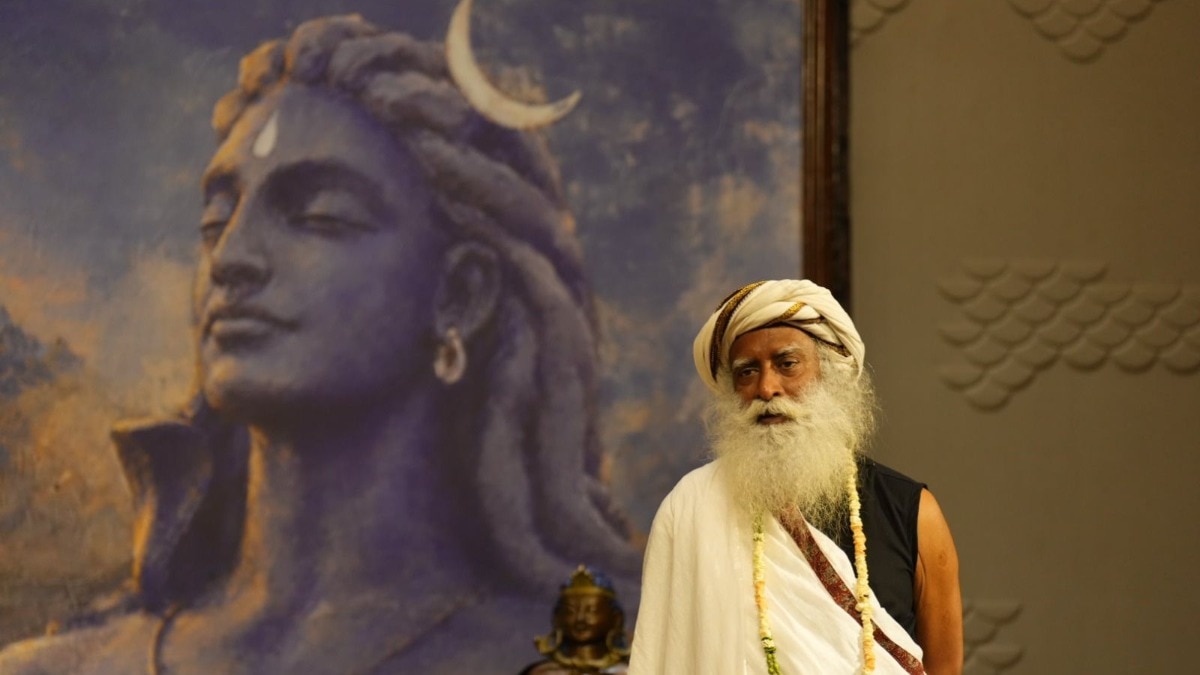
Following the loss of over 900 lives in Nepal and Tibet, spiritual leader Sadhguru has called for a coordinated five-nation board to manage Himalayan ecological disasters, transcending political borders.
- Sadhguru proposes a Himalayan Board comprising India, China, Pakistan, Nepal, and Bhutan.
- Over 900 people have perished in recent flash floods across Nepal and Tibet.
- 77 pilgrims from the Isha Foundation remain missing after the disaster.
- A contribution of Rs 1 crore has been pledged to the Nepal Prime Minister's Disaster Fund.
In the wake of catastrophic flash floods that have claimed more than 900 lives across Nepal and Tibet, spiritual leader Sadhguru Jaggi Vasudev has issued a clarion call for unprecedented regional cooperation. Speaking at a solidarity event in Kathmandu, the founder of the Isha Foundation urged the creation of a five-nation Himalayan Board, integrating the efforts of India, China, Pakistan, Nepal, and Bhutan.
Sadhguru emphasized that the Himalayan range must be viewed as a singular, connected ecological system rather than a collection of territories fragmented by geopolitical boundaries. He argued that the scale of climate-induced disasters in the region has reached a point where nationalistic approaches are no longer sufficient to protect vulnerable mountain communities.
Why This Matters
BozokMedia analysis shows that the Himalayan region is one of the most climate-vulnerable zones globally. The lack of a unified data-sharing mechanism for early warnings between these five nations often leads to delayed evacuations and higher casualty rates. A centralized board could synchronize satellite data and river-level monitoring, potentially saving thousands of lives in future glacial lake outburst floods (GLOFs).
"Political boundaries are man-made, but the ecology of the Himalayas is a shared destiny that requires a shared solution."
Beyond the structural proposal, Sadhguru addressed the psychological and spiritual aftermath of the tragedy. He strongly cautioned against attributing such disasters to "divine reasons" or "mystical possibilities," stating that such narratives often diminish the tangible suffering of victims and distract from the urgent need for ecological restoration and scientific disaster management.
The tragedy has hit close to home for the Isha Foundation. Currently, 77 pilgrims from the foundation's Kailash pilgrimage group are missing. The group, consisting of individuals from 19 different nationalities, was returning to Nepal near the Tibet border when the disaster struck. Despite having reached the immigration center at Gyirong early, the sheer scale of the flood—with debris reported to be 40 feet high—has left their whereabouts unknown.
In a gesture of support, Sadhguru announced that the Kala Bhairava Karma, a consecrated death ritual, would be performed at the Isha Yoga Centre in Coimbatore on September 3. This ritual is intended to bring peace to those who suffered unnatural deaths and provide solace to the grieving families.
| Current Approach | Sadhguru's Proposed Model |
|---|---|
| National-level disaster response | Unified 5-Nation Himalayan Board |
| Fragmented ecological data | Shared ecological system management |
| Political boundary constraints | Trans-border humanitarian cooperation |
Frequently Asked Questions
Q1: Which countries are proposed for the Himalayan Board?
The proposed board would include India, China, Pakistan, Nepal, and Bhutan.
Q2: What is the status of the missing Isha Foundation pilgrims?
77 pilgrims from 19 different nationalities remain missing; the foundation is coordinating with the embassies of India, China, and Nepal for their recovery.
