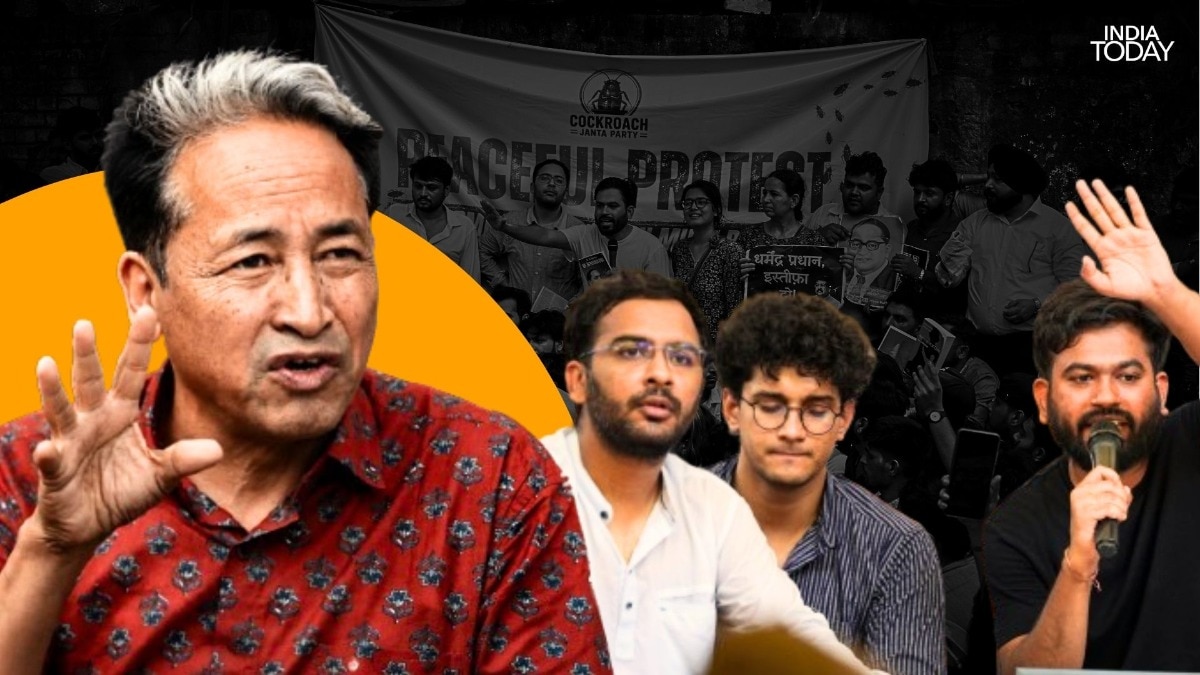
Activist Sonam Wangchuk has dropped a bombshell revelation regarding the leadership of the Cockroach Janta Party (CJP), claiming they were desperate to end their Delhi protests despite their public image of determination.
- Sonam Wangchuk revealed that CJP leadership suffered from severely low morale.
- Certain leaders pleaded with "folded hands" to find an exit strategy from the protests.
- The movement's energy was driven by police crackdowns and crowd size rather than leadership conviction.
- Political calculations heavily influenced the decision-making process of the CJP organizers.
The protests at New Delhi's Jantar Mantar, which lasted 45 days, were viewed globally as a symbol of youth-led resilience. However, Sonam Wangchuk, the face of the movement whose 26-day hunger strike galvanized the masses, has now pulled back the curtain on the internal turmoil of the Cockroach Janta Party (CJP) leadership.
In a candid conversation during a recent podcast, Wangchuk revealed a stark contrast between the CJP's public bravado and their private desperation. He claimed that while the party projected an image of unwavering determination, several leaders were internally struggling and seeking an "off-ramp" to end the agitation as quickly as possible.
Why This Matters
BozokMedia analysis shows that this revelation exposes the fragility of movements that rely on a single charismatic figurehead while the organizational leadership remains driven by political expediency. When the morale of the leadership is tied solely to crowd turnout, the movement becomes vulnerable to external pressures and internal collapse, regardless of the righteousness of the cause.
"The gap between public projection and private conviction is where most political movements fail."
Wangchuk detailed that before the critical march to Parliament on July 20, the leadership had almost lost hope of any tangible outcome. It was only after the subsequent police crackdown and the resulting public sympathy that the movement regained its momentum. He further mentioned that various exit routes were being discussed, including the potential involvement of Leader of Opposition Rahul Gandhi to bring the fast to a conclusion.
The activist noted that the leadership's spirit fluctuated based on the number of protesters. After the initial surge, as the crowd dwindled around the ninth day, the leadership's confidence plummeted. Wangchuk recalled instances where leaders approached him with "folded hands," explicitly stating their desire to leave the protest site.
Frequently Asked Questions
1. Who led the CJP during the protests?
The leadership included founder Abhijeet Dipke, co-convenors Ashutosh Ranka and Saurav Das, and formerly Vijeta Dahiya.
2. What was the outcome of the CJP protest?
The movement successfully pressured the government, leading to the resignation of Dharmendra Pradhan as the Union Education Minister.