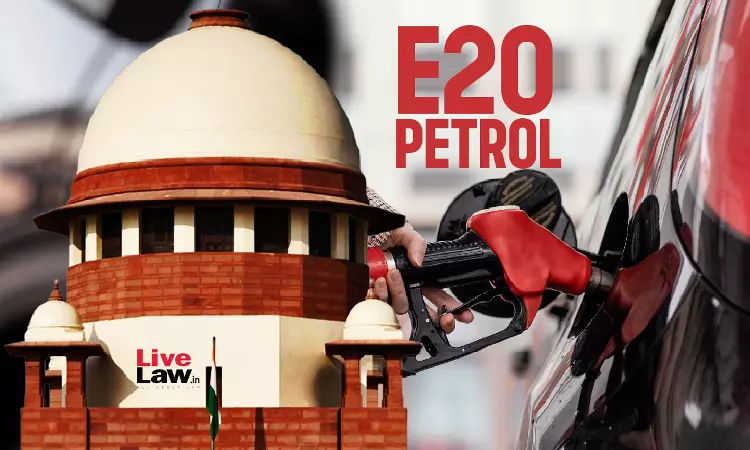
The Supreme Court of India has declined a petition seeking mandatory disclosure of ethanol percentages on fuel nozzles and bills, directing the petitioner to approach the High Court instead.
- Supreme Court refused to mandate ethanol percentage labeling on fuel nozzles and receipts.
- Petitioner sought a vehicle-compatibility database and an expert committee to study E20 fuel impact.
- The Court granted liberty to the petitioner to seek relief from the High Court.
In a significant ruling on consumer transparency, the Supreme Court of India has refused to entertain a petition that sought to compel fuel stations to disclose the exact percentage of ethanol blended into petrol. The petition, filed by advocate N.K. Goswami, argued that citizens have a fundamental right to know the chemical composition of the fuel they purchase for their vehicles.
The bench, comprising Justice MM Sundresh and Justice Prasanna B Varale, heard arguments regarding the transparency of the government's ethanol-blending program. The petitioner contended that the absence of ethanol disclosure on fuel bills leaves consumers in the dark about the nature of the product they are buying, potentially impacting engine health and vehicle longevity.
Why This Matters
BozokMedia analysis shows that this decision highlights a tension between the government's aggressive push toward the E20 (20% ethanol blend) target for energy security and consumer demands for transparency. While ethanol blending reduces crude oil imports and carbon emissions, the lack of clear labeling creates a 'blind spot' for owners of older vehicles that may not be compatible with higher ethanol blends.
The Attorney General for India strongly opposed the petition, characterizing it as a "proxy petition" and noting that a similar plea had been dismissed in the previous year. The government's stance suggests that the rollout of ethanol blending is a policy matter rather than a judicial one, emphasizing that the state should not be held personally answerable to individual petitioners in this manner.
The shift toward E20 fuel is a strategic necessity for India's energy independence, but the gap in consumer communication could lead to widespread vehicle maintenance disputes.
The original petition was comprehensive, requesting not just labeling but the creation of a publicly accessible, vehicle-wise compatibility database. This database would have allowed owners to check if their specific make, model, and year of manufacture were suitable for E20 fuel. Furthermore, the petitioner proposed an independent expert committee involving the Ministry of Road Transport and Highways and the Bureau of Indian Standards to study the impact on fuel efficiency and food security.
Despite the depth of the concerns raised—including the environmental impact and water consumption associated with ethanol production—the Supreme Court opted not to intervene, leaving the door open for the petitioner to approach the High Court for appropriate relief.
Frequently Asked Questions
Q1: What was the primary demand of the petition?
The petitioner wanted petrol pumps to display the ethanol percentage on nozzles and print it on all fuel receipts.
Q2: Why did the Supreme Court refuse the plea?
The court declined to entertain the matter and suggested the petitioner approach the High Court, while the Attorney General argued it was a repetitive proxy petition.