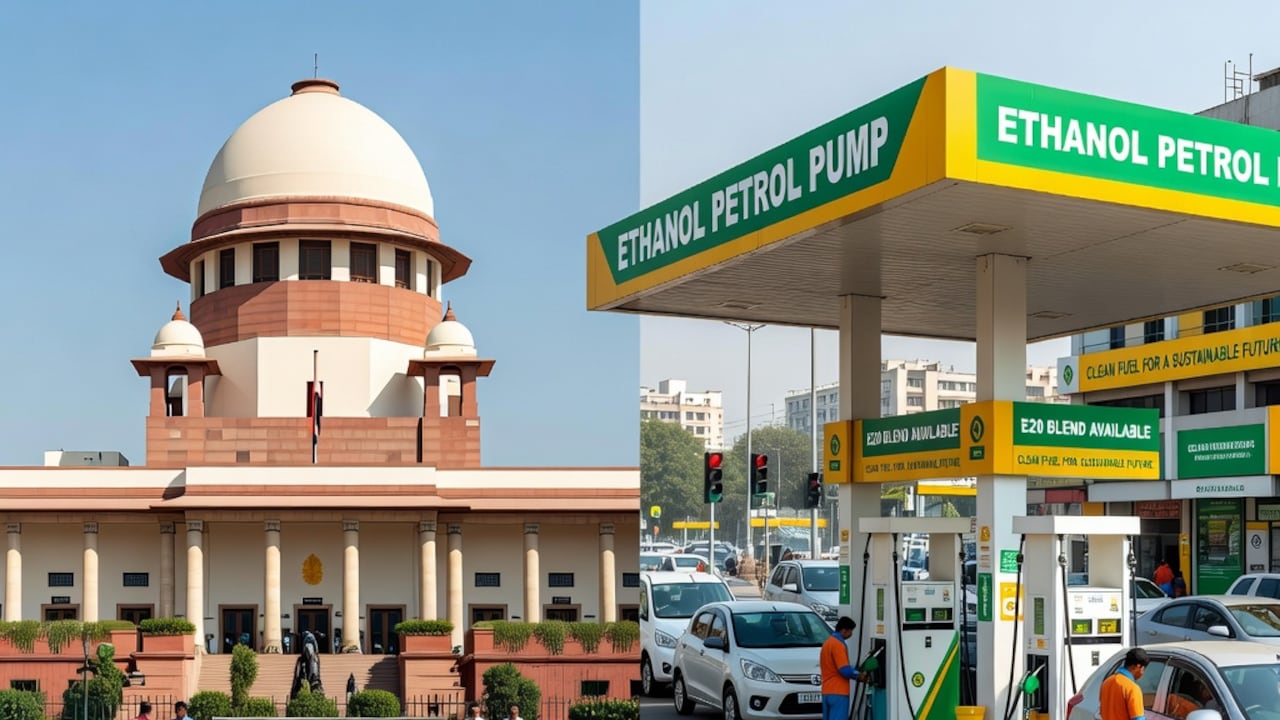
The Supreme Court has refused to entertain a PIL requesting uniform labeling of ethanol percentages on fuel dispensing nozzles, upholding existing regulatory frameworks.
- Supreme Court rejected a PIL for mandatory ethanol content disclosure on fuel nozzles.
- The plea sought transparency for consumers regarding fuel grade and engine compatibility.
- The court declined to intervene in the administrative labeling process of fuel stations.
The Supreme Court of India has dismissed a Public Interest Litigation (PIL) that sought to mandate the disclosure of the exact percentage of ethanol blended in petrol at all fuel stations across the country. The petitioner argued that for the sake of transparency and vehicle maintenance, fuel dispensing nozzles should clearly state the ethanol content, allowing consumers to make informed decisions based on their vehicle's specifications.
This legal challenge comes at a time when India is aggressively pursuing its Ethanol Blending Program (EBP). The government aims to reduce the massive crude oil import bill and support the agricultural sector by integrating ethanol derived from sugarcane and food grains into the national fuel supply.
Why This Matters
BozokMedia analysis shows that this ruling prevents a potential logistical nightmare for Oil Marketing Companies (OMCs). Implementing real-time, precise labeling on millions of nozzles would have required significant capital expenditure and frequent updates as blending ratios shift across different geographic zones.
"The judiciary typically avoids interfering in technical policy matters unless there is a clear violation of constitutional rights or a complete failure of regulatory oversight."
Historical Background and Context
The transition toward E20 (20% ethanol blend) is a cornerstone of India's energy security strategy. While ethanol is a cleaner-burning fuel that reduces greenhouse gas emissions, it possesses different chemical properties than pure gasoline. Specifically, ethanol is hygroscopic (attracts water) and can be corrosive to certain rubber and plastic components in older internal combustion engines, which was the primary driver behind the petitioner's demand for transparency.
| Feature | Pure Petrol | Ethanol Blended (E20) |
|---|---|---|
| Emissions | Higher Carbon Footprint | Lower Carbon Footprint |
| Engine Impact | Standard Performance | Risk for Legacy Engines |
| Economic Source | Foreign Imports | Domestic Agriculture |
Frequently Asked Questions
1. Is E20 fuel compatible with all vehicles?
Most newer vehicles are designed for E20, but older models may experience wear and tear if not modified.
2. What is the goal of the Ethanol Blending Program?
The goal is to reach a 20% blend by 2025 to enhance energy independence and reduce pollution.