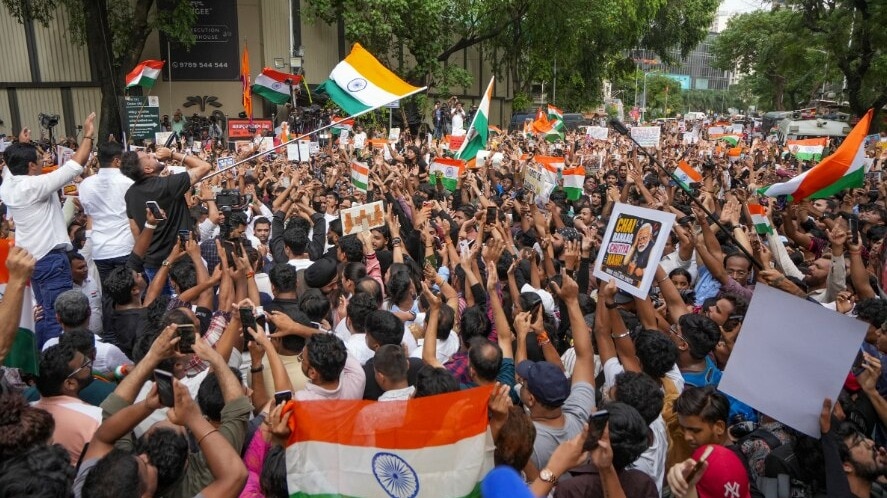
The Supreme Court has declined to stop the CJP's planned protest from Jantar Mantar to Delhi Police HQ on September 5, stating that law and order is the responsibility of the authorities.
- Supreme Court declined to pass an immediate stay on the CJP's Sept 5 march.
- CJI Surya Kant stated there is no basis to assume the protest would lead to untoward incidents.
- The court emphasized that maintaining law and order is the duty of the government and police.
- The protest stems from alleged government failure to honor commitments regarding the NEET paper leak.
The Supreme Court on Monday declined to pass any immediate order against the Cockroach Janata Party’s (CJP) proposed September 5 protest march from India Gate to the New Delhi Police Headquarters. A bench headed by Chief Justice of India Surya Kant observed that there was currently no basis to assume that the demonstration would lead to an untoward incident.
The court clarified that the immediate issue of maintaining law and order falls squarely within the jurisdiction of the government and the police. The CJI remarked, "At least as of now, we will presume that everybody will act and behave in a very responsible manner and in a peaceful and lawful manner," directing the petitioner to engage with the concerned authorities first.
Why This Matters
BozokMedia analysis shows that this decision reinforces the judicial principle of non-interference in administrative law and order duties unless a clear constitutional breach is evident. By refusing to halt the march, the SC is upholding the democratic right to dissent. Moreover, the context of the NEET paper leak adds a layer of social urgency, as the protest is led by families of students who died by suicide, making it a high-stakes emotional and political issue.
"The court's refusal to preemptively ban a march signals a trust in the constitutional machinery to manage dissent without resorting to judicial bans."
The court noted that the matter involved both law and order aspects and policy considerations. Justice Surya Kant expressed confidence that the Centre and the Delhi government would act within the legal framework to ensure safety. However, the court left the door open for the petitioner to return if the situation becomes alarming.
Historical Background: The conflict dates back to July 25, when a massive nationwide agitation against the NEET paper leak was called off following assurances from the Centre. On August 24, the CJP announced a fresh march, claiming that commitments—specifically regarding the filing of FIRs and written guarantees—remain unfulfilled.
CJP spokesperson Saurav Das described the government's actions as "vishwasghaat" (betrayal) toward the bereaved families of students. He emphasized that the march, starting at India Gate and ending at the Delhi Police HQ, would be peaceful. The matter is now scheduled for a further hearing on September 10.
Frequently Asked Questions
1. Why is the CJP organizing the September 5 march?
The CJP claims the Central Government failed to honor promises made during the NEET paper leak protests in July, particularly regarding legal actions and written assurances.
2. What was the Supreme Court's final stance on the petition?
The court refused to halt the march, stating that it is the administration's job to manage law and order, though it allowed the petitioner to return if the situation worsens.