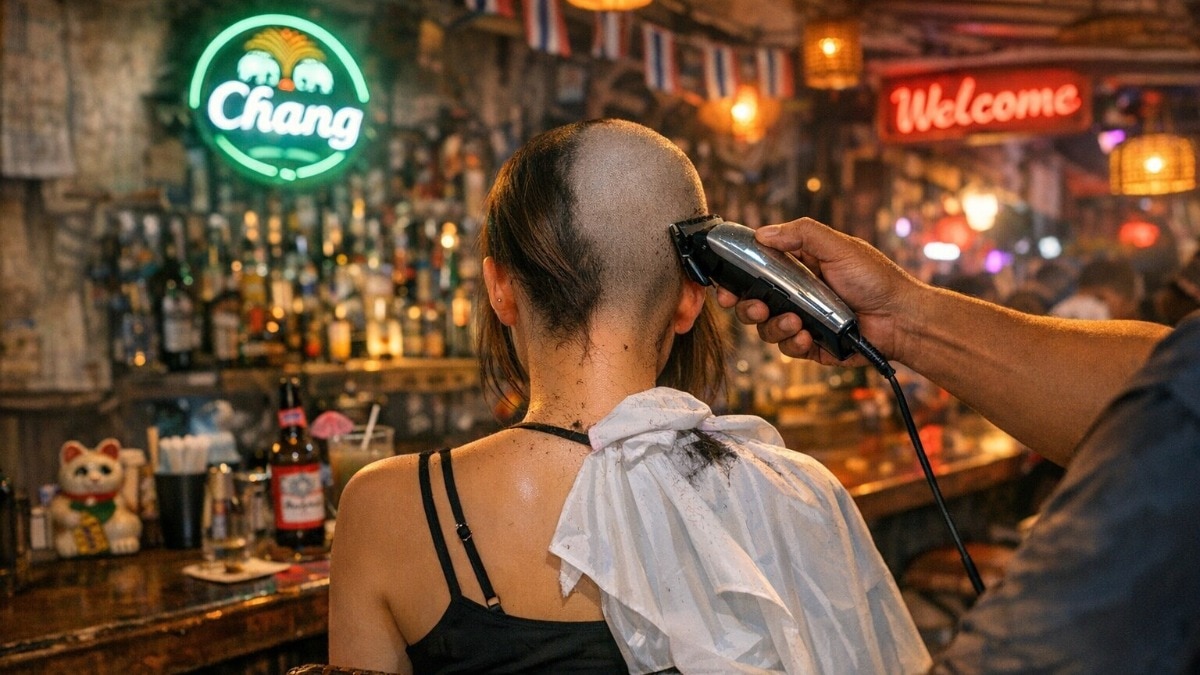
A shocking incident in Bangkok has sparked outrage after a woman's head was shaved as part of a 'settlement' for an unpaid bar bill. The case has raised serious questions about human rights and illegal detention.
- A woman was allegedly unable to pay a bill of 60,000 Baht (approx. $1,812) at a Bangkok bar.
- She signed a controversial 'Hair Purchase Contract' to settle the debt.
- Human rights activists claim the act constitutes assault and illegal detention.
A disturbing incident has emerged from the Pinklao district of Bangkok, Thailand, where a woman was allegedly forced to have her head shaved after failing to pay a substantial bar bill. The incident, captured on video and widely circulated on social media, has ignited a fierce debate over the ethics of debt recovery and personal dignity.
According to reports by the New York Post, the woman is not a first-time offender, with previous allegations of attempting to leave clubs and restaurants without paying. On August 25, she reportedly entered a popular establishment using a fake ID, where she consumed food and drinks totaling approximately 60,000 Baht (roughly $1,812).
The Controversial 'Hair Purchase Contract'
When the bar staff intercepted her as she attempted to leave without payment, a bizarre arrangement was made instead of involving the police. The woman reportedly agreed to a 'Hair Purchase Contract', essentially trading her long, thick hair for the cancellation of her debt.
In the viral footage, a man can be heard telling the woman that he is not taking advantage of her and that the arrangement follows 'market rates.' Subsequently, a bartender used electric clippers to shave her head almost entirely. While it was claimed that the hair would be donated, the manner in which the act was carried out has been described as dehumanizing.
Why This Matters
BozokMedia analysis shows that this incident transcends a simple commercial dispute; it highlights a dangerous trend of 'vigilante justice' within the service industry. When business owners bypass legal channels to impose physical penalties, it undermines the rule of law. The use of a contract signed under duress to justify a physical act is a legal fallacy that could set a precedent for further abuses.
Any contract signed under coercion or pressure is legally void, and restricting a person's movement to force such a deal can be classified as kidnapping or illegal detention.
Chalida, the founder of the B One Foundation, a Thai NGO, has strongly condemned the bar's actions. She stated that the establishment had crossed a line. While the bar management later apologized, claiming the manager acted in a fit of rage, Chalida maintains that the act constitutes assault and coercion.
Frequently Asked Questions
Q1: Is a 'Hair Purchase Contract' legally binding?
No, contracts signed under duress or those involving the surrender of bodily integrity as payment for a civil debt are generally unenforceable and illegal.
Q2: What legal steps are being taken now?
The Ministry of Social Development and Human Security in Thailand has been contacted to investigate the incident.