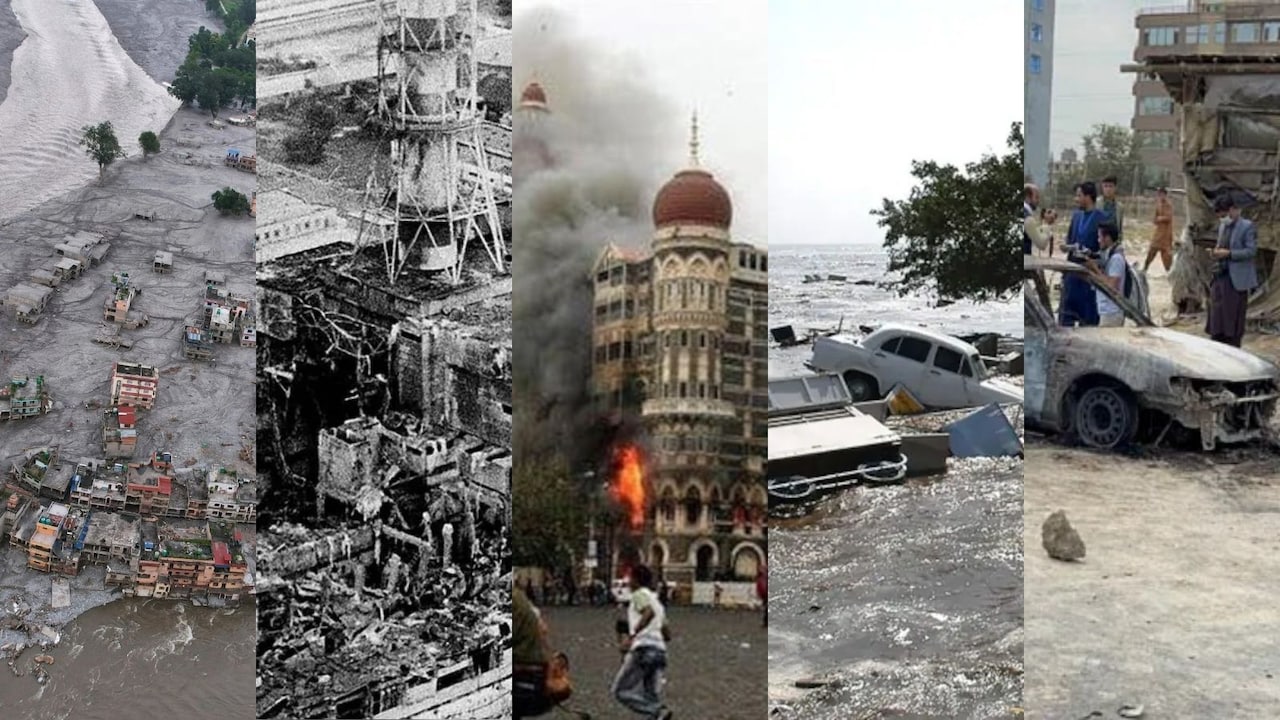
From the devastating Boxing Day tsunami to the brutal Mumbai terror attacks, a strange pattern emerges when analyzing the dates of history's most catastrophic events.
- The December 26, 2004 tsunami claimed hundreds of thousands of lives across 14 countries.
- The November 26, 2008 Mumbai attacks fundamentally changed global counter-terrorism strategies.
- While statistically coincidental, the recurrence of the 26th in major tragedies is a haunting pattern.
History is often viewed as a series of random events, but occasionally, a pattern emerges that defies simple explanation. For historians and observers of global catastrophes, the 26th of the month has become a date associated with profound loss and systemic failure. Whether through the wrath of nature or the cruelty of man, this specific calendar date has witnessed some of the darkest hours of the 21st century.
The most visceral example is the December 26, 2004 Boxing Day tsunami. Triggered by a massive undersea earthquake off the coast of Sumatra, the resulting waves decimated coastal communities in Indonesia, Sri Lanka, India, and Thailand. The sheer scale of the tragedy, with an estimated 230,000 deaths, remains one of the deadliest natural disasters in recorded history.
Fast forward to November 26, 2008, and the world witnessed a different kind of horror. The coordinated terror attacks in Mumbai, India, targeted landmarks like the Taj Mahal Palace Hotel and the Chhatrapati Shivaji Terminus. The siege lasted several days, exposing vulnerabilities in urban security and sparking a global dialogue on the evolution of asymmetric warfare.
Why This Matters
BozokMedia analysis shows that while there is no empirical evidence suggesting the 26th is 'cursed,' the psychological impact of such coincidences creates a narrative of vulnerability. These events highlight the critical need for robust early-warning systems for natural disasters and impenetrable intelligence networks to thwart human-led atrocities.
"The human brain is hardwired to find patterns in chaos; however, the tragedy of these dates lies not in the number, but in the avoidable nature of such losses."
Looking deeper into historical archives, one finds that while other dates have also seen tragedies, the intensity of the events on the 26th creates a lingering sense of dread. These milestones serve as grim reminders of the fragility of human civilization in the face of planetary shifts and ideological extremism.
Frequently Asked Questions
Q1: Is there a scientific reason why disasters happen on the 26th?
A: No, there is no scientific or geological correlation. It is a statistical coincidence.
Q2: How did the 2008 Mumbai attacks change international security?
A: It led to the creation of more specialized urban combat units and better intelligence sharing between nations.