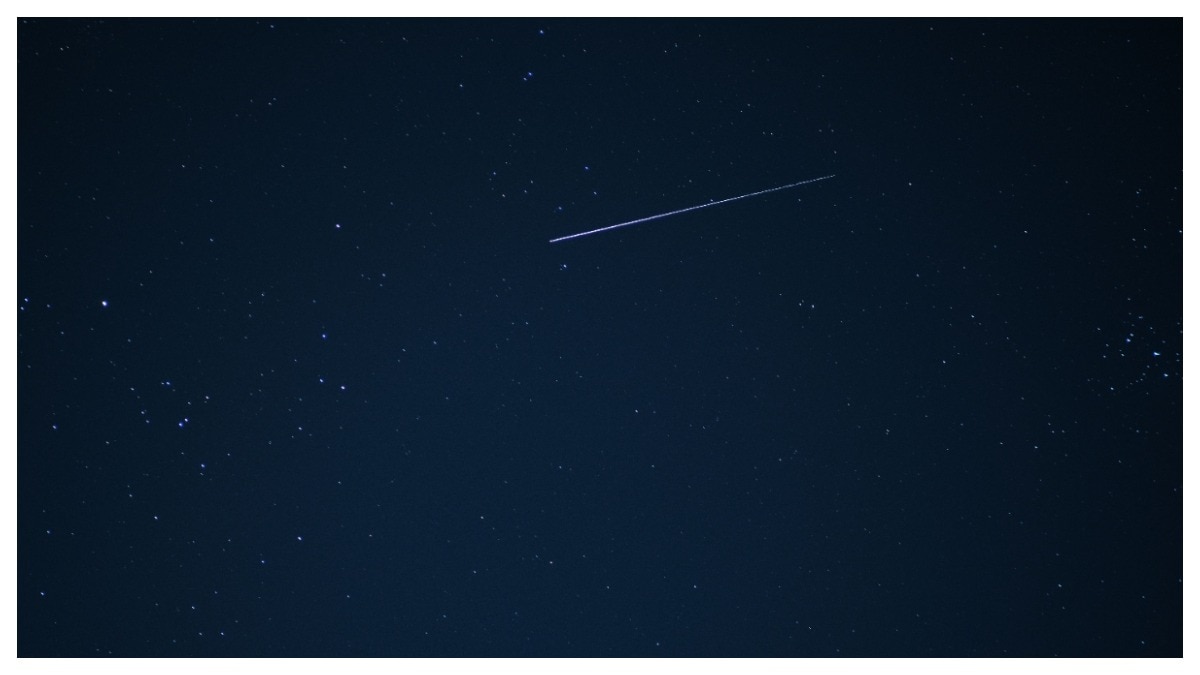
What we perceive as a falling star is actually a fascinating astronomical event. Discover the science of meteors and the historical origins of the centuries-old tradition of making a wish.
- A shooting star is actually a 'meteor', not a celestial star.
- The streak of light is caused by friction and ionization as debris enters Earth's atmosphere.
- The wishing tradition is linked to ancient Greek beliefs and the theories of Ptolemy.
From cinema to childhood stories, the connection between a 'falling star' and making a wish is deeply ingrained in global culture. However, have you ever wondered why we associate this visual phenomenon with hope and desires? Most importantly, the very term 'shooting star' is a misnomer, as there are no stars actually falling from the sky.
The Science Behind the Streak
In astronomical terms, what we call a shooting star is a meteor. These are typically small fragments of rock or dust particles orbiting in space. When such a particle enters Earth's atmosphere at an incredibly high velocity, it compresses the air in front of it, creating intense heat. This process causes the particle to vaporize and the surrounding air to ionize, producing the brilliant streak of light we see from the ground.
It is crucial to distinguish these from actual stars. Stars, like our Sun, are massive spheres of hot plasma and gas. They are light-years away from Earth, making it physically impossible for them to 'fall' into our atmosphere. Thus, the term 'shooting star' is a poetic description rather than a scientific fact.
Why This Matters
BozokMedia analysis shows that the persistence of such myths highlights the human tendency to romanticize natural phenomena. Understanding the lifecycle of space debris—from meteoroid to meteorite—is essential for appreciating the protective role of Earth's atmosphere.
| Term | Definition/Location |
|---|---|
| Meteoroid | A small rocky or metallic body traveling through outer space. |
| Meteor | The streak of light produced when a meteoroid burns in the atmosphere. |
| Meteorite | The fragment of a meteoroid that survives the fall and hits the ground. |
"The visual phenomenon of a shooting star is essentially a cosmic collision between space debris and Earth's protective atmosphere, converting kinetic energy into light."
Origins of the Wishing Tradition
The practice of wishing upon a shooting star does not have a single recorded inventor, but it is strongly linked to ancient Greek philosophy. The astronomer Ptolemy suggested that the heavens occasionally opened, allowing stars to fall or enter our realm. This led to the belief that such rare moments provided a direct line of communication to the gods.
Over centuries, this belief evolved and spread across different cultures. The sudden, fleeting nature of a meteor—appearing for a fraction of a second before vanishing—added an element of mystery and perceived 'luck' to the event. While historically popular, there is no scientific evidence that these events have any impact on the fulfillment of human desires.
Frequently Asked Questions
Q1: Is a shooting star actually a star?
No, it is a meteor—a piece of space debris burning up upon entry into the atmosphere.
Q2: What is the difference between a meteor and a meteorite?
A meteor is the light phenomenon in the sky; a meteorite is the actual rock that reaches the Earth's surface.