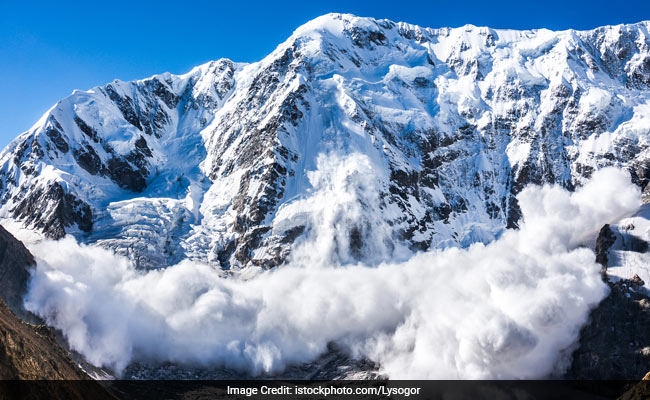
A critical study reveals that 73 of Uttarakhand's 219 hanging glaciers are unstable, posing a severe risk of Glacial Lake Outburst Floods (GLOFs) as the Himalayas warm faster than the global average.
- Uttarakhand hosts 219 hanging glaciers, with 33% identified as unstable.
- Hanging glaciers are more prone to collapse due to their position on steep slopes.
- The Himalayan region is experiencing warming rates exceeding the global average.
The fragile ecosystem of the Indian Himalayas is facing an unprecedented threat as new research highlights the precarious state of Uttarakhand's glacial landscape. Out of the 219 identified 'hanging glaciers'—glaciers that cling to steep mountain slopes rather than resting on valley floors—approximately one-third have been categorized as unstable. This instability significantly increases the likelihood of catastrophic landslides and floods.
Unlike traditional valley glaciers, hanging glaciers are naturally more susceptible to gravitational collapse. When these ice masses melt rapidly or shift, they can trigger Glacial Lake Outburst Floods (GLOFs), which send torrents of water, debris, and boulders downstream, obliterating villages and infrastructure in seconds. The region has already witnessed the devastating power of such events, with Uttarakhand and neighboring Sikkim recording three major GLOF disasters in recent years.
Why This Matters
BozokMedia analysis shows that this is not merely a geological anomaly but a direct symptom of accelerated climate change. The Himalayan region is warming at a pace that surpasses the global average, leading to rapid glacial retreat and the formation of unstable proglacial lakes. The precarious balance of these hanging glaciers means that a single trigger—be it an earthquake or an extreme heatwave—could lead to a chain reaction of disasters across the lower valleys.
The acceleration of Himalayan warming is turning these frozen giants into ticking time bombs for the millions living downstream.
Historically, the Himalayas have been viewed as a permanent shield of ice, but the 21st century has seen a shift toward volatility. The interaction between steep topography and rising temperatures creates a 'perfect storm' for glacial instability. This requires an immediate shift from reactive disaster management to proactive, satellite-based monitoring and early warning systems.
Frequently Asked Questions
Q1: What is a hanging glacier?
A hanging glacier is a glacier that terminates abruptly at the edge of a cliff or a steep slope, rather than flowing down into a valley.
Q2: Why are they more dangerous than valley glaciers?
Because they are perched on steep slopes, they are more susceptible to gravity-driven collapses and rapid melting, which can trigger sudden floods.
