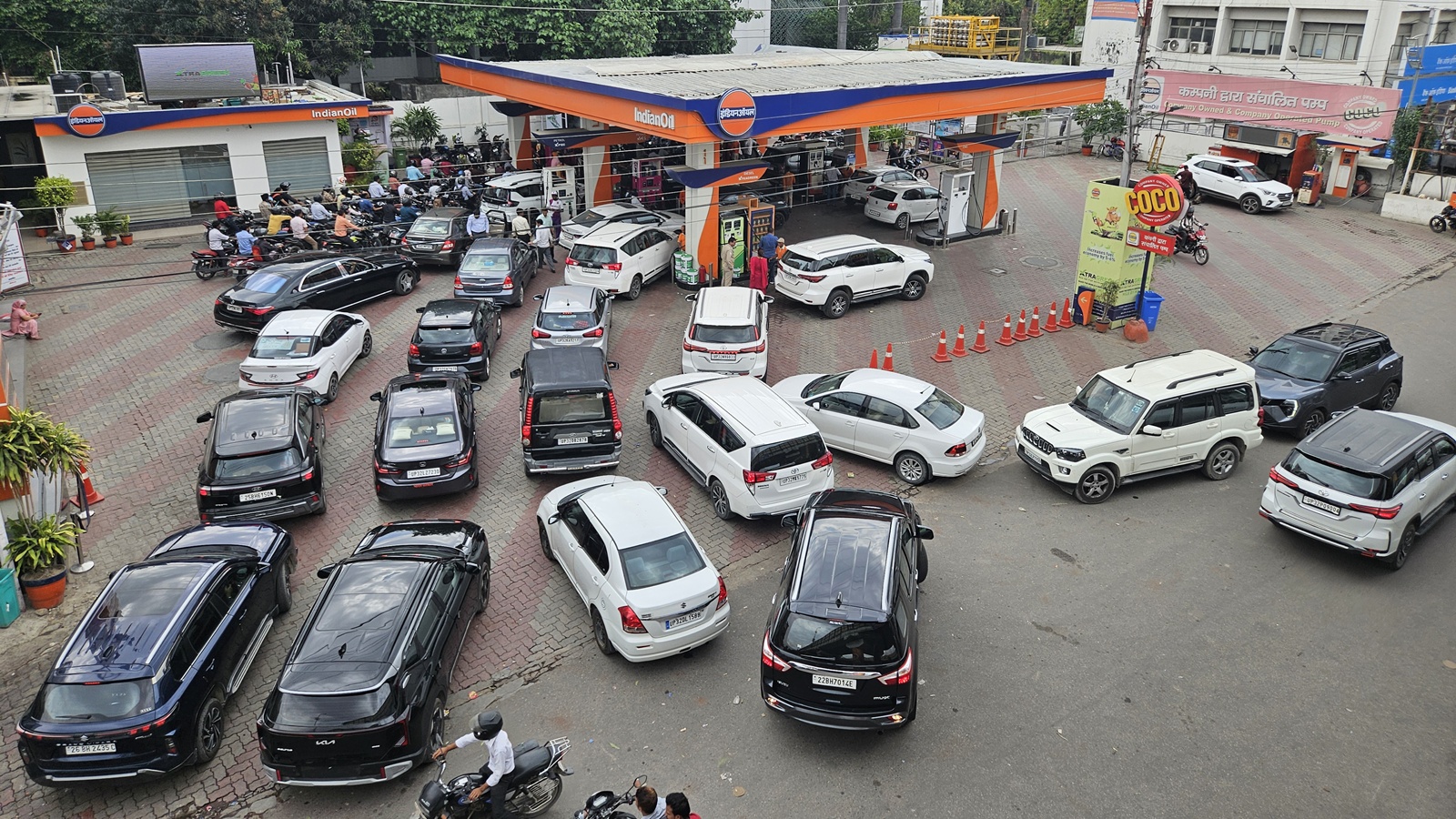
The Madhya Pradesh government is launching a pioneering pilot project to deny fuel to uninsured vehicles using ANPR cameras and VAHAN portal integration to curb road safety violations.
- ANPR cameras will be installed at petrol pumps to identify uninsured vehicles.
- The system will be integrated with the VAHAN portal for real-time insurance verification.
- The 'Zero-Fatality District' program is expanding from 6 to 9 districts.
In a decisive move to enhance road safety and legal compliance, the state of Madhya Pradesh is set to implement a pilot project where vehicles lacking valid insurance may be denied fuel at petrol pumps. This initiative was finalized during a high-level meeting chaired by Abhay Manohar Sapre, a retired Supreme Court judge and chairman of the Supreme Court Committee on Road Safety, at the Chief Secretary’s Office.
The pilot will be launched in a district identified as having the highest concentration of uninsured vehicles. The technical framework involves installing Automatic Number Plate Recognition (ANPR) cameras at fuel stations. These cameras will be linked directly to the VAHAN portal, allowing the system to instantly flag vehicles without valid insurance and potentially block their access to fuel.
Why This Matters
BozokMedia analysis shows that this represents a paradigm shift from 'reactive' enforcement (fining drivers after a stop) to 'preventive' enforcement (limiting access to essential services). By linking fuel—a non-negotiable necessity for vehicle operation—to insurance compliance, the government creates a powerful incentive for owners to maintain legal documentation, thereby ensuring financial protection for accident victims.
Preventing road deaths requires a transition from mere policing to a holistic ecosystem involving community participation and seamless technological integration.
Beyond the fuel-denial project, the government is scaling up its Zero-Fatality District program. Previously implemented in Dhar, Satna, Rewa, Sagar, Jabalpur, and Khargone, the program will now extend to Indore, Bhopal, and Ujjain. This expansion comes at a critical time, as Madhya Pradesh records approximately 13,000 road accident deaths annually.
The meeting also addressed the menace of stray animals on highways and the need for better emergency response systems. With the current average response time for transporting urban accident victims to hospitals standing at 16 minutes, authorities are under pressure to optimize the 'golden hour' response to save more lives.
| Feature | Conventional Enforcement | Proposed Pilot Project |
|---|---|---|
| Detection Method | Manual police checks/interceptions | Automated ANPR Camera Scanning |
| Enforcement Point | Roadside checkpoints | Petrol Pumps (Points of Sale) |
| Verification Speed | Slow (Physical document check) | Instant (VAHAN Portal API) |
Frequently Asked Questions
1. Is this rule applicable across all of Madhya Pradesh immediately?
No, it will start as a pilot project in one specific district. After testing and refining the technology, it will be rolled out in phases across the state.
2. What happens if the VAHAN portal is down during the check?
While the technical details are being finalized, typical fail-safe mechanisms in such pilots allow for manual override or grace periods to avoid public chaos.