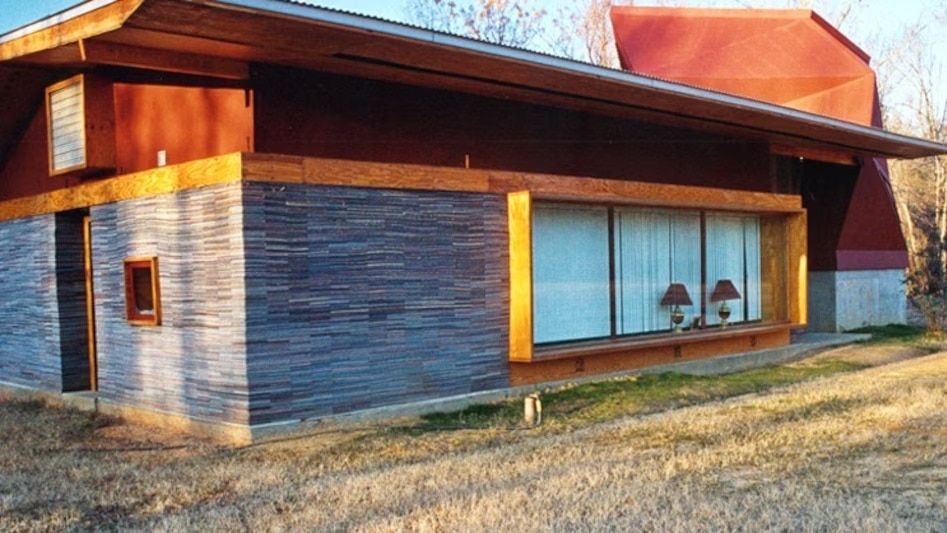
Students in Alabama have constructed a durable and affordable home using 72,000 recycled carpet tiles. Known as the 'Lucy Carpet House,' this project exemplifies the power of limited resources combined with creative architectural design.
- Constructed using 72,000 recycled carpet tiles for wall structures.
- Designed and built by students from Auburn University's 'Rural Studio'.
- Features a specialized tornado shelter and a sky-view bedroom tower.
- A pioneering experiment in the field of sustainable and affordable housing.
While bricks, cement, and concrete are the staples of modern construction, a unique residence in Hale County, Alabama, challenges these norms. The 'Lucy Carpet House' features walls made entirely from 72,000 recycled carpet tiles. More than two decades after its completion, this experimental home stands as a testament to how design can be centered around human needs despite severe resource constraints.
The project was initiated in 2002 by six students working with Rural Studio, an off-campus design-build program of Auburn University. Co-founder Samuel Mockbee envisioned this charity house for Lucy and Anderson Harris and their children, focusing on delivering a low-cost solution tailored to the family's specific requirements.
Construction Technique and Structural Integrity
The most striking feature of the home is the wall system. 72,000 individual carpet tiles were stacked and compressed using heavy wooden ring beams to ensure structural stability. Given that Alabama is prone to severe weather and tornadoes, the architects integrated a tornado shelter in the lower level, ensuring the safety of the inhabitants.
The project received funding and materials from Interface Carpet, which provided $30,000 and the 72,000 used tiles. To ensure safety, the tiles were stored for approximately seven years to allow off-gassing of volatile organic compounds before being used in the construction.
Why This Matters
BozokMedia analysis shows that the Lucy Carpet House is a masterclass in 'upcycling'. It proves that luxury is not about expensive materials but about thoughtful design. By converting waste into walls, the students not only reduced the carbon footprint but also allocated the saved budget to create a personalized prayer space for the homeowner, blending human emotion with structural engineering.
"Architecture should not just be about building structures; it should be about solving human problems using the most sustainable resources available."
The home's bedroom is designed as a unique tower that opens directly to the sky. This allows Lucy to gaze at the heavens from her bed, fulfilling her wish for a dedicated space for prayer. The interplay of light and shadow within the tower creates a dynamic interior environment, proving that architecture can be an extension of a person's spiritual needs.
The 'Rural Studio' philosophy emphasizes 'learning by doing'. Since 1993, the program has completed over 200 projects and trained more than 1,200 students in Alabama's Black Belt region. Students live within the community, ensuring that designs are not created in isolation but are collaborative solutions to local challenges.
| Feature | Traditional House | Lucy Carpet House |
|---|---|---|
| Primary Material | Brick, Cement, Concrete | Recycled Carpet Tiles, Wood |
| Cost | High | Very Low (Charity-based) |
| Environmental Impact | High Carbon Footprint | Upcycled (Eco-friendly) |
Frequently Asked Questions
1. Are walls made of carpet tiles structurally safe?
Yes, they are compressed by heavy wooden ring beams and the materials were aged for years to ensure they were safe for habitation.
2. What is the primary goal of Rural Studio?
To inspire young architects to understand their ethical responsibility toward social, political, and environmental impacts through sustainable building.

