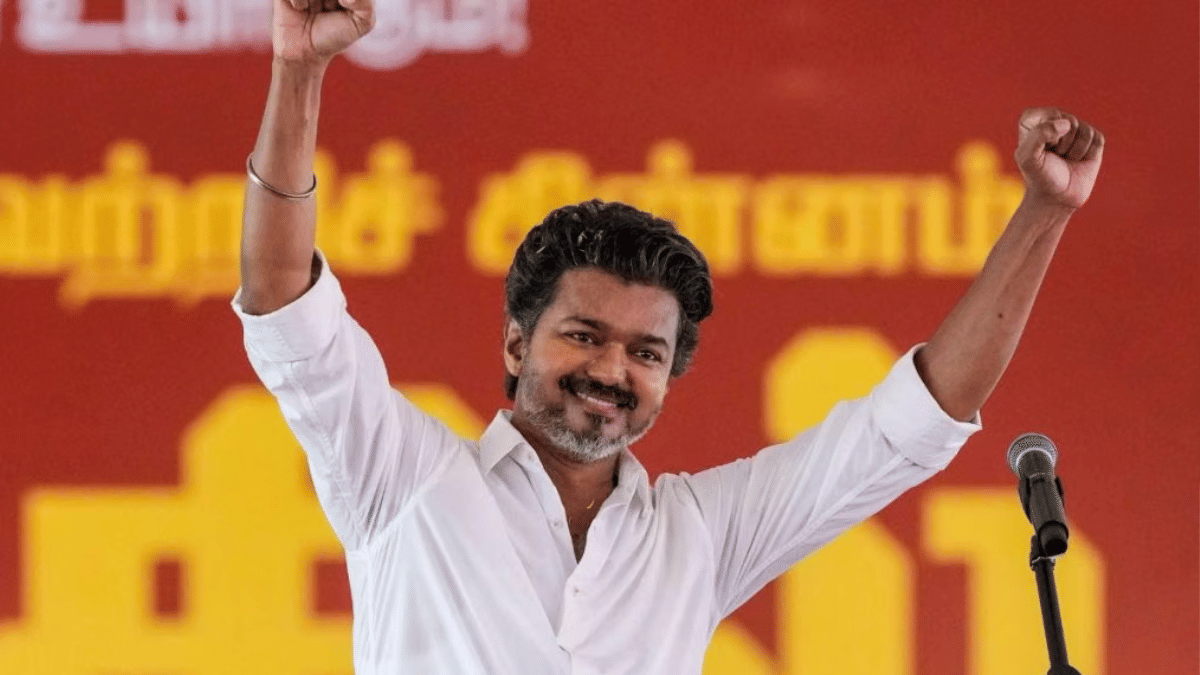
Despite a surge in popularity surveys placing him as a preferred PM candidate, Chief Minister Vijay faces scrutiny over his administrative style and ideological clarity in Tamil Nadu.
- Vijay ranks as the third most preferred PM candidate in recent Mood of the Nation surveys.
- Critics argue he is adopting traditional 'realpolitik' and vendetta politics rather than introducing systemic change.
- Concerns persist regarding opacity in decision-making and a lack of clear ideological positioning.
The political ascent of C Joseph Vijay, the founder of Tamilaga Vettri Kazhagam (TVK) and current Chief Minister of Tamil Nadu, has been nothing short of meteoric. Recent data from India Today’s 'Mood of the Nation' survey reveals a startling trend: approximately 9.2% of respondents view him as the most suited individual to lead India as Prime Minister. This places him third, trailing only Prime Minister Narendra Modi and Rahul Gandhi, despite having spent barely 114 days in the CM's office.
While his ministers and a wave of social media narratives—particularly in Hindi-speaking belts—portray him as a decisive, strongman leader, the ground reality in Chennai suggests a more complex story. The narrative of Vijay as a 'savior' who can overhaul India's electronics exports or implement swift justice is often driven by wishful thinking rather than administrative milestones.
Why This Matters
BozokMedia analysis shows that the transition from a cinematic icon to a political leader is fraught with the risk of 'image-based governance.' When a leader's popularity is decoupled from their administrative track record, it creates a dangerous vacuum. Vijay's current trajectory suggests he is learning the art of power—cobbling together majorities and absorbing opposition MLAs—but has yet to define a unique ideological footprint beyond declaring the BJP as an 'ideological enemy.'
The administration has been marked by several controversial moves. From the arrest of Opposition Leader Udhayanidhi Stalin over alleged double entendres to the appointment of personal associates—including his astrologer and film producers—to high-ranking government positions, Vijay is mirroring the very political patterns he ostensibly sought to disrupt.
"The transition from reel-life heroism to real-life governance requires a shift from charisma to competence; currently, Vijay is relying heavily on the former."
Furthermore, Vijay has adopted a strategy of 'project cancellation' reminiscent of other regional strongmen, putting a hold on major infrastructure works like the Parandur airport and the Kanchipuram redevelopment plan. This approach, while popular with some who view it as 'cleaning house,' risks stalling the state's economic momentum.
The lack of transparency in the TVK-led government is also a growing concern. With the CM remaining largely inaccessible to the media and his own cabinet, the decision-making process has become opaque. This was evident in the controversial circular attempting to restrict students from joining protests, a move that was only retracted after significant backlash from coalition partners like the CPI(M).
| Feature | Public Perception (Reel) | Administrative Action (Real) |
|---|---|---|
| Governance Style | Decisive & Revolutionary | Traditional Realpolitik & Appointments of Aides |
| Ideology | Anti-Establishment | Coalition-based / Vague Positioning |
| Communication | Mass Appeal | Media Opacity & Inaccessibility |
Frequently Asked Questions
Q1: Why is Vijay being discussed as a potential Prime Minister?
A: This is primarily driven by high popularity ratings in national surveys and a perceived need for a strong leader from South India.
Q2: What are the main criticisms of Vijay's tenure as CM?
A: Critics point to nepotism in appointments, a lack of ideological clarity, and an opaque decision-making process.


