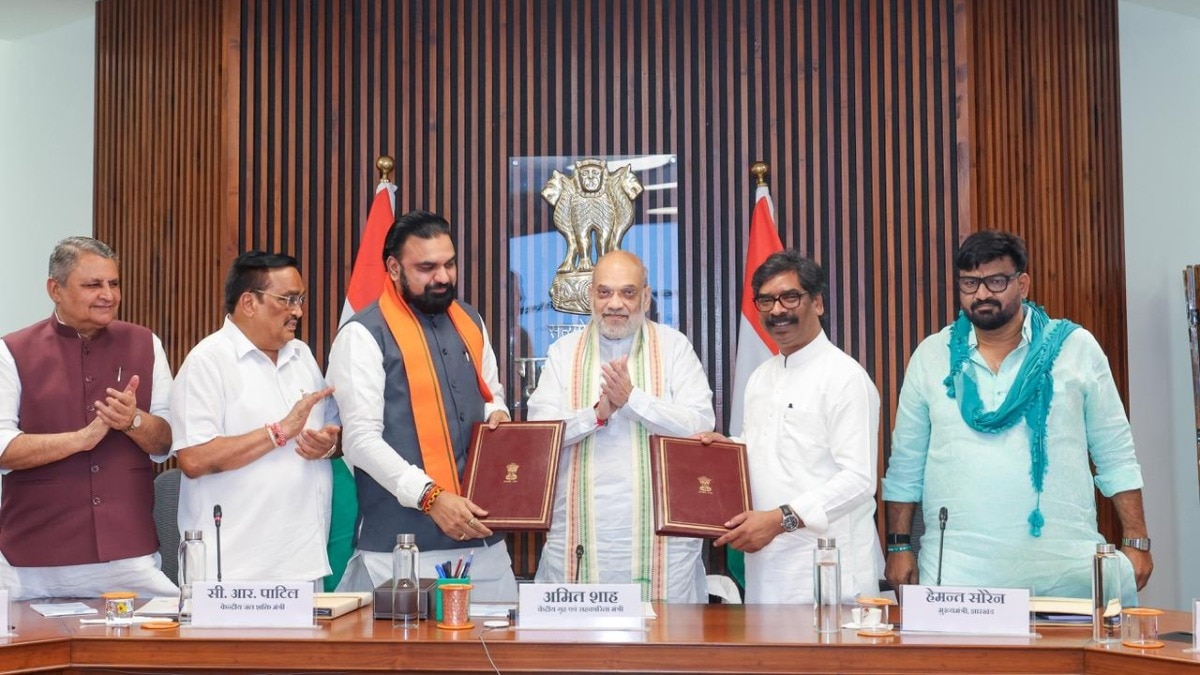
In a landmark move for cooperative federalism, Bihar and Jharkhand have signed an MoU to share 7.75 million acre-feet of Sone river water, ending a quarter-century of legal and political deadlock.
- Bihar and Jharkhand agree to share 7.75 million acre-feet of Sone river water.
- The pact resolves a dispute dating back to the creation of Jharkhand in 2000.
- The agreement will directly benefit farmers and drinking water supplies across multiple districts in both states.
In a significant diplomatic breakthrough, the states of Bihar and Jharkhand signed a Memorandum of Understanding (MoU) in New Delhi on Monday to share the waters of the Sone river. The agreement, witnessed by Union Home Minister Amit Shah, effectively puts an end to a nearly 25-year-old conflict that had hindered regional development and agricultural stability since the reorganization of the states.
The pact ensures the distribution of 7.75 million acre-feet of water, a move the Central Government describes as a "permanent resolution." Union Home Minister Amit Shah emphasized that this agreement serves as a blueprint for resolving long-standing interstate grievances through dialogue and the spirit of cooperative federalism. The ceremony was attended by Jharkhand CM Hemant Soren, Bihar CM Samrat Choudhary, and Union Jal Shakti Minister CR Patil.
Historical Background
The roots of the conflict trace back to 1973, when Uttar Pradesh, Madhya Pradesh, and the then-undivided Bihar entered into an agreement regarding the Sone river and the cost-sharing of the Bansagar Dam in Madhya Pradesh. However, the equilibrium was disrupted in 2000 when Jharkhand was carved out of Bihar. Jharkhand demanded a larger share of the water, arguing that a significant portion of the river's catchment area lay within its borders, while Bihar maintained that the original 1973 agreement remained the legal benchmark.
Why This Matters
BozokMedia analysis shows that water security in Eastern India is not just an environmental issue but a critical economic driver. By resolving this dispute, the two states can now optimize crop yields and stabilize the drinking water infrastructure. This pact is particularly vital for Bihar's Bhojpur, Buxar, Rohtas, Kaimur, Aurangabad, Arwal, Gaya, and Patna districts, as well as Jharkhand's Palamu and Garhwa regions.
"The resolution of the Sone river dispute marks a shift from litigious state relations to a collaborative 'Team Bharat' approach, prioritizing rural prosperity over political boundaries."
This agreement is part of a broader trend of the Centre mediating interstate water conflicts. This year alone, four such historic pacts have been reached, including settlements regarding the Narmada Award, the Yamuna Water Project, and the Kishau Multipurpose Dam Project.
| Feature | Pre-Agreement Status | Post-Agreement Status |
|---|---|---|
| Legal Standing | Contested (1973 vs 2000 claims) | Unified MoU signed in 2026 |
| Water Allocation | Disputed shares | 7.75 million acre-feet shared |
| Primary Focus | Litigation and claims | Irrigation and drinking water |
Frequently Asked Questions
Q1: Which districts in Bihar will benefit from this pact?
The agreement will ensure water for Bhojpur, Buxar, Rohtas, Kaimur, Aurangabad, Arwal, Gaya, and Patna.
Q2: Why did the dispute start in 2000?
The dispute began when Jharkhand was created, leading to new claims over water shares based on the river's catchment area within the new state's borders.